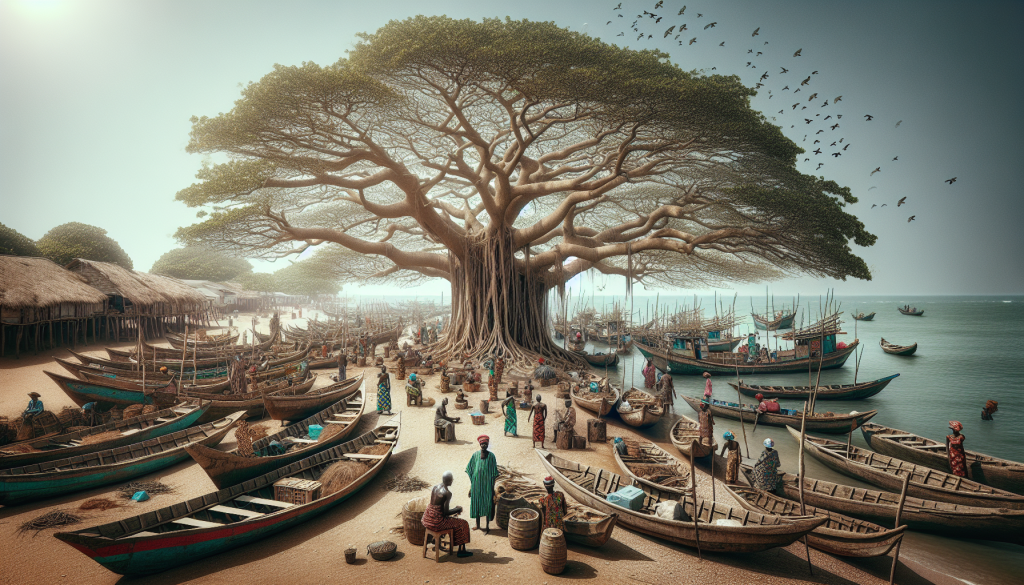
In a remarkable testament to heritage and continuity, a family in a Ghanaian fishing town traces its origins back to a tree planted by an ancestor in the 13th century. This tree not only symbolizes their deep-rooted connection to the land but also marks the beginning of their community’s settlement in the area. Such oral histories play a crucial role in preserving cultural identity and linking present generations to their past.
Historically, trees have often served as landmarks and spiritual symbols in many African societies, representing life, growth, and stability. The family’s story underscores the importance of natural landmarks in maintaining communal memory and cultural narratives over centuries. It also reflects how environmental features can anchor human history and social structures in a tangible way.
In a significant development for cultural preservation, this ancestral tree stands as a living monument to the family’s enduring presence and legacy in the region. It highlights the broader significance of oral traditions in documenting histories that may not be recorded in written form. Such narratives enrich our understanding of how communities relate to their environment and maintain their heritage through generations.