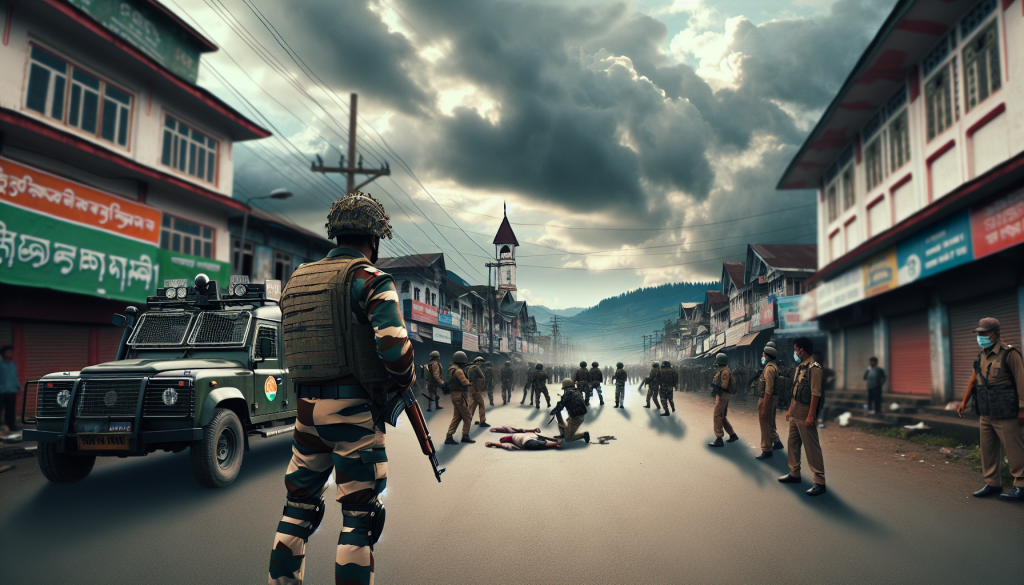
Manipur, a northeastern state in India, has been grappling with persistent ethnic clashes for the past three years. The ongoing violence has deeply unsettled the region, disrupting daily life and causing widespread fear among its diverse communities. Rooted in long-standing ethnic rivalries, the conflict has led to significant casualties and displacement, highlighting the fragile social fabric of the area. Despite efforts by authorities to restore peace, tensions remain high, with sporadic outbreaks of violence continuing to threaten stability.
In a significant development, the prolonged unrest in Manipur underscores broader challenges faced by India’s northeastern states, where ethnic diversity often intersects with political and economic grievances. The region’s strategic location and complex demographic composition have made it a hotspot for inter-community strife, complicating governance and development initiatives. Meanwhile, the central government has been urged to intensify dialogue and implement sustainable measures to address the root causes of the conflict. Failure to do so risks further escalation and potential spillover into neighboring states.
Notably, the Manipur crisis has drawn national and international attention due to its implications for human rights and regional security. The ongoing violence has strained resources and heightened communal tensions, impacting not only local populations but also the broader geopolitical landscape of India’s northeast. As the conflict enters its fourth year, stakeholders emphasize the urgent need for reconciliation and inclusive policies to prevent further deterioration. The situation remains a critical test for India’s commitment to maintaining peace and harmony in its diverse regions.