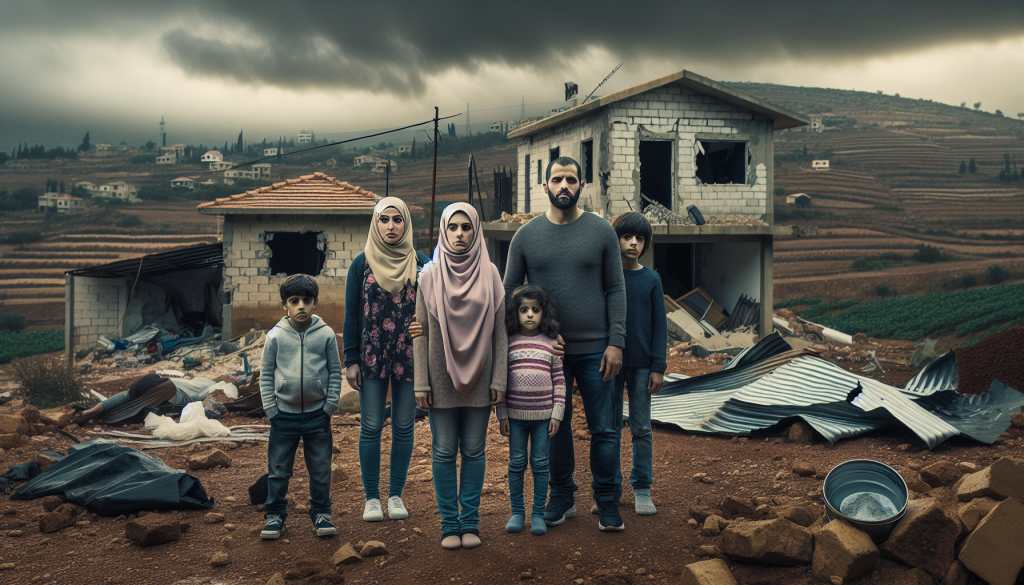
In southern Lebanon, displaced residents are caught in a precarious situation, forced to choose between staying in their homes under threat of violence or leaving to avoid danger. This dilemma highlights the ongoing instability in the region, where security concerns and economic hardship intersect. Many families face the grim reality that neither option guarantees safety or a sustainable livelihood. The conflict and displacement have exacerbated poverty levels, straining already limited resources and social services.
Meanwhile, the broader context of Lebanon’s political and economic turmoil compounds the challenges faced by displaced populations. The country has been grappling with a severe financial crisis, widespread unemployment, and deteriorating infrastructure, all of which contribute to the vulnerability of those uprooted from their homes. Humanitarian organizations warn that without urgent intervention, the situation could worsen, leading to increased displacement and social unrest. The lack of viable solutions underscores the need for comprehensive policies addressing both security and economic recovery.
In a significant development, the plight of Lebanon’s displaced has drawn international attention, emphasizing the urgent need for coordinated aid and conflict resolution efforts. The choices facing these communities reflect broader regional instability and the complex interplay of political, social, and economic factors. Addressing these challenges is critical not only for the displaced but also for Lebanon’s long-term stability and development. Without effective support, the cycle of displacement and poverty is likely to continue, deepening the humanitarian crisis in southern Lebanon.