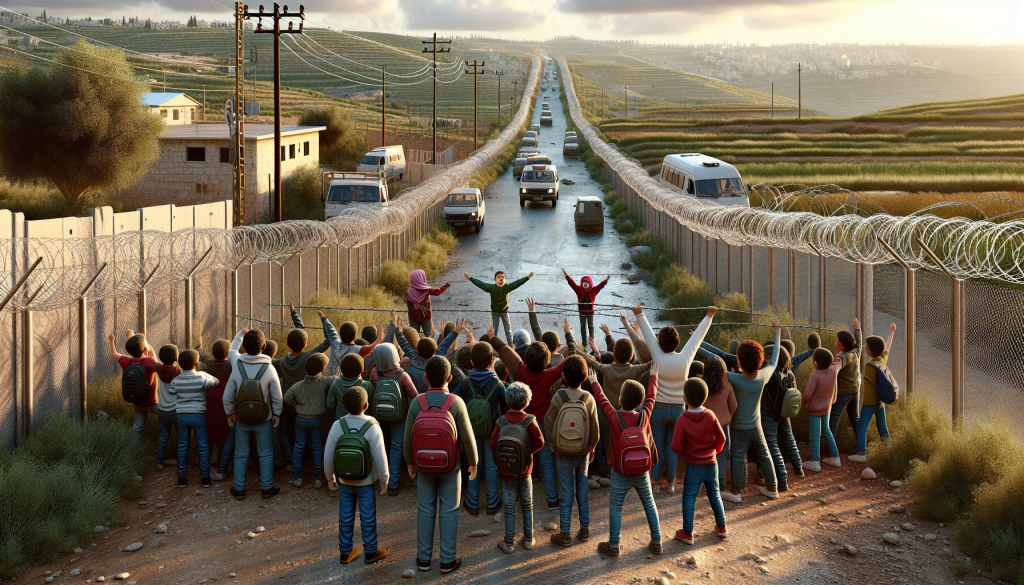
In the occupied West Bank village of Umm al-Khair, Palestinian children have been prevented from reaching their school due to a newly erected barbed wire fence installed by settlers. This physical barrier has sparked protests among the local youth, who have organized what they call a ‘Freedom School’ in response. The fence effectively blocks the traditional path students used to access their education, highlighting ongoing tensions in the region.
Settler actions such as these are part of a broader pattern of restrictions and land disputes in the West Bank, where Palestinian communities frequently face obstacles to basic services and mobility. Education, a fundamental right, becomes a focal point of resistance when access is denied. The children’s protests symbolize a larger struggle for freedom and rights amid the complex socio-political landscape of the Israeli-Palestinian conflict.
Notably, the establishment of the ‘Freedom School’ serves as both a form of peaceful protest and a statement of resilience by the Palestinian community. It draws international attention to the challenges faced by children in conflict zones and underscores the importance of safeguarding educational access. Meanwhile, the situation in Umm al-Khair reflects ongoing disputes over land and movement in the West Bank, with significant implications for peace and human rights efforts in the region.