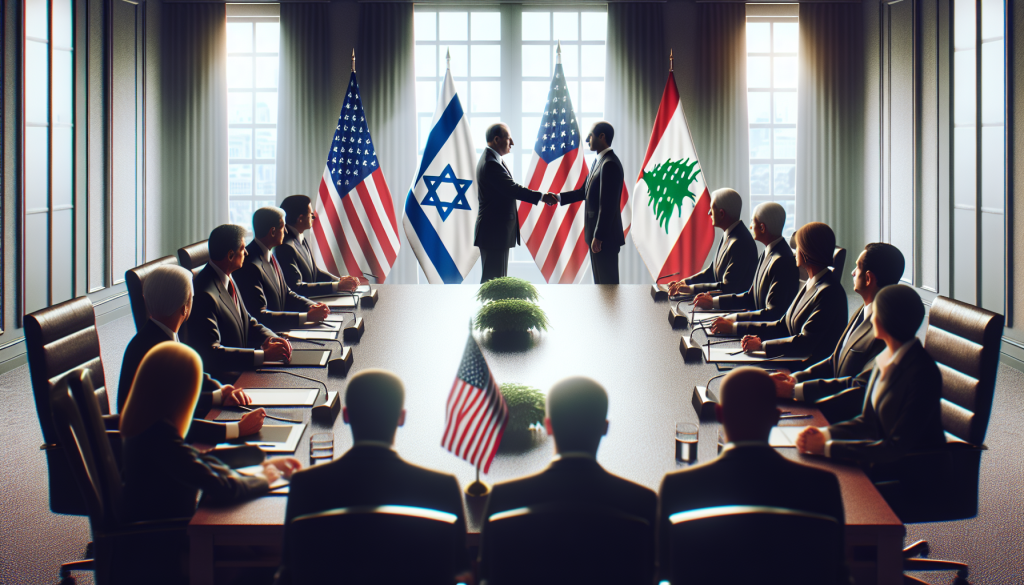

In a historic diplomatic breakthrough, Israel and Lebanon are scheduled to engage in their inaugural direct negotiations at the ambassadorial level in Washington next week. These discussions, facilitated by the United States, aim to establish a lasting ceasefire and tackle the growing security challenges along the Blue Line border.
This initiative represents a major shift from decades of indirect communication, reflecting a determined effort by the Trump administration to stabilize the Levant region independently of wider Middle Eastern conflicts.
Notably, senior Lebanese officials have revealed that the White House is deliberately pursuing a distinct negotiation track for the Israel-Lebanon dispute, separating it from the ongoing U.S.-led ceasefire talks with Iran. This approach, reportedly championed by President Trump, focuses on isolating specific security issues related to Hezbollah’s disarmament and the repatriation of displaced civilians to northern Israel. The goal is to prevent these localized tensions from hindering a broader regional agreement.
Meanwhile, Beirut has expressed a preference for a simultaneous announcement of a truce alongside the commencement of formal talks, mirroring the framework used in the current U.S.-Iran negotiations. However, Israeli officials remain steadfast that military actions will persist until a definitive security assurance is secured on the ground.