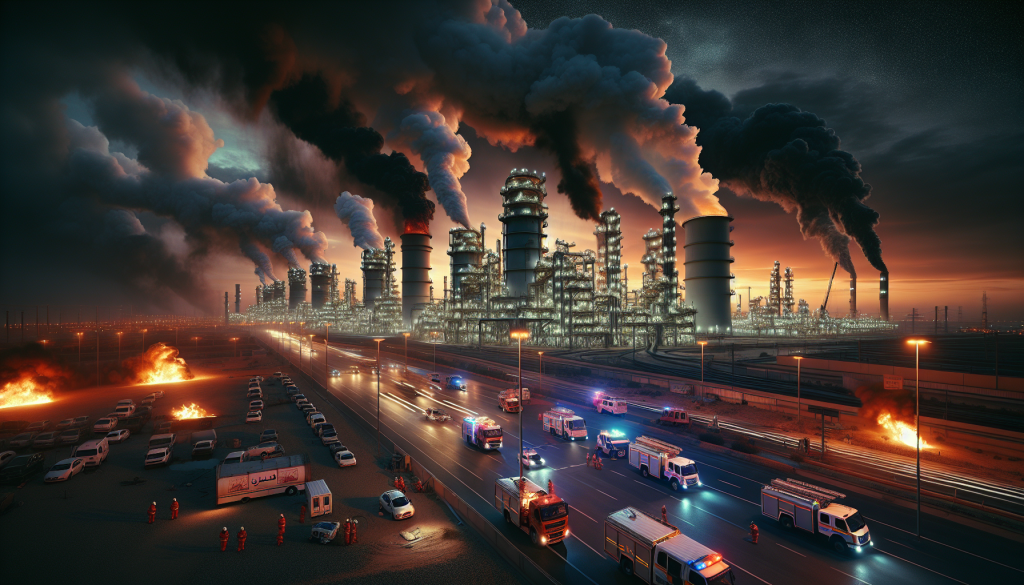

In a significant escalation of tensions in the Gulf region, Iran targeted Jubail Industrial City in Saudi Arabia’s Eastern Province with ballistic missiles and drones on April 7. The assault ignited extensive fires across one of the world’s largest industrial complexes.
Jubail is a vital hub for Saudi Arabia’s petrochemical and energy industries, covering over 1,000 square kilometers and housing more than 150 industrial plants. These facilities contribute approximately 7 to 12 percent of the nation’s GDP, highlighting the strategic importance of the site.
Footage from the area captured massive explosions and towering flames, illustrating the severity of the attack. Notably, the strikes occurred just hours before the deadline set by US President Donald Trump for Iran to reopen the Strait of Hormuz, a critical maritime passage essential for global oil transportation.
Iranian authorities have labeled Saudi Arabia and Israel as primary provocateurs in the ongoing Gulf conflict. The attack coincided with Iran’s formal rejection of Washington’s 15-point peace proposal, instead presenting a 10-point counteroffer. Tehran’s conditions include guarantees against future assaults, a permanent cessation of hostilities, Israeli withdrawal from Lebanon, full lifting of US sanctions, and reopening the Strait of Hormuz under a transit fee of $2 million per ship shared with Oman, with revenues allocated for regional reconstruction.
The incident and related diplomatic developments have already influenced international markets. Early Tuesday trading saw Bitcoin fall nearly 2 percent to about $68,500, while Brent crude oil prices surged above $111 per barrel. Meanwhile, gold and silver prices experienced slight declines, and US stock indices such as the Nasdaq, Dow Jones, and Russell 2000 recorded modest gains.
Experts emphasize that the upcoming hours will be critical in determining whether Iran’s assertive actions will lead to diplomatic progress or provoke the military responses warned of by President Trump.