

The four astronauts aboard NASA’s Artemis II mission entered the moon’s gravitational influence early Monday morning as they journeyed toward the lunar far side. This trajectory will soon position them as the farthest-traveling humans in history.
Since launching from Florida last week, the Artemis II crew has been orbiting in their Orion capsule. They are scheduled to awaken around 10:50 a.m. ET Monday for their sixth day in space. By 7:05 p.m., they will reach the mission’s peak distance from Earth, approximately 252,757 miles—surpassing the Apollo 13 crew’s 56-year-old record by 4,102 miles.
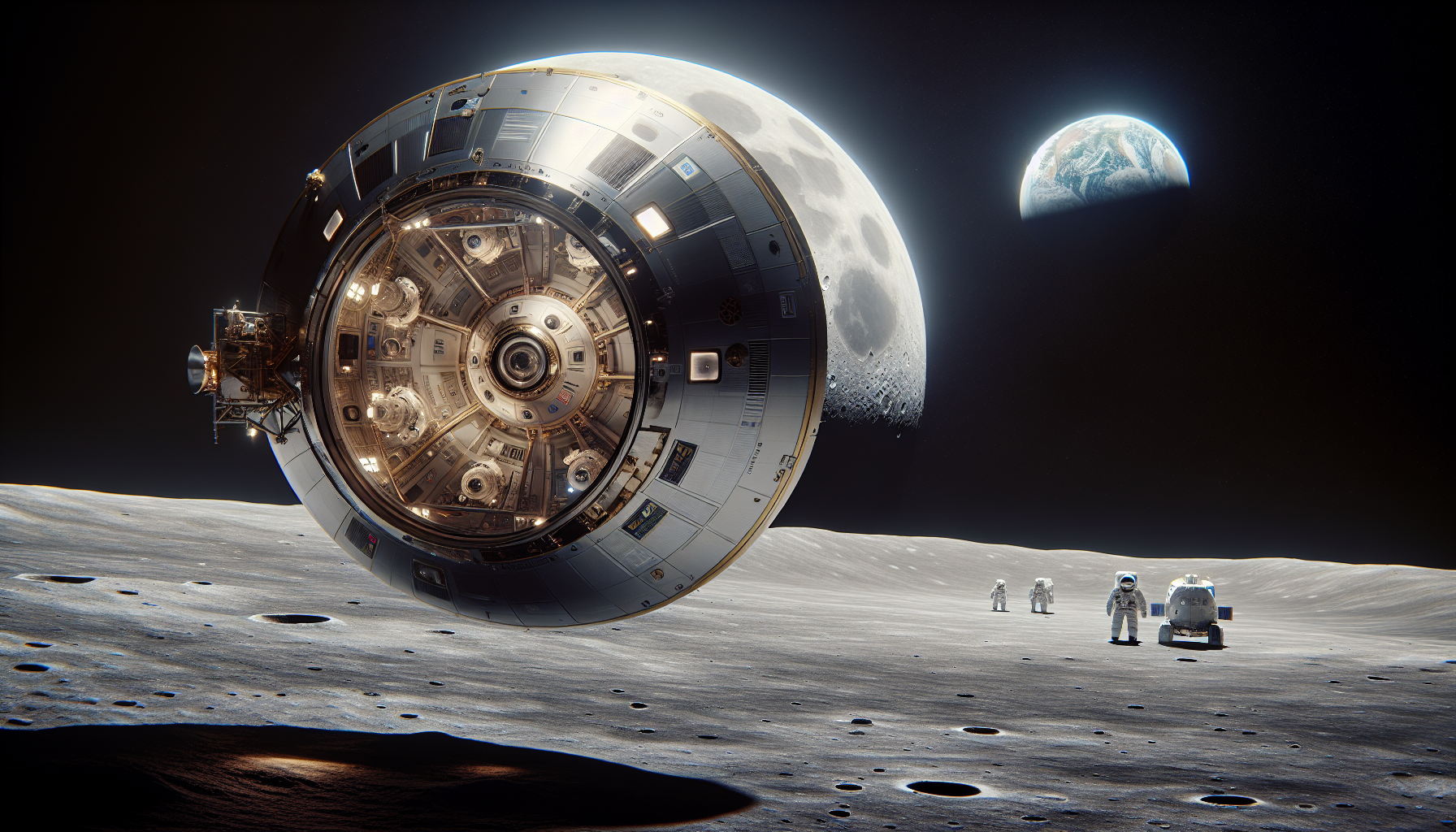
The astronauts—NASA’s Reid Wiseman, Victor Glover, Christina Koch, and Canadian astronaut Jeremy Hansen—will be orbiting about 4,000 miles above the moon’s shadowed far side. From this vantage point, they will witness the lunar surface eclipsing a small, basketball-sized Earth in the distant background.
This milestone marks a pivotal moment in the nearly 10-day Artemis II mission, which serves as the first crewed test flight of NASA’s Artemis program. This multibillion-dollar initiative aims to return humans to the moon’s surface by 2028, ahead of China, and to establish a sustainable U.S. presence there over the coming decade. The long-term goal includes building a lunar base to serve as a testing ground for future Mars missions.
The lunar flyby officially begins at 2:34 p.m. ET, plunging the crew into darkness and causing temporary communication blackouts as the moon blocks signals from NASA’s Deep Space Network. This global network of large radio antennas has been the primary means of communication with the astronauts.
During the approximately six-hour flyby, the crew will use professional cameras to capture detailed images through Orion’s window. They will photograph the silhouetted moon, capturing a rare scientific perspective of sunlight filtering around its edges, effectively creating a lunar eclipse. Additionally, the astronauts will have the opportunity to document a unique celestial event: Earth rising from the lunar horizon as their capsule emerges from behind the moon, a striking reversal of the familiar moonrise seen from Earth.
Meanwhile, a team of lunar scientists at NASA’s Johnson Space Center in Houston will monitor the mission from the Science Evaluation Room. These experts will take notes as the astronauts, trained extensively on lunar phenomena, provide real-time descriptions of their extraordinary views.
