

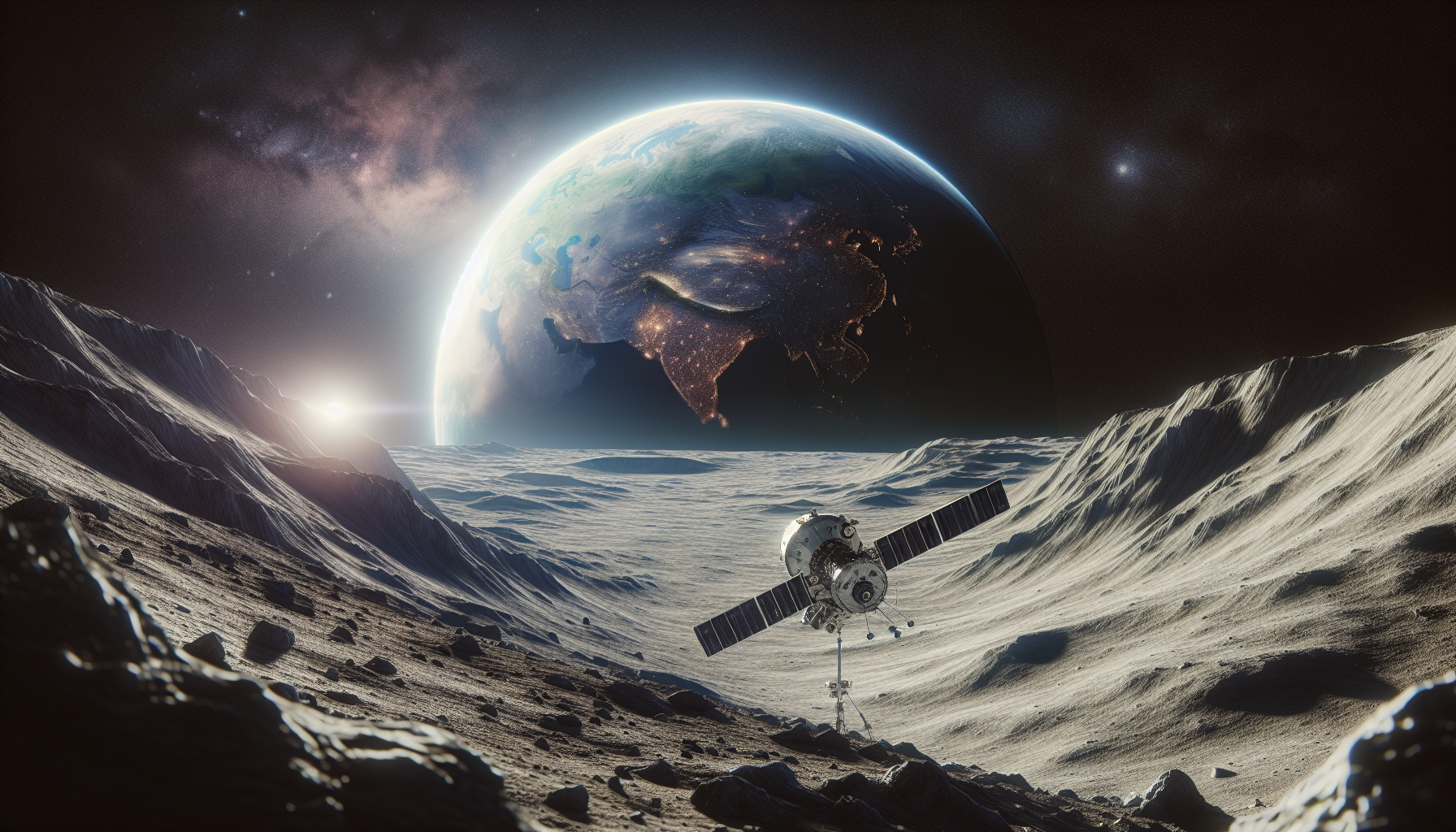
The Artemis II mission is making its final significant maneuver as it approaches the far side of the Moon, marking a pivotal moment in human space exploration. This mission represents the first time astronauts have left Earth’s orbit since the Apollo missions concluded in 1972, signaling a renewed commitment to deep space travel. By venturing beyond the familiar confines of Earth’s gravitational influence, Artemis II aims to pave the way for future lunar and potentially Martian expeditions.
Notably, the mission’s trajectory will take the crew around the Moon’s far side, a region never before visited by humans. This area presents unique communication and navigational challenges due to its position opposite Earth, making Artemis II a critical test of new technologies and operational procedures. Success here could enhance our understanding of lunar geology and provide insights essential for establishing a sustainable human presence on the Moon.
In a significant development for space exploration, Artemis II’s progress underscores international and scientific ambitions to extend humanity’s reach beyond low Earth orbit. The mission’s achievements will likely influence future policy and funding decisions related to space programs worldwide. As Artemis II closes in on this historic milestone, it rekindles the spirit of discovery that defined the Apollo era while charting a course for the next generation of explorers.
