

Hopes for a peaceful resolution between the United States and Iran diminished sharply on Tuesday after US President Donald Trump dismissed Tehran’s latest response to Washington’s ceasefire proposal as unacceptable. Iran, meanwhile, reiterated its demands, including an end to the US naval blockade and formal recognition of its sovereignty over the Strait of Hormuz.
Addressing reporters, Trump described the ceasefire announced on April 7 as being “on life support” following his review of Iran’s counteroffer. He criticized the response, calling it the “weakest” and refusing to fully read the document, warning that Tehran’s stance threatened the future of the truce.
This exchange highlighted escalating tensions between the two nations as ongoing conflict and economic sanctions continue to disrupt global energy markets and raise concerns about a broader regional war. Iran insists on halting military operations across the Middle East, including Israeli actions against Hezbollah in Lebanon, which is supported by Tehran. Additionally, Iran demands compensation for war damages, lifting of the US blockade, and acknowledgment of its control over the strategic Strait of Hormuz.
The US had initially proposed a ceasefire to pave the way for negotiations on contentious issues such as Iran’s nuclear program. Meanwhile, the Pentagon revealed that the cost of the conflict has risen to $29 billion, an increase of $4 billion from last month’s estimates.
The diplomatic impasse has driven global oil prices sharply upward, with Brent crude approaching $108 per barrel on Tuesday. Market attention remains fixed on the Strait of Hormuz, a narrow passage through which nearly 20% of the world’s oil and liquefied natural gas shipments passed before hostilities began on February 28.
Shipping activity in the strait has slowed considerably amid fears of further escalation. Data from shipping trackers Kpler and LSEG indicated that only three crude tankers exited the waterway last week, with some vessels reportedly turning off tracking systems to avoid potential attacks.
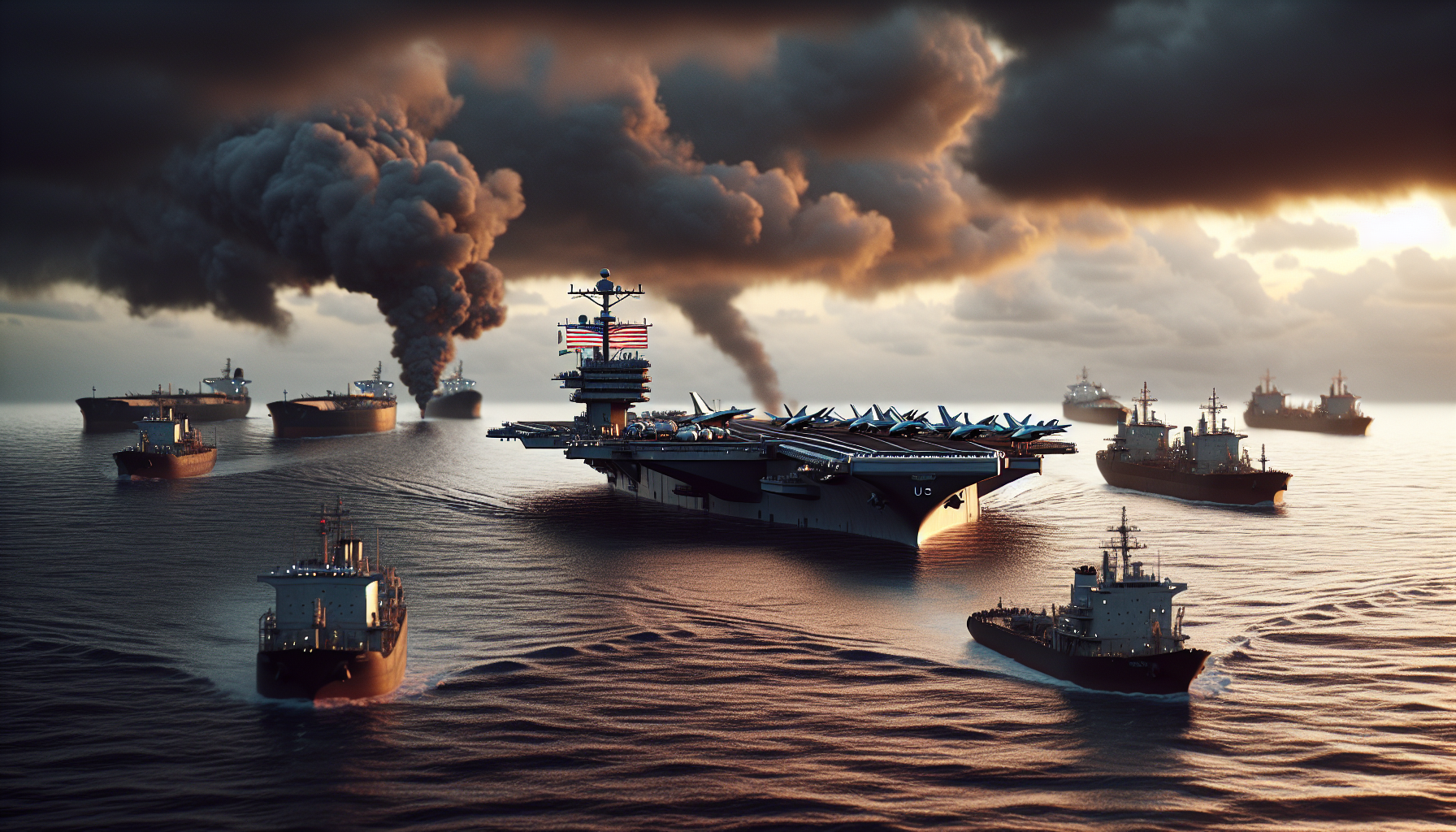
The US Central Command confirmed that the aircraft carrier Abraham Lincoln remains deployed in the Arabian Sea to enforce the naval blockade against Iran. The carrier group has redirected 65 commercial vessels and disabled four others, military sources.
Regional tensions have spilled over into neighboring Gulf countries. Kuwait announced the arrest of four alleged infiltrators linked to Iran’s Revolutionary Guards who attempted to enter by sea. Iran has yet to respond to these allegations.
Iranian officials have signaled defiance despite mounting pressure. Mohammad Akbarzadeh, deputy political director of the Islamic Revolutionary Guard Corps Navy, stated that Iran has expanded its operational definition of the Strait of Hormuz under a new military strategy, extending the zone from the eastern coastal city of Jask to Siri Island in the west.
In a further escalation, Ebrahim Rezaei, spokesperson for the parliamentary national security commission, warned that Iran could enrich uranium to 90 percent purity—considered weapons-grade—if attacked again. State television broadcast footage of Revolutionary Guards conducting military drills in Tehran focused on preparing to confront adversaries.
On Monday, the US imposed new sanctions targeting individuals and companies accused of aiding Iran in exporting oil to China. These measures aim to restrict funding for Tehran’s military and nuclear programs while cautioning financial institutions against evading sanctions.
President Trump is scheduled to arrive in Beijing on Wednesday, where Iran is expected to be a key topic during talks with Chinese President Xi Jinping. The worsening crisis has also intensified domestic political pressure on the White House as fuel prices rise ahead of congressional elections later this year.
A recent poll showed that two-thirds of Americans believe Trump has not clearly explained the reasons for US involvement in the conflict. The survey found that nearly all Democrats and one-third of Republicans share this view. In response to rising fuel costs, Trump announced a temporary suspension of the federal gasoline tax, promising that prices would fall sharply once the conflict ends.
International concern is growing. In Doha, Turkish Foreign Minister Hakan Fidan called for efforts to reopen the Strait of Hormuz and cautioned against weaponizing this vital shipping route during the conflict. Washington has struggled to secure broader international support for military operations in the Gulf, with NATO allies reportedly hesitant to participate without a comprehensive peace agreement and an internationally mandated mission.
The US State Department noted that Secretary of State Marco Rubio held separate discussions with British and Australian counterparts about efforts to restore freedom of navigation in the Strait of Hormuz.
