

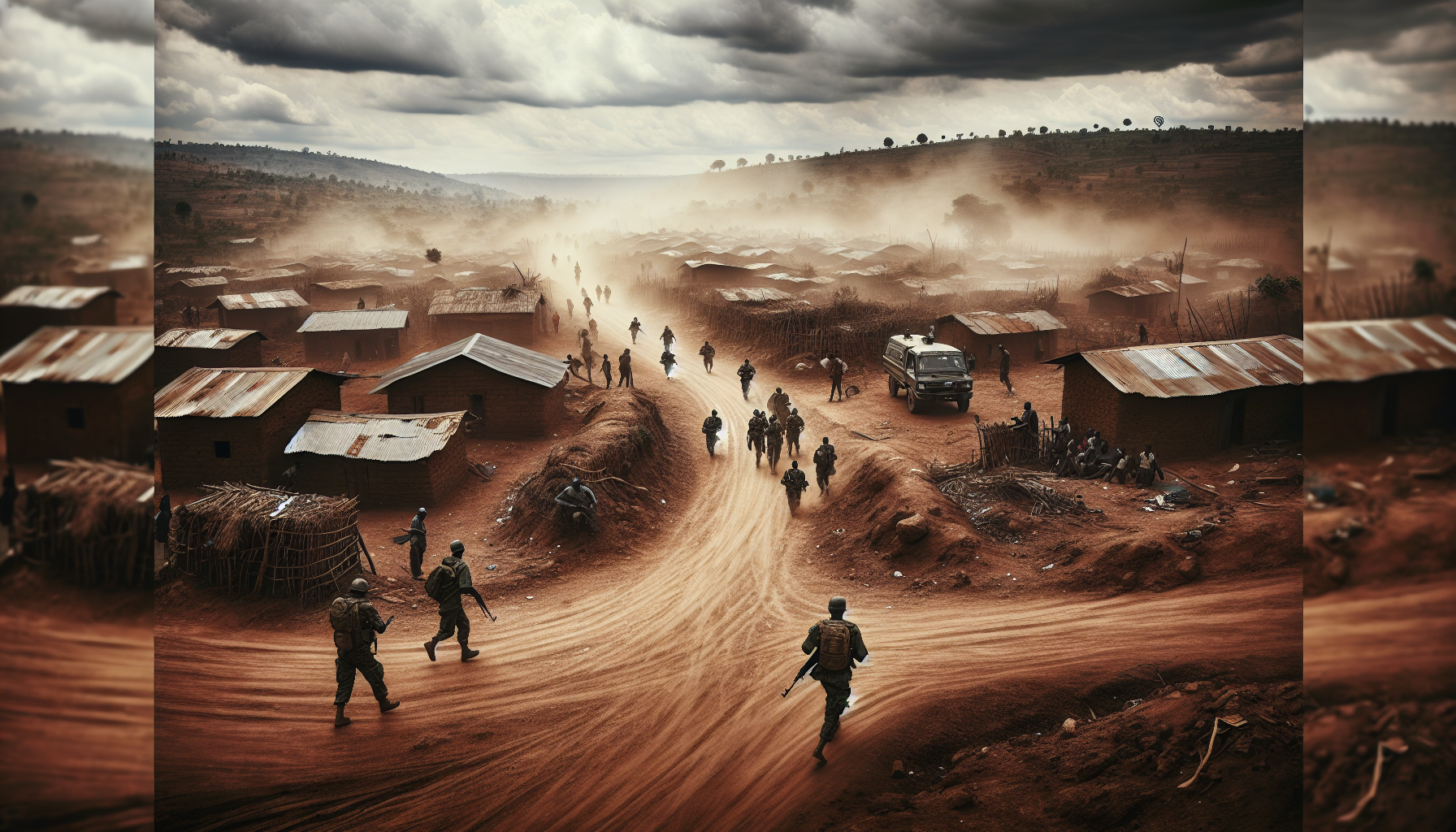
In the northeastern region of the Democratic Republic of Congo, a surge in violent attacks by lesser-known armed factions has alarmed both local communities and international observers. These groups, often overshadowed by larger militias, have intensified their operations, disrupting fragile peace and security in an area already plagued by conflict. The recent violence complicates ongoing efforts to establish a lasting truce among warring parties in the region.
Historically, northeastern DR Congo has been a hotspot for armed conflict due to its complex ethnic dynamics and competition over natural resources. The presence of numerous small militias has made peace negotiations challenging, as these groups often operate independently and resist disarmament. The recent escalation underscores the difficulty of achieving comprehensive peace without addressing the root causes that fuel these localized insurgencies.
In a significant development, the renewed attacks threaten to derail diplomatic initiatives aimed at stabilizing the region, which is crucial for both national security and humanitarian relief efforts. The instability also risks exacerbating displacement and suffering among civilians caught in the crossfire. Meanwhile, regional and international actors are urged to intensify support for conflict resolution mechanisms to prevent further deterioration of the security situation in northeastern DR Congo.
