

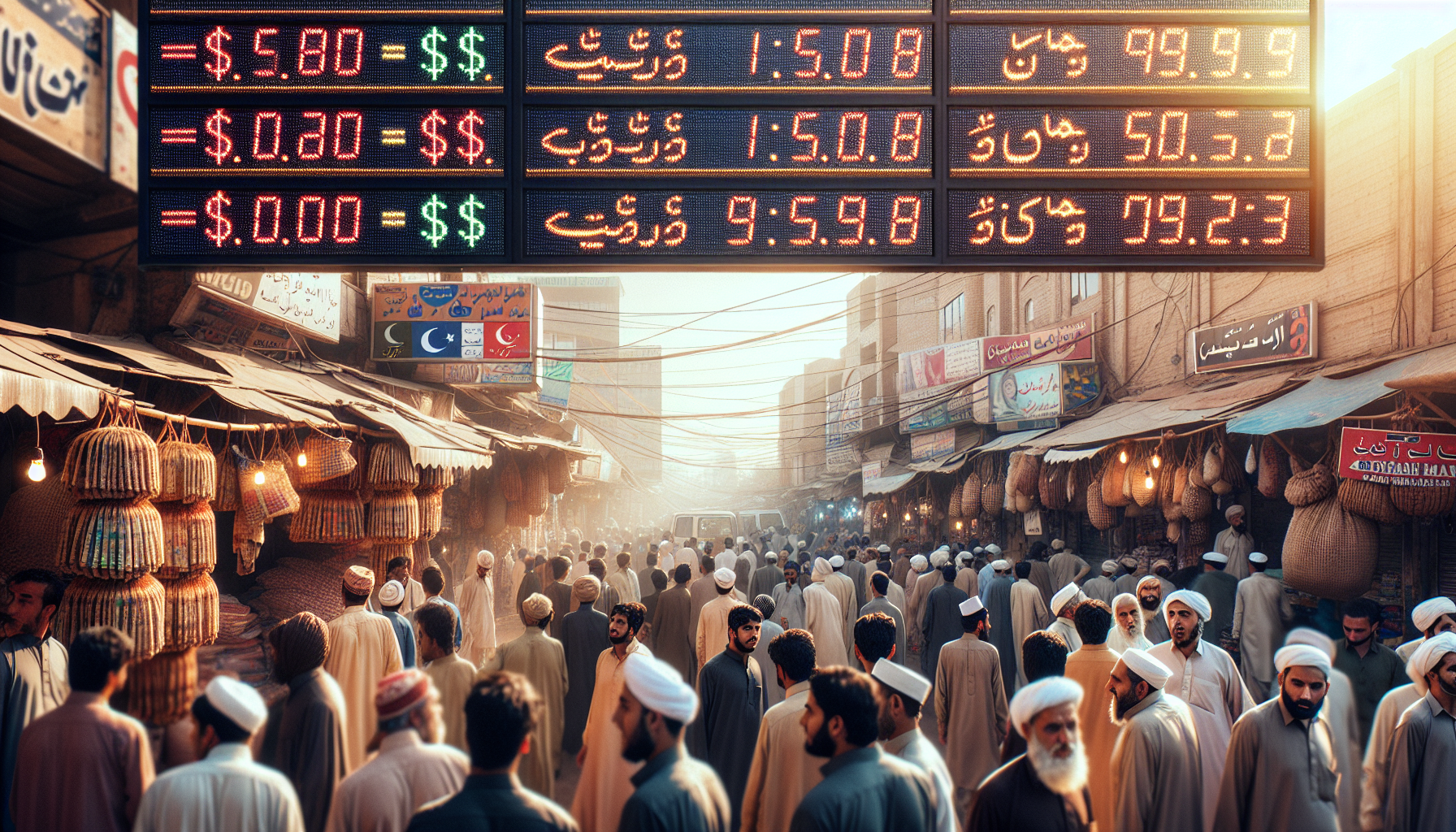
On May 7, 2026, the Iranian Rial’s exchange rate in Pakistan was closely monitored by traders and businesses engaged in cross-border commerce. The currency’s valuation plays a crucial role in facilitating trade between the two neighboring countries, influencing import-export dynamics and financial transactions. Fluctuations in the Rial’s rate can affect the cost of goods and services, impacting economic activities on both sides.
Meanwhile, the exchange rate trends also hold significance for the Pakistani diaspora and businesses involved in remittances and investments linked to Iran. Given the geopolitical and economic complexities in the region, currency stability is vital for maintaining steady bilateral economic relations. Market participants often track these rates to make informed decisions regarding currency exchange and financial planning.
In a broader context, the Iranian Rial’s performance against the Pakistani Rupee reflects wider economic conditions, including inflation, sanctions, and trade policies. Understanding these currency movements helps stakeholders anticipate potential challenges and opportunities in regional trade. The exchange rate on this date serves as a snapshot of ongoing economic interactions between Pakistan and Iran amid evolving global economic scenarios.
