

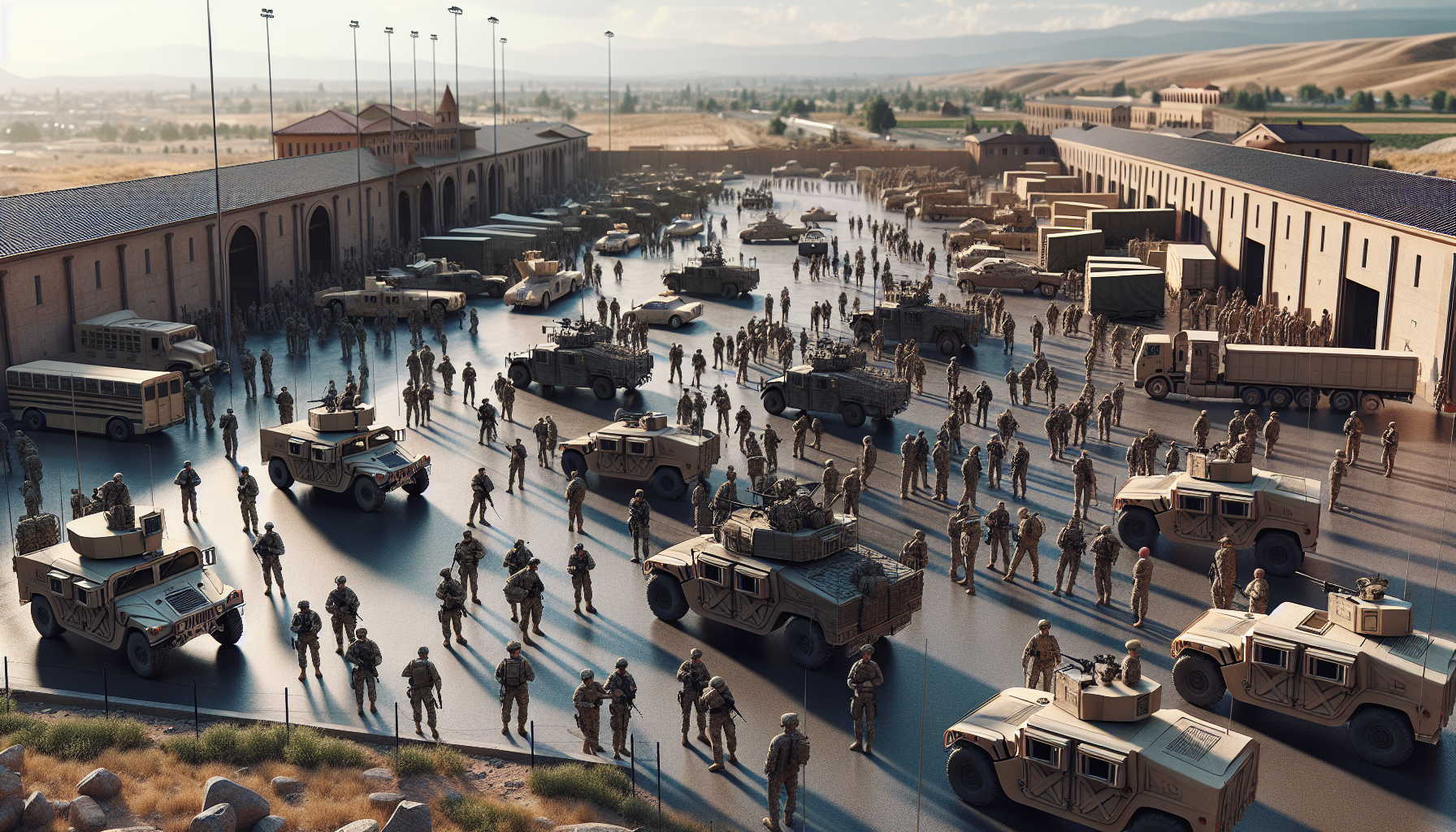
The United States has announced the sudden removal of 5,000 American troops stationed in Germany, a move characterized by the Trump administration as a punitive response. This decision reportedly arises from US dissatisfaction with Germany’s criticism of the war in Iran and perceived inadequate military support for American operations.
Despite the intended impact of this announcement, German leaders, security experts, and the public have expressed minimal worry about losing a fraction of the 35,000 US forces currently based in the country.
Regarding national security, German officials remain confident that the troop reduction will not jeopardize their safety. Robert Crumbach, Brandenburg’s infrastructure minister, downplayed the strategic consequences, stating that having 5,000 fewer American soldiers stationed in Germany makes no meaningful difference. He added that while a complete withdrawal would be a serious matter requiring careful planning, he is not fundamentally opposed to such a scenario.
Economic concerns, rather than security fears, dominate the local discourse. Communities reliant on the economic benefits generated by the American military presence worry about the financial repercussions of losing thousands of personnel.
For decades, US troops in Germany have transitioned from an occupying force after World War II to a Cold War deterrent against Soviet threats, and more recently, a logistical support hub for American military campaigns abroad. This longstanding presence has deeply influenced local economies and security perceptions.
