

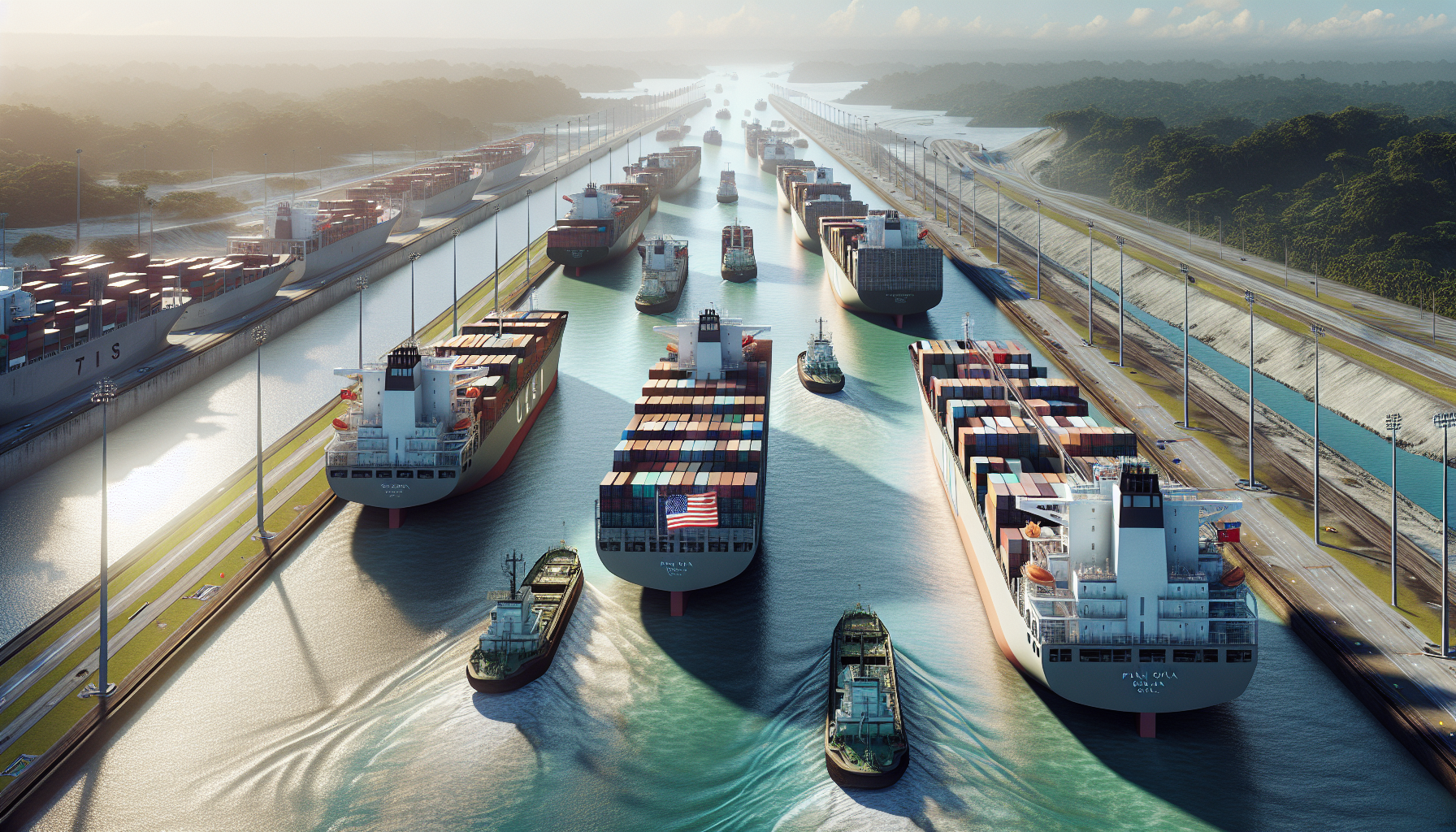
The Panama Canal, a vital artery for international maritime trade, has become a focal point in the escalating rivalry between the United States and China. This strategic waterway connects the Atlantic and Pacific Oceans, facilitating the transit of nearly 6% of global trade annually. Both powers are increasing their presence and influence in the region, signaling a broader contest for dominance in global shipping and logistics.
In a significant development, the US is reinforcing its alliances and military presence in the Americas to counterbalance China’s expanding economic and infrastructural investments around the canal. Meanwhile, China has been actively pursuing partnerships and infrastructure projects in Panama and neighboring countries, aiming to secure a foothold in this crucial maritime corridor. This competition reflects broader geopolitical tensions reminiscent of the ‘Hormuz effect,’ where control over key chokepoints can impact global trade and security.
The intensifying US-China competition over the Panama Canal underscores the strategic importance of maritime routes in global power dynamics. Control or influence over such chokepoints can affect international trade flows, energy supplies, and military logistics. As both nations ramp up their efforts, the situation could reshape alliances and economic partnerships in the Western Hemisphere, with significant implications for global commerce and geopolitical stability.
