

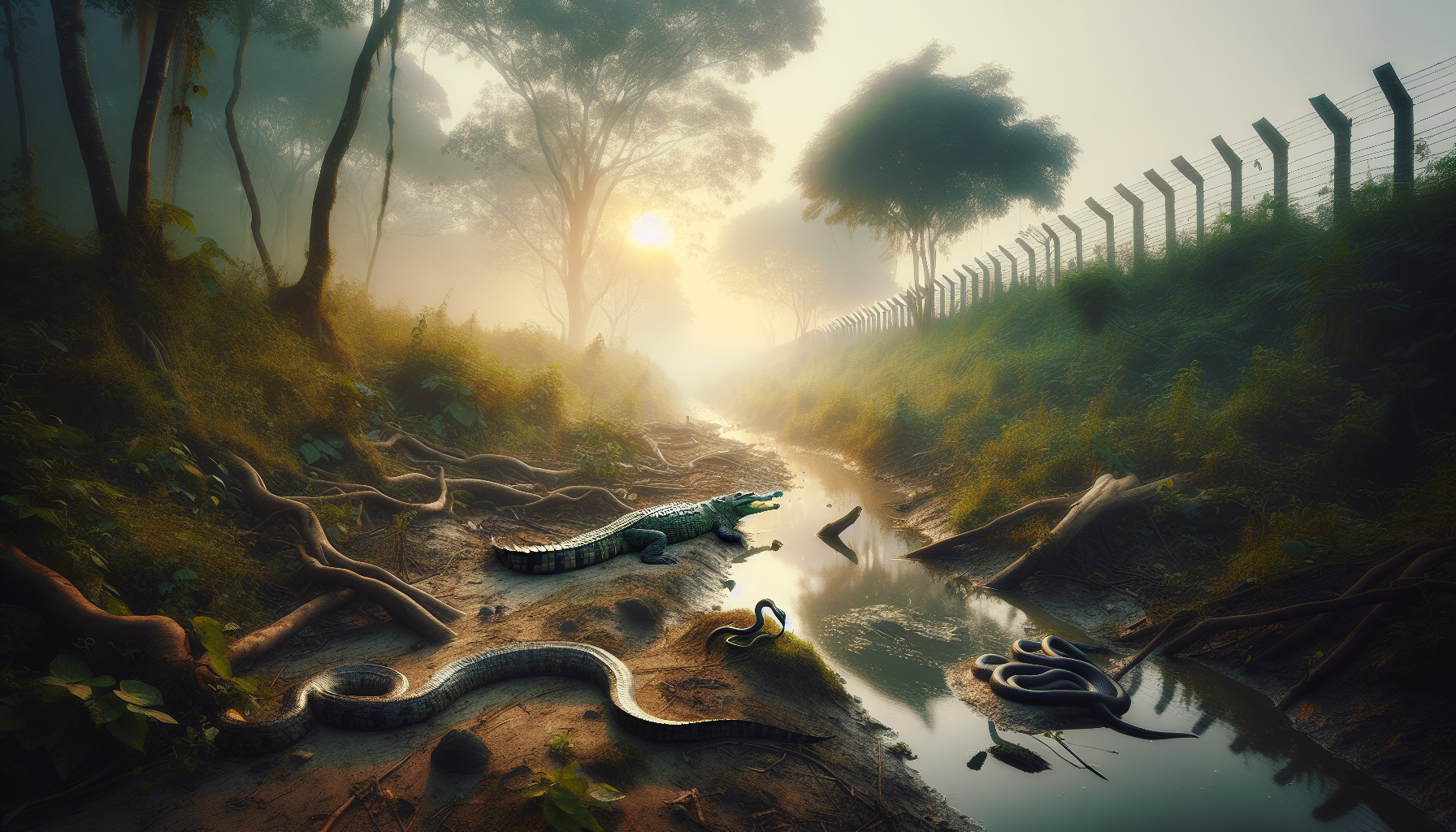
In a unique and controversial approach to border security, India has begun using venomous snakes and crocodiles to fortify its boundary with Bangladesh. This strategy aims to create a natural deterrent against illegal crossings and smuggling activities, reflecting the country’s urgent desire to tighten control over this porous frontier. The border between India and Bangladesh spans over 4,000 kilometers, making traditional surveillance and fencing efforts challenging and costly.
Historically, the India-Bangladesh border has been a hotspot for cross-border crime, including human trafficking and smuggling of goods. Conventional fencing and patrols have not fully prevented unauthorized movement, prompting authorities to explore alternative methods. The use of dangerous wildlife as a living barrier is intended to discourage trespassers by exploiting the natural fear of these creatures, although it raises ethical and environmental concerns among activists and experts.
In a significant development, this unconventional tactic underscores the lengths to which India is willing to go to secure its borders amid ongoing geopolitical and security challenges. Meanwhile, the move has sparked debate over the humanitarian implications and the potential impact on local ecosystems. The effectiveness and long-term consequences of deploying crocodiles and snakes as border guardians remain to be seen, but the initiative highlights the complexity of managing one of South Asia’s most sensitive borders.
