

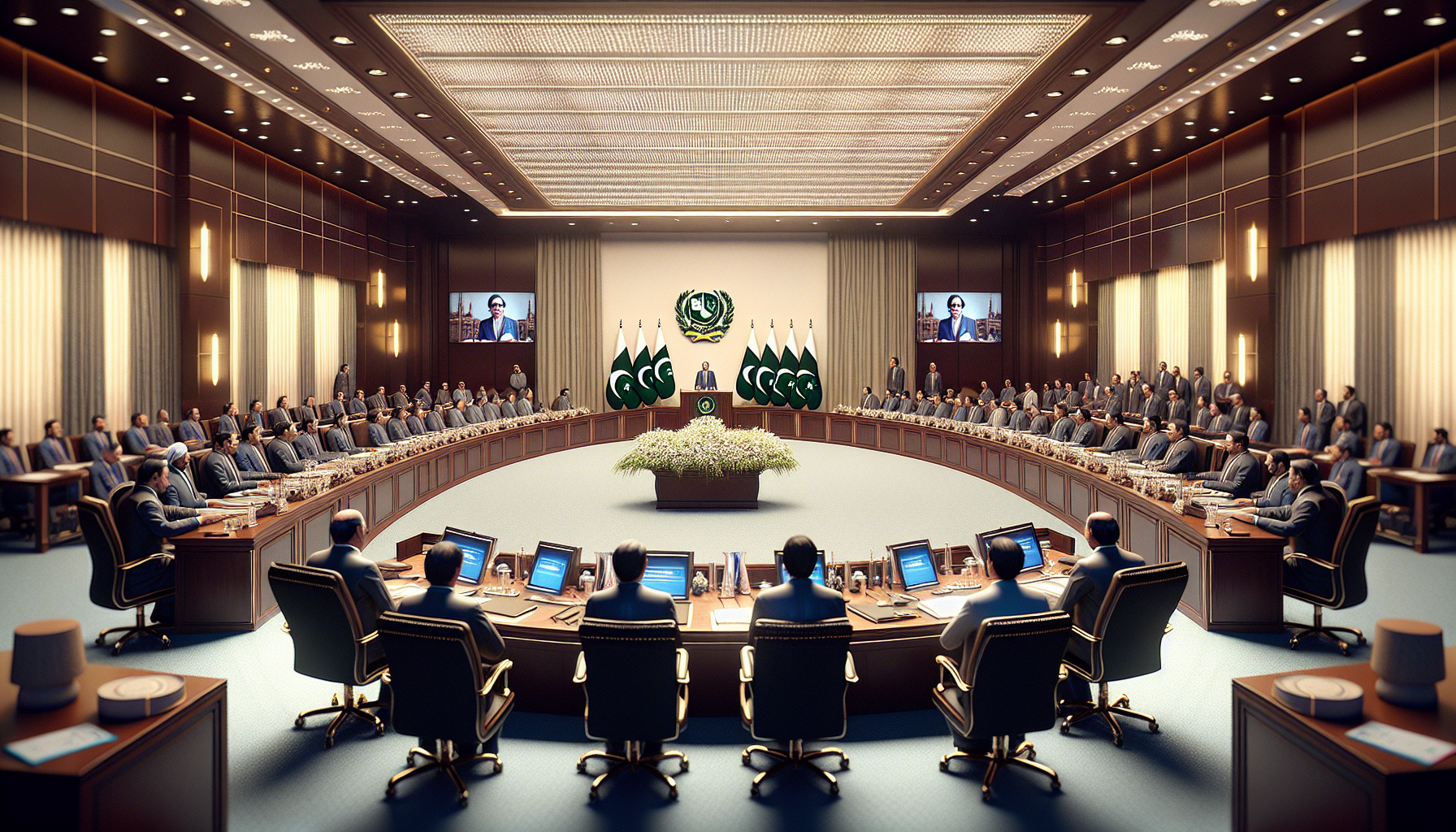
Prime Minister Shehbaz Sharif informed the federal cabinet about Pakistan’s significant diplomatic involvement in facilitating dialogue between Iran and the United States. He cautioned that the ongoing tensions have notably driven up global oil prices, placing additional strain on Pakistan’s economy.
During his address, the prime minister disclosed that negotiations between the two nations commenced in Islamabad on April 11, featuring an extensive 21-hour session. He acknowledged the contributions of Deputy Prime Minister Ishaq Dar and Chief of Army Staff Asim Munir in supporting the peace efforts, which helped maintain a ceasefire.
Sharif referred to Iran as a “brotherly neighboring country” and mentioned that Iranian Foreign Minister Abbas Araqchi visited Pakistan for in-depth discussions. Araqchi also engaged with other nations, including Oman and Russia. The prime minister noted that Iran plans to respond to ongoing negotiations after consulting its leadership.
He highlighted the economic repercussions of the conflict, particularly the surge in global oil prices. Pakistan’s weekly oil import bill has escalated from roughly $300 million before the conflict to about $800 million, intensifying challenges to economic stability.
To address these issues, a task force is monitoring developments daily, and the government is collaborating with provincial authorities on measures such as public transport subsidies to mitigate the impact. Sharif commended Petroleum Minister Ali Pervaiz Malik for his effective management during this period.
Additionally, the prime minister noted that Pakistan has repaid $3.5 billion in external loans and expressed gratitude to the Saudi leadership for their ongoing support amid economic difficulties. He stressed the importance of national unity and persistent efforts, reaffirming Pakistan’s commitment to diplomatic initiatives aimed at regional peace.
The cabinet meeting also included a review of progress on the privatisation of Pakistan International Airlines (PIA), reflecting the government’s broader economic agenda.
