

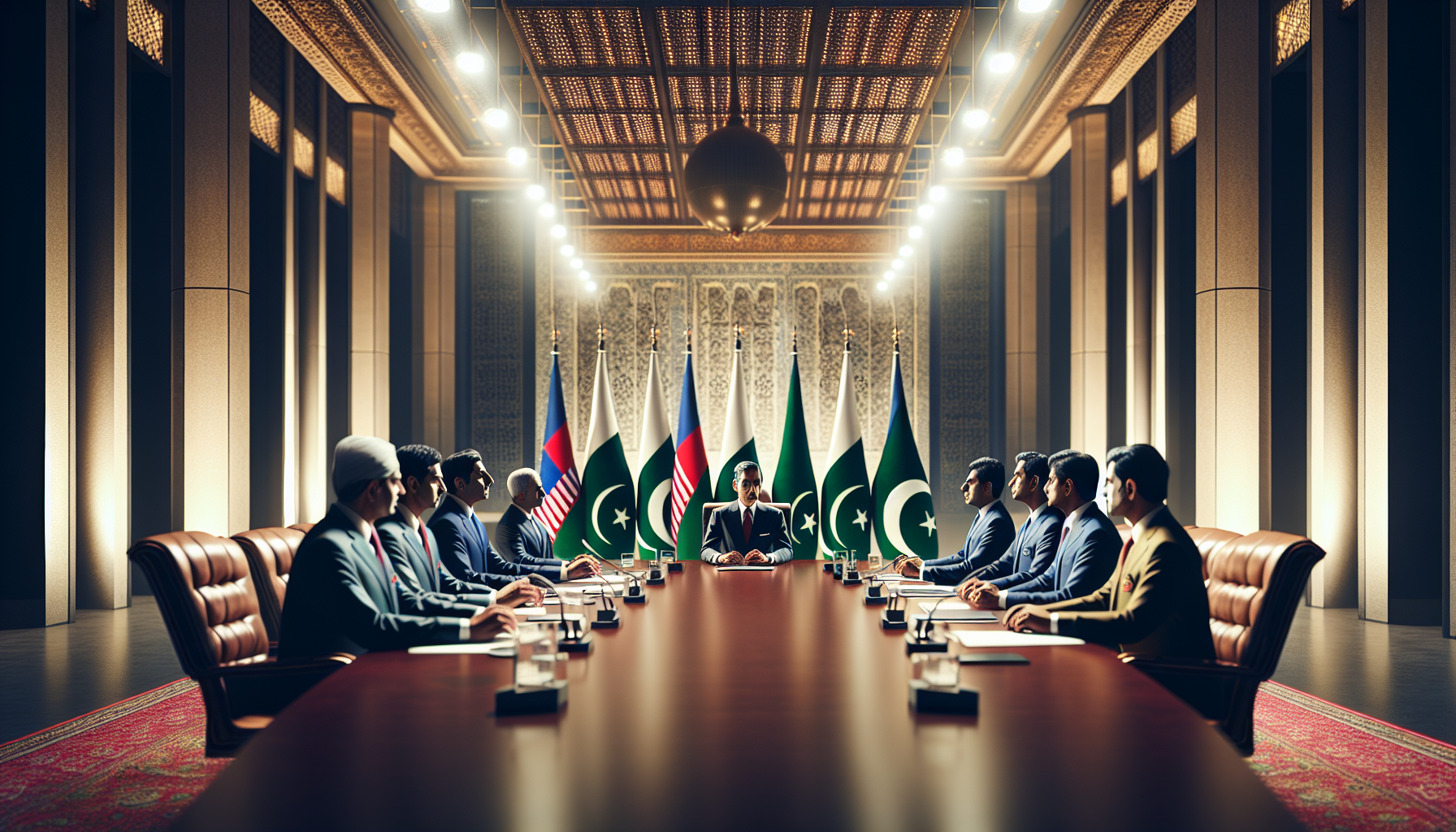
Iran’s foreign ministry firmly rejected on Saturday any arrangements for a meeting with the United States in Pakistan, despite ongoing high-level discussions between Iranian and Pakistani officials in Islamabad and indications of possible diplomatic engagement from Washington.
Foreign ministry spokesperson Esmaeil Baghaei, who accompanied Iranian Foreign Minister Abbas Araghchi, clarified that no meeting with the US was planned during their visit. The delegation’s agenda focuses on talks with Pakistan’s leadership concerning bilateral relations, regional developments, and Islamabad’s mediation initiatives.
Baghaei highlighted that the discussions will address what Iran terms “aggressive measures imposed by the United States” and efforts aimed at restoring stability in the region. He also noted that the Iranian delegation will update Pakistan on Iran’s positions and assessments.
These statements followed remarks from a White House spokesperson, Karoline Leavitt, who indicated that Iran had expressed interest in direct engagement and requested a face-to-face meeting with the US. Leavitt confirmed that US envoys Steve Witkoff and Jared Kushner are scheduled to travel to Pakistan for talks.
During his Islamabad visit, Araghchi met with Pakistan’s army chief, Asim Munir, and Foreign Minister Ishaq Dar, the Iranian embassy. He is also set to meet Prime Minister Shehbaz Sharif later on Saturday, with senior political and military officials expected to participate. The discussions are anticipated to focus on bilateral cooperation, regional security, and diplomatic coordination.
Following Pakistan, Iranian officials plan to continue consultations in Muscat and Moscow. Iranian authorities indicated that outcomes from talks with Pakistan might be shared with US officials, though the timing of any direct negotiations between Tehran and Washington remains uncertain.
Leavitt added that US Vice President JD Vance will not participate in the initial round of talks but remains involved alongside Secretary of State Marco Rubio. While Vance will stay in the United States for now, he may travel to Pakistan if necessary. She also mentioned that Washington has observed “positive signals” from Iran recently, suggesting a readiness for direct dialogue, and described the Israel-Lebanon ceasefire as a notable diplomatic achievement.
After concluding his engagements in Islamabad, Araghchi is expected to proceed to Muscat and Moscow for further diplomatic discussions.
Meanwhile, tensions in the Gulf escalated as Iran’s Islamic Revolutionary Guard Corps (IRGC) announced the seizure of two vessels passing through the Strait of Hormuz. The IRGC accused the ships of violating maritime regulations and collaborating with the US military. Reported by Tasnim news agency, the vessels had been monitored due to multiple trips to US ports over six months, raising suspicions. The seizure occurred after the ships ignored several warnings and engaged in actions deemed threatening to regional security.
In a related development, the European Union expressed openness to easing sanctions on Iran if a comprehensive agreement is reached with the United States. German Chancellor Friedrich Merz conveyed to European leaders that sanction relief could facilitate a durable ceasefire. These remarks came during a summit in Cyprus attended by leaders from Egypt, Syria, and Lebanon, where regional security and Iran were key topics.
European Council President Antonio Costa urged the immediate reopening of the Strait of Hormuz without restrictions or tariffs, emphasizing its critical role in global energy supplies. EU foreign policy chief Kaja Kallas warned that failure to secure a strong agreement akin to the 2015 Iran nuclear deal could lead to a more dangerous situation.
