



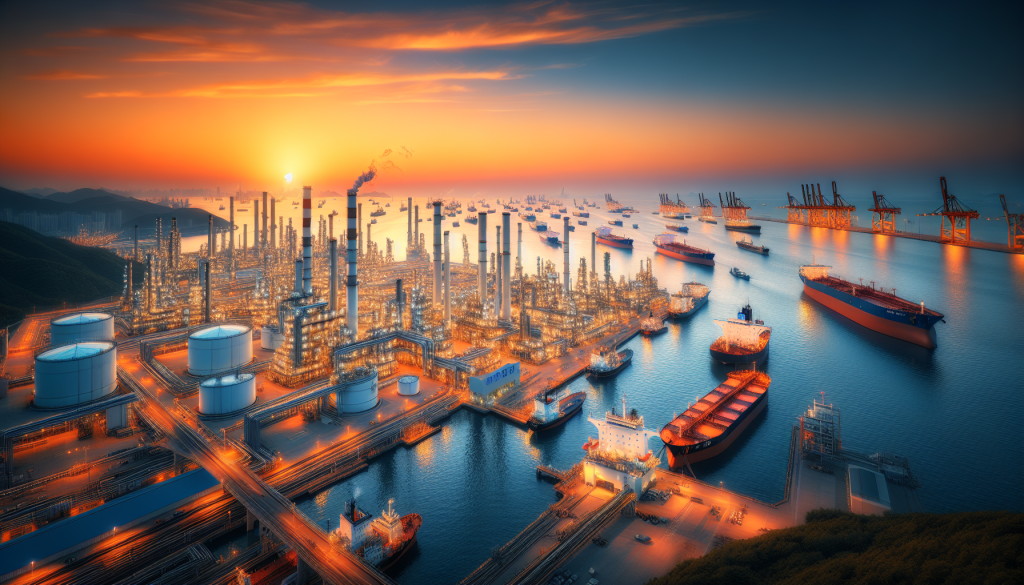
The United States has intensified its economic campaign against Iran by imposing extensive sanctions on a prominent Chinese oil refinery and numerous shipping companies. Announced on Friday, the sanctions focus on Hengli Petrochemical’s large-scale refinery in Dalian, along with around 40 shipping firms and tankers accused of transporting Iranian crude oil.
This action forms part of Washington’s ongoing “maximum pressure” strategy designed to cut off financial resources supporting the Iranian military. It specifically targets the so-called “shadow fleet” that facilitates Iran’s evasion of international trade restrictions.
Notably, the inclusion of Hengli Petrochemical’s refinery marks a significant escalation. As one of China’s largest independent refineries, it processes approximately 400,000 barrels of oil daily. US Treasury officials claim the facility has consistently imported Iranian oil since 2023, generating hundreds of millions in revenue for Tehran.
Historically, China has relied on smaller “teapot” refineries to handle Iranian crude, often disguised as shipments from other countries such as Malaysia. Targeting a major industrial hub like Dalian signals a strategic shift in US policy. By applying secondary sanctions, the US administration compels global companies to choose between trading with Iran or maintaining access to the US financial system.
Meanwhile, these financial sanctions coincide with a tightening physical blockade in the region. Earlier this month, a US-led maritime blockade was enforced on the Strait of Hormuz, a critical chokepoint for global oil shipments.
This combined approach of maritime interdiction and financial restrictions has disrupted global energy markets, driving up oil and gas prices. Treasury Secretary Scott Bessent defended the measures as essential to dismantling the network of intermediaries facilitating Iran’s oil exports, despite the resulting market instability.
In response, Beijing has expressed strong disapproval, with embassy representatives in Washington accusing the US of destabilizing the “international trade order.” However, market analysts believe that major Chinese banks may still comply with the sanctions to safeguard their exposure to the US dollar.

Leave an opinion