

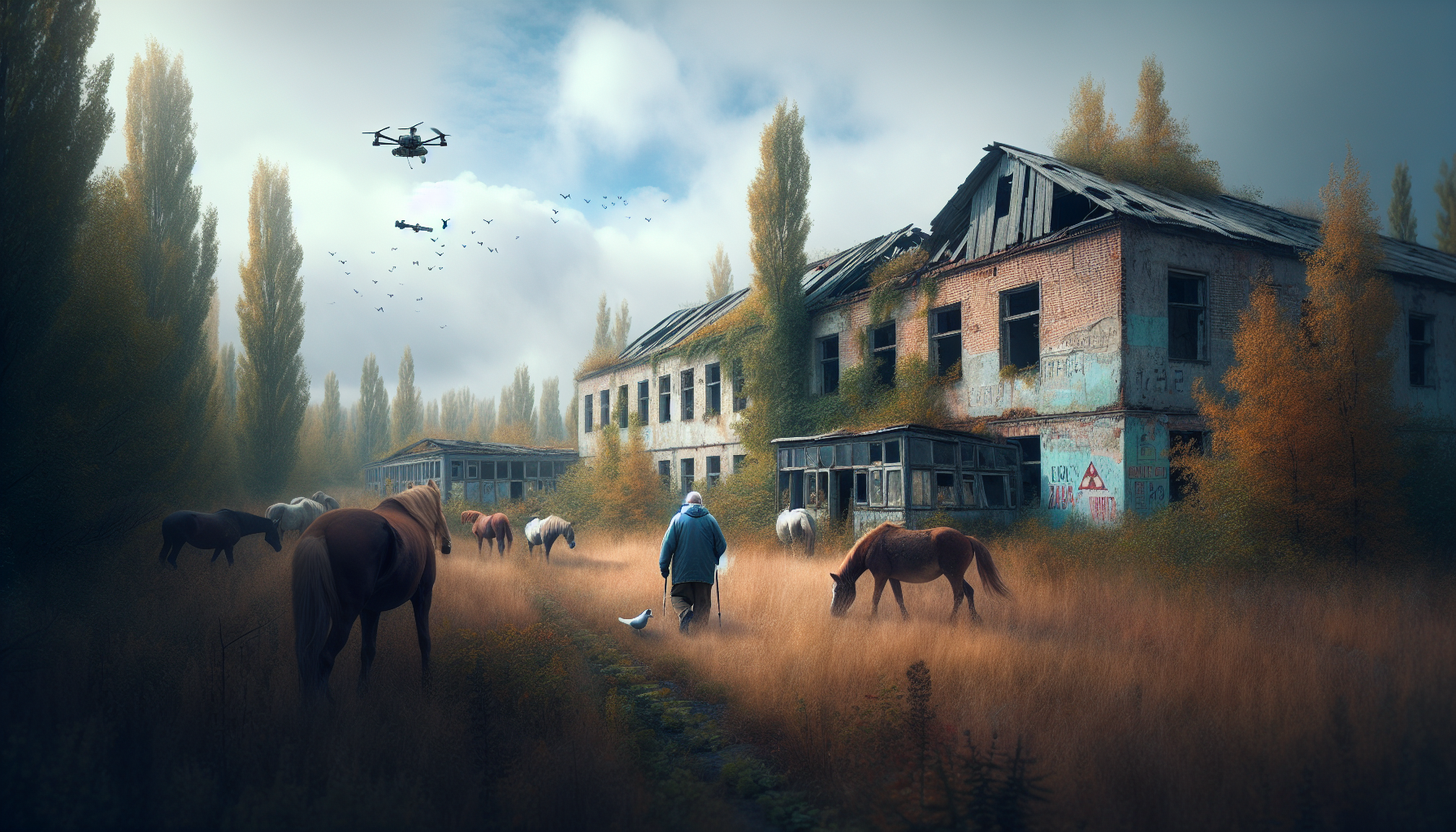
Four decades after the catastrophic nuclear accident at Chornobyl, the area remains a complex environment where life persists despite lingering radiation. Survivors of the disaster, including elderly returnees who chose to live in the exclusion zone, continue to adapt to the unique challenges posed by contamination. Their experiences offer valuable insights into human resilience and the long-term effects of nuclear fallout on communities.
Meanwhile, wildlife researchers have documented the surprising survival and adaptation of animals such as horses within the contaminated zone. These species have become emblematic of nature’s ability to reclaim and thrive in areas abandoned by humans. However, the region faces new threats, including incursions by Russian drones, which complicate conservation efforts and raise concerns about security and environmental safety.
In a significant development, the intersection of historical radiation exposure and modern geopolitical tensions highlights the ongoing vulnerability of the Chornobyl area. The testimonies of radiation survivors, returnees, and scientists underscore the importance of continued monitoring and protection of this unique ecosystem. Their stories contribute to a broader understanding of how human and natural systems endure in the face of both environmental and technological hazards.
