

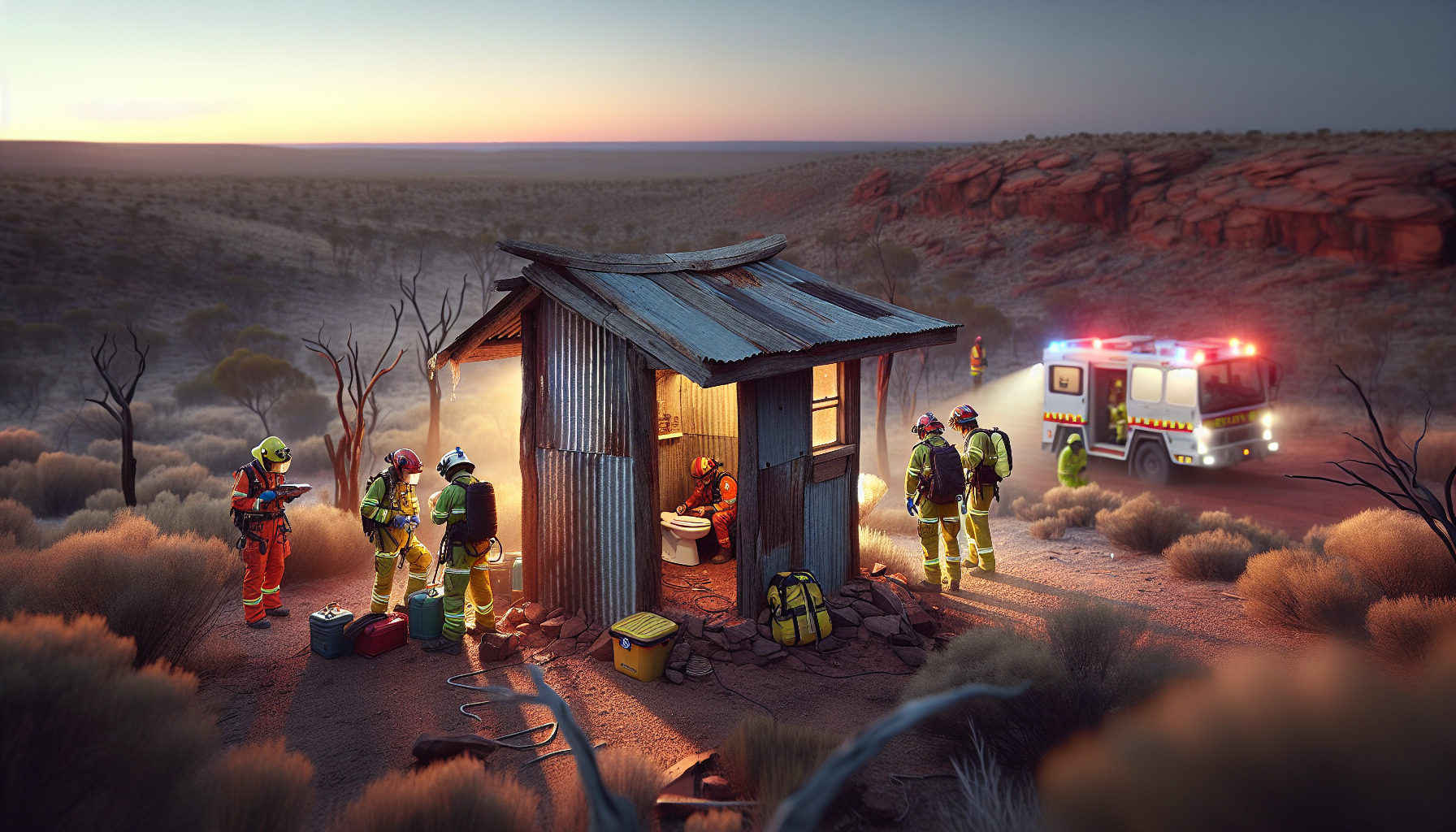
A woman became trapped waist-deep in a pit latrine located in the remote Australian outback after the structure unexpectedly gave way beneath her. The incident left her immobilized for approximately three hours before rescue teams could safely extract her. Pit latrines are common in isolated regions where conventional plumbing is unavailable, but this event has raised questions about their structural integrity and safety standards.
In a significant development, emergency responders had to carefully navigate the unstable environment to avoid further collapse while ensuring the woman’s safety. Such rescues in remote areas often face challenges due to limited access and resources, prolonging response times. This case underscores the importance of regular maintenance and inspection of sanitation facilities in isolated communities to prevent similar accidents.
Meanwhile, the incident has sparked discussions about improving infrastructure in Australia’s outback, where many residents rely on basic amenities. Ensuring safer sanitation options is crucial not only for public health but also for preventing hazardous situations like this. Authorities are now considering measures to enhance the durability and safety of pit latrines to protect vulnerable populations in these regions.
