

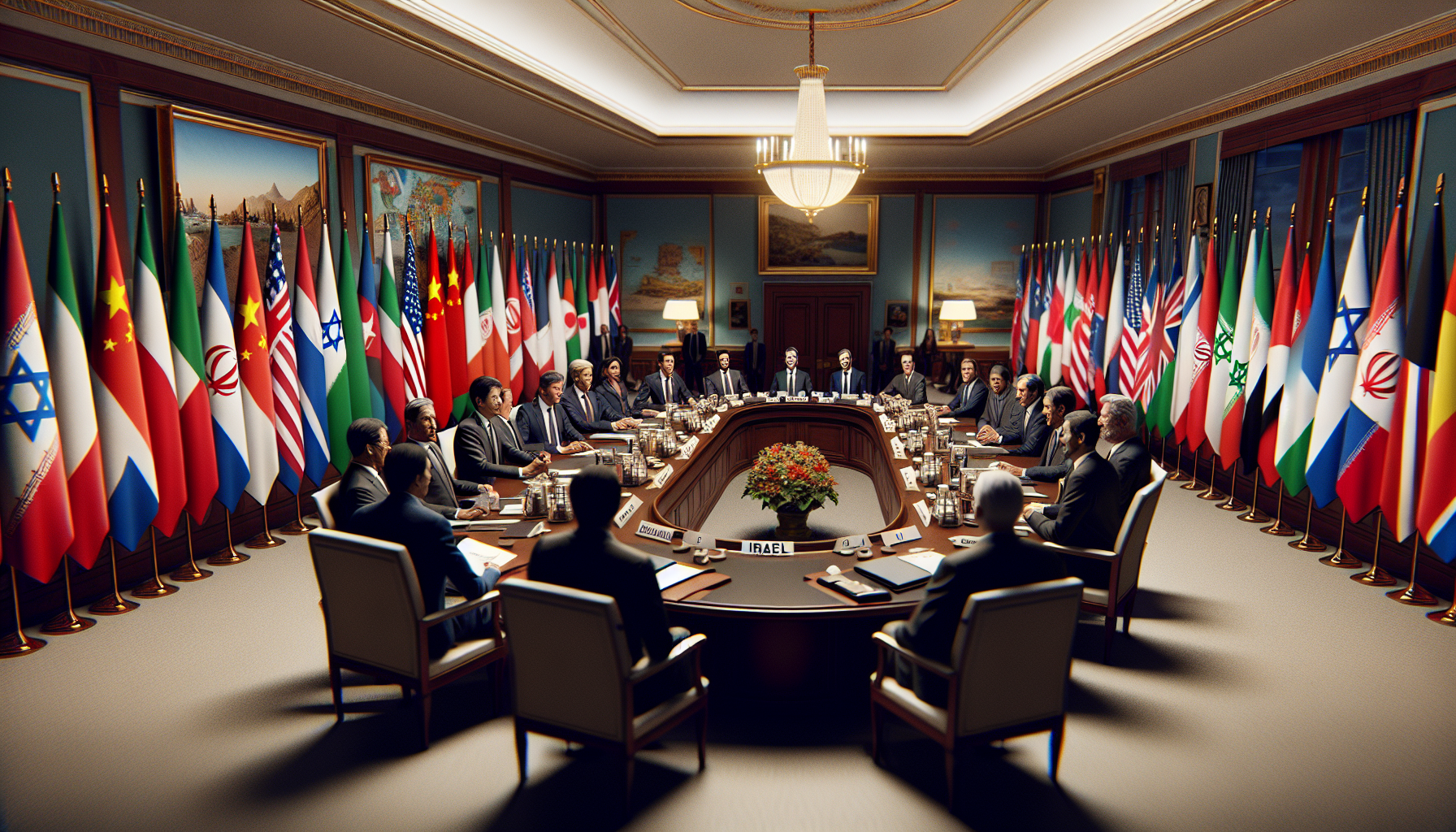
China has strategically positioned itself amid the ongoing conflict involving Iran by emphasizing its distinct approach compared to the United States. Leveraging robust economic relationships with key players such as the US, Israel, Iran, and Gulf countries, Beijing aims to safeguard its interests while avoiding direct confrontation. This nuanced stance allows China to maintain influence across multiple fronts without alienating any single partner.
In a significant development, China’s balancing act highlights its broader foreign policy goal of projecting itself as a responsible global power that prioritizes economic cooperation over military engagement. By differentiating its policies from those of the US, China seeks to present itself as a stabilizing force in a volatile region. This approach also underscores Beijing’s desire to expand its geopolitical footprint while minimizing risks associated with regional conflicts.
Meanwhile, the economic interdependence China shares with these nations provides it with leverage to navigate complex diplomatic challenges. Maintaining open channels with both Western and Middle Eastern countries enables China to influence outcomes subtly and protect its trade and energy interests. This strategy reflects China’s growing role as a key player in international affairs, particularly in regions where US influence is contested.
