

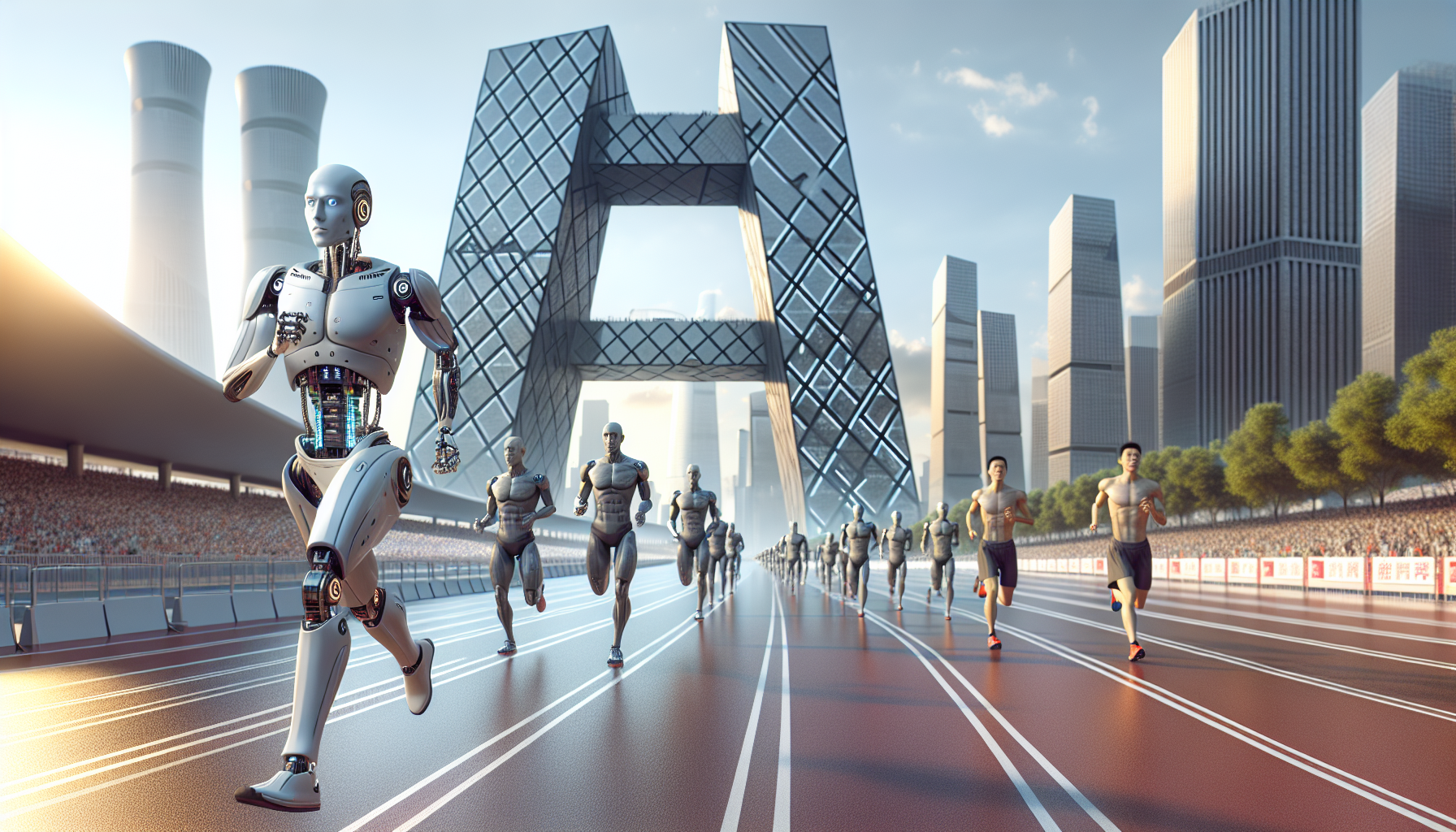
A unique half-marathon held in Beijing’s Yizhuang district featured a competition between human runners and humanoid robots, serving as a large-scale experiment in robotics technology under real-world conditions. More than 300 robots participated in the 21-kilometre race, running on separate lanes alongside thousands of human competitors.
The event was designed as a live testing ground for evaluating navigation systems, endurance, speed, and computational efficiency of the machines. Impressively, nearly 40 percent of the robots completed the entire course autonomously, marking a significant improvement compared to last year’s inaugural race, where most robots failed to finish.
In a significant development, this year’s competition demonstrated a major leap in robotic performance. The fastest robot, created by the Chinese technology firm Honor, finished the race in just over 50 minutes, outperforming all human participants and even surpassing the current human half-marathon record. Honor’s robots also claimed the second and third positions, underscoring rapid advancements within China’s robotics industry.
Engineers attributed these gains to innovations such as liquid cooling systems adapted from smartphone technology, which enhanced the robots’ efficiency and stability during the race. Experts note that events like this are accelerating the timeline toward mass production by providing practical testing environments that help reduce costs and broaden potential industrial uses.
