

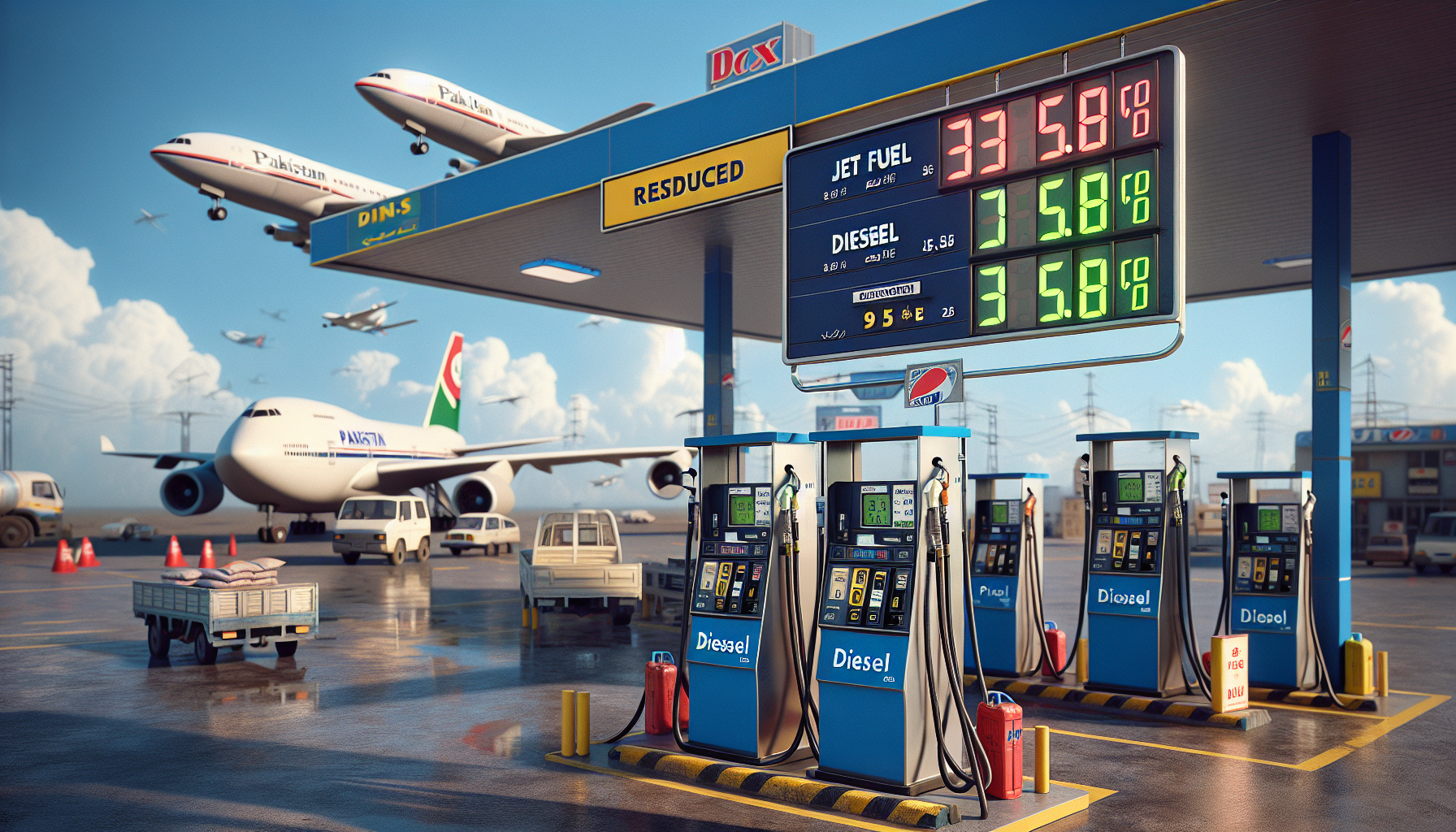
In a significant development, Pakistan has decided to cut the prices of jet fuel and light diesel. This move is expected to alleviate some financial pressure on the aviation and transportation industries, which are heavily dependent on these fuels. The reduction comes as part of broader economic adjustments aimed at stabilizing market conditions and supporting key sectors. Lower fuel costs can potentially translate into reduced operational expenses for airlines and transport companies, benefiting consumers indirectly.
Fuel prices in Pakistan have historically been a sensitive issue due to their direct impact on inflation and the cost of goods and services. By lowering the prices of jet fuel and light diesel, the government is likely attempting to curb inflationary pressures and stimulate economic activity. The aviation sector, which has faced challenges from fluctuating fuel costs, may find some relief, potentially improving flight affordability and frequency. Similarly, the transportation sector, crucial for trade and daily commuting, could experience cost savings that might be passed on to the public.
Meanwhile, this price adjustment aligns with Pakistan’s ongoing efforts to manage energy resources efficiently amidst global market volatility. The decision may also reflect government strategies to balance fiscal constraints with the need to support vital economic sectors. As fuel prices are a key component of Pakistan’s energy policy, such changes often signal broader economic priorities and can influence investor confidence. The impact of this reduction will be closely monitored by stakeholders across industries and consumers alike.
