

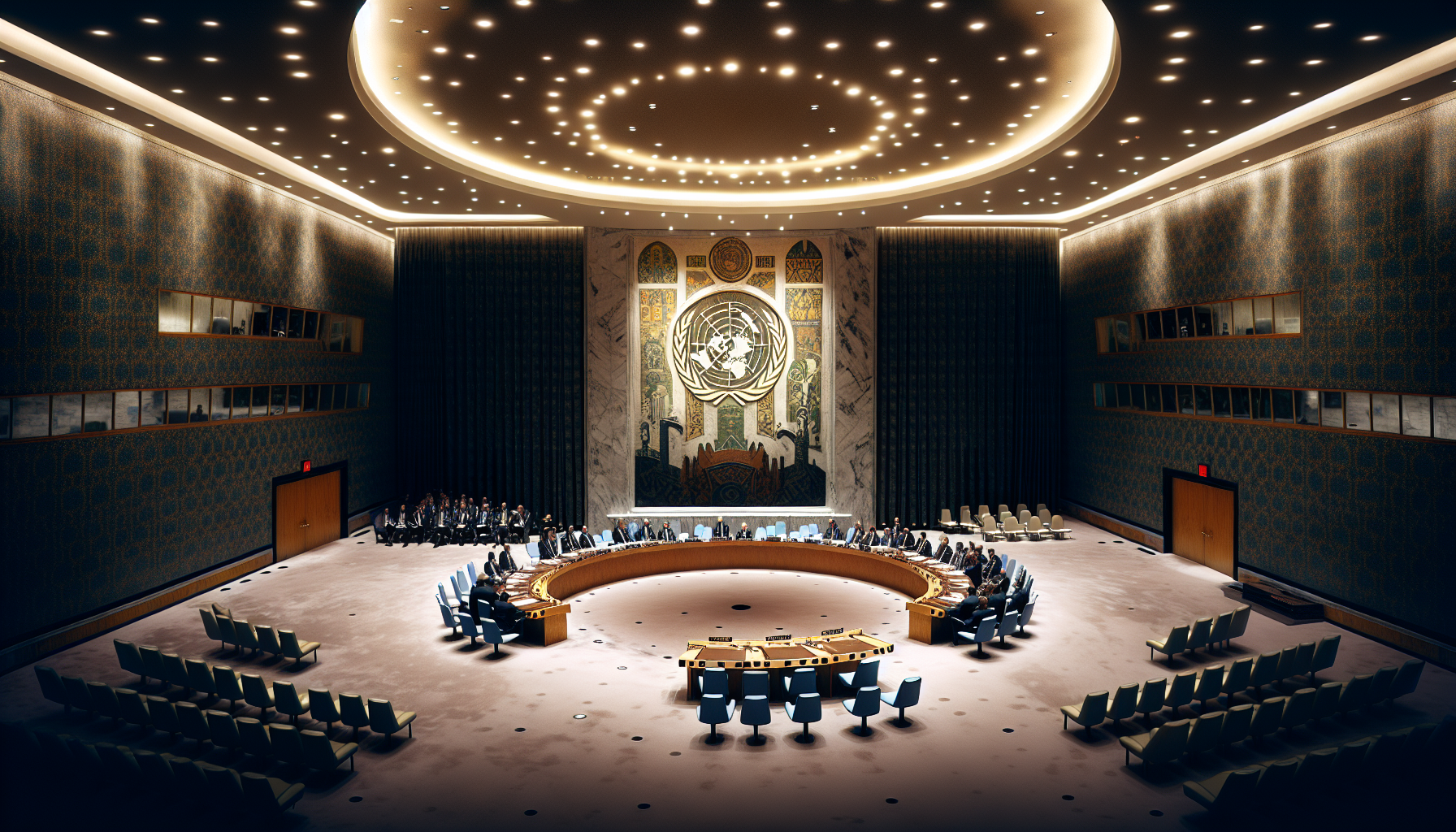
Pakistan has reiterated its longstanding stance calling for the abolition or significant limitation of the veto power held by permanent members of the United Nations Security Council (UNSC). The country also firmly opposes any increase in the number of permanent seats on the Council.
During a resumed session of the Intergovernmental Negotiations (IGN) focused on UNSC reform, Pakistan’s Permanent Representative to the UN, Ambassador Asim Iftikhar Ahmad, emphasized Islamabad’s support for expanding the number of non-permanent members. He argued this would help balance the veto power currently held by permanent members, which often leads to paralysis in decision-making on critical international peace and security issues.
Ambassador Ahmad stated, “Increasing the number of elected members will shift the balance away from the permanent members.” He highlighted that the frequent misuse or abuse of veto power by permanent members is a primary cause of inaction on vital matters. The ambassador strongly opposed any expansion of veto rights or the addition of new permanent members, warning that such moves would exacerbate existing problems.
Negotiations to reform the 15-member UNSC began in the General Assembly in February 2009, focusing on five key areas: membership categories, the veto question, regional representation, the size of an enlarged Council, and its working methods and relationship with the General Assembly. However, progress remains stalled due to conflicting positions.
The G-4 nations—India, Brazil, Germany, and Japan—continue to advocate for permanent seats, while the Uniting for Consensus (UfC) group, led by Italy and Pakistan, opposes adding permanent members, arguing that it would create “new centers of privilege.” As a compromise, the UfC has proposed a new membership category with longer terms and the possibility of re-election, but without permanent status.
The current Security Council consists of five permanent members—Britain, China, France, Russia, and the United States—and ten non-permanent members elected for two-year terms. The IGN framework aims to restructure the Council to enhance its representativeness, effectiveness, and accountability.
Ambassador Ahmad remarked on the widespread opposition to the veto, describing it as an outdated privilege incompatible with modern principles of democracy and representation. He questioned the logic of proposals seeking to expand veto rights, calling it a contradiction that undermines reform efforts.
Pakistan supports initiatives to improve accountability and transparency regarding veto use, including mechanisms allowing the General Assembly to review and debate veto decisions. The ambassador noted that when a permanent member blocks an action supported by a broad majority, the veto becomes increasingly isolated and difficult to justify, thereby raising the political and reputational costs for the veto-wielding member.
He stressed that Security Council reform must be comprehensive and tackled as a unified process, with the veto issue closely linked to other reform areas. Ambassador Ahmad underscored the importance of adhering to core principles such as democracy, representation, accountability, effectiveness, and transparency as the foundation for any reform.
Concluding his remarks, he stated, “Veto power contradicts each of these principles and must be seriously reconsidered. If we want reform for all, there should be privilege for none.”
