

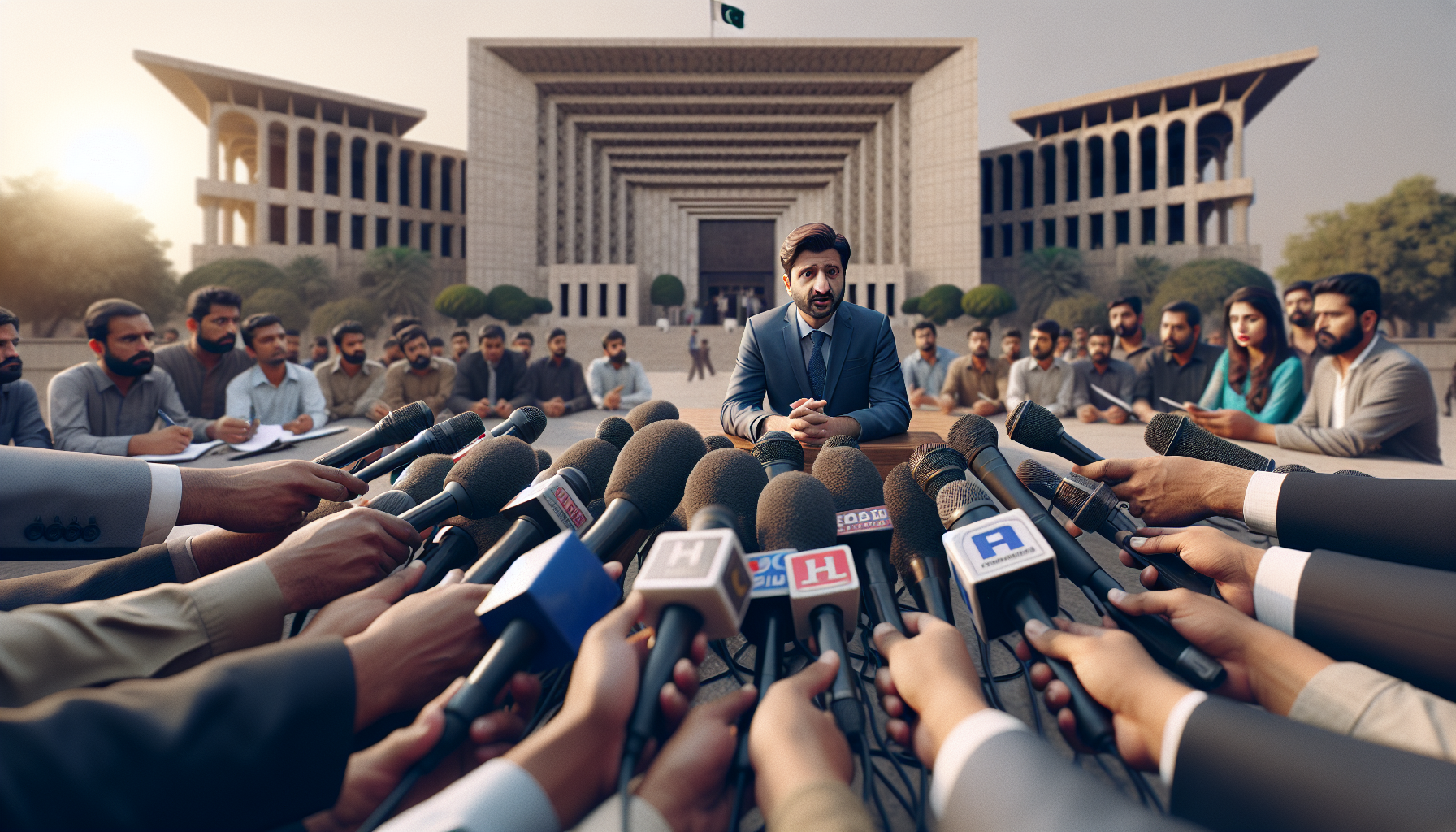
Jamaat-e-Islami Pakistan leader Hafiz Naeem ur Rehman sharply condemned the Punjab government on Wednesday, describing the prevailing situation in the province as the “worst form of dictatorship.” Addressing the media after a Lahore High Court hearing concerning local government elections, he labeled the Punjab Local Government Act as unconstitutional and accused the authorities of eroding democratic values.
He highlighted that the government is failing to transfer authority to the grassroots level and is pushing for local government elections on a non-party basis, which he argued contravenes the Constitution. Hafiz Naeem, this system denies citizens the fundamental right to freely elect their representatives, replacing democracy in Punjab with authoritarian rule.
In a significant development, the JI chief revealed that his party has legally challenged the Local Government Act and noted positive progress during the recent court proceedings. The court has instructed officials not to delay the case any further. He emphasized that the law weakens local governance by not devolving power to lower tiers, warning that such neglect could fuel demands for new provinces.
Criticizing the proposed election framework, Hafiz Naeem explained that the process involves indirect elections where nine candidates are proportionally selected, who then choose four reserved seat members. These members subsequently select additional representatives, culminating in the election of the Union Council chairman and vice chairman. He described this convoluted mechanism as undemocratic and expressed regret that the public is denied the direct right to elect Union Council chairmen, calling it contrary to democratic principles.
The Jamaat-e-Islami leader accused the Punjab government of using legislation to consolidate power, asserting that such tactics have no place in a democratic system. When asked about the ongoing electricity crisis, he voiced serious concern over prolonged power outages, labeling the hours-long load shedding as “cruel” despite the country’s adequate power generation capacity.
He also claimed that a previous JI protest compelled the federal government to reduce the petroleum levy, criticizing many political figures for remaining silent on issues of injustice.
