

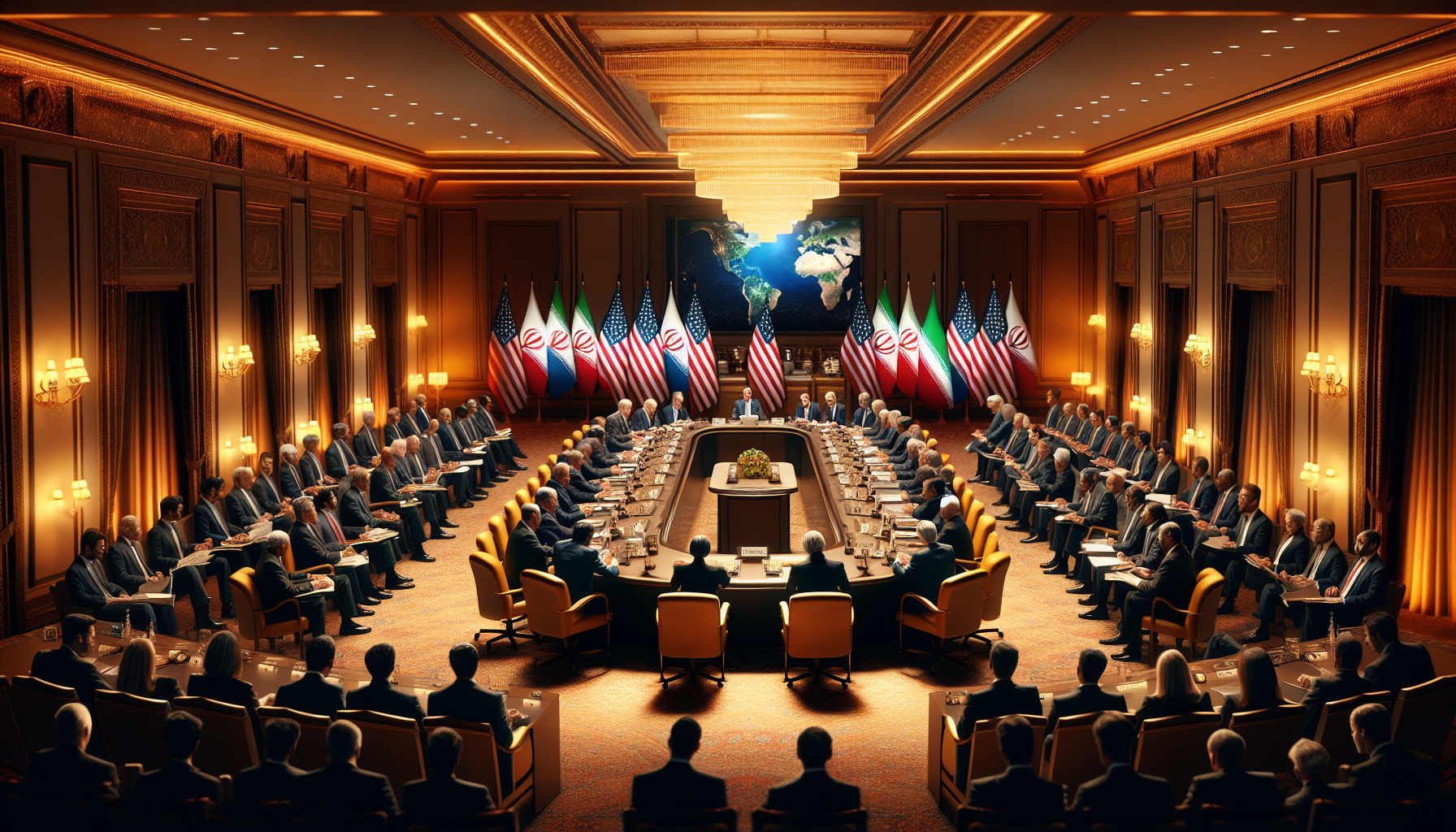
Prime Minister Shehbaz Sharif stated on Monday that Pakistan remains actively involved in resolving outstanding issues between the United States and Iran, praising the political and military leadership for facilitating the historic negotiations held in Islamabad. The city emerged as a crucial mediator after the prime minister brokered a two-week ceasefire between the conflicting parties on April 8.
Following this, delegations from Washington and Tehran convened in Islamabad for over 20 hours of talks during the past weekend at the invitation of PM Shehbaz. Despite the extensive discussions, the negotiations did not culminate in a formal agreement.
Addressing the federal cabinet, the prime minister emphasized Pakistan’s significant role in bringing the US and Iran together for direct dialogue after nearly 47 years. He noted that both sides accepted Islamabad’s invitation, marking the first face-to-face engagement at such a high level, with talks lasting approximately 21 hours.
PM Shehbaz highlighted the relentless efforts of Pakistan’s leadership to enable these negotiations. He also expressed appreciation to both the US and Iranian delegations for their acceptance of Pakistan’s hospitality and recognition of the country’s constructive involvement.
The prime minister affirmed that Pakistan’s mediation helped maintain the ceasefire and that efforts continue to address unresolved issues. He underscored Pakistan’s positive contribution to regional stability amid a global economy strained by the conflict.
The Islamabad talks represented the first direct US-Iran meeting in over a decade and the highest-level discussions since Iran’s 1979 Islamic Revolution. The US delegation was led by Vice President JD Vance and included President Donald Trump’s special envoy Steve Witkoff and Jared Kushner, Trump’s son-in-law. The Iranian delegation was headed by Parliament Speaker Mohammad Bagher Ghalibaf and included Foreign Minister Abbas Araghchi.
The negotiations aimed to end six weeks of hostilities that have resulted in thousands of deaths across the Gulf region, disrupted critical energy supplies, and raised concerns about a broader regional war. The conflict began on February 28 when the US and Israel launched a joint bombing campaign against Iran. The situation escalated as Iran blocked the Strait of Hormuz and carried out attacks on Israel and US military bases in the Middle East.
This war has severely impacted global financial markets and caused extensive civilian casualties, predominantly in Iran and Lebanon.
