

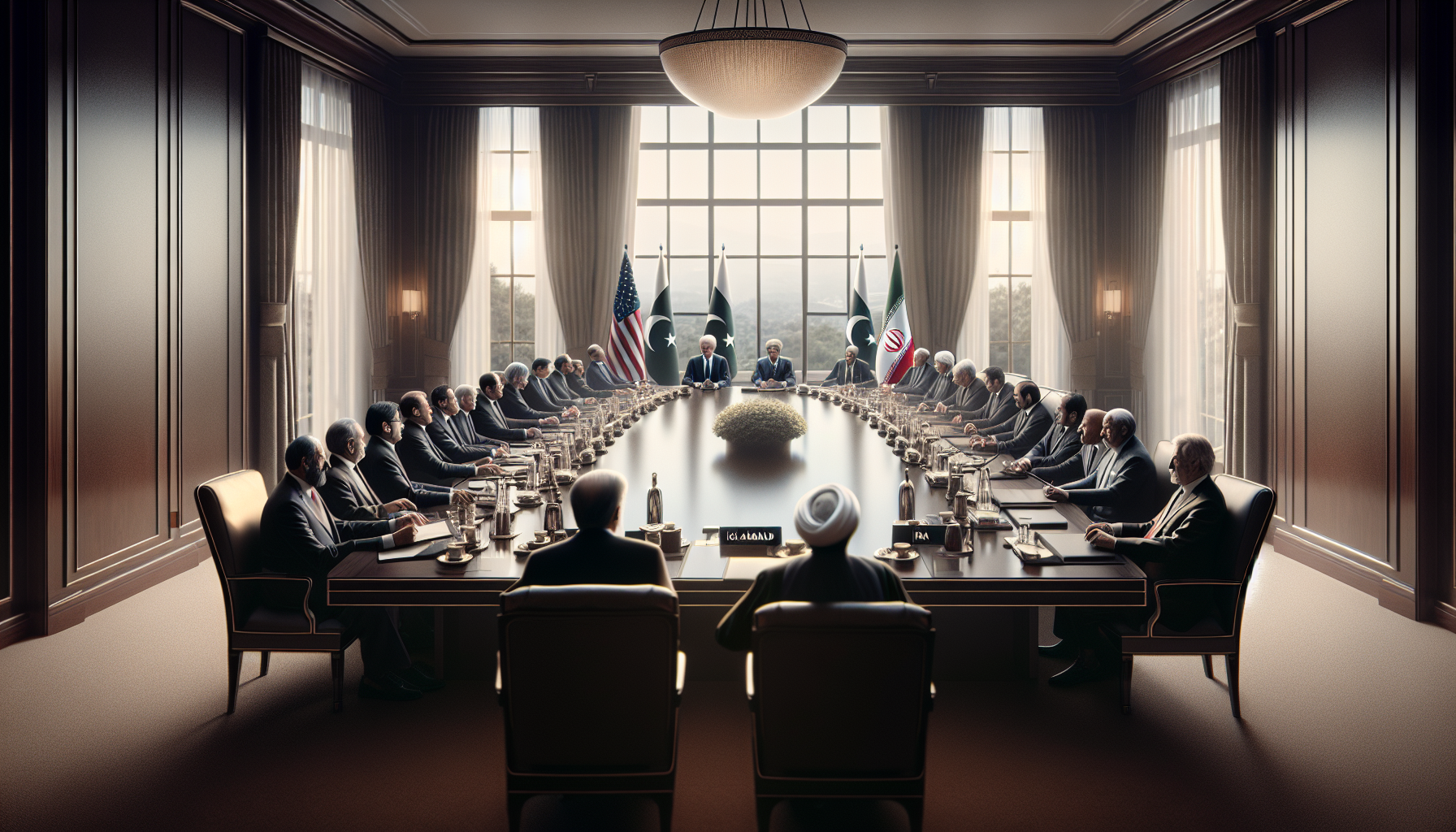
Following an exhaustive 21-hour negotiation session in Islamabad, US Vice President JD Vance declared that talks between Washington and Tehran concluded without reaching an agreement. He emphasized that the outcome represented a greater setback for Iran than for the United States. The Iranian side has yet to issue an official response regarding the developments.
The US delegation departed Islamabad after the talks ended, with Field Marshal Syed Asim Munir and Deputy Prime Minister Ishaq Dar seeing them off. Interior Minister Mohsin Naqvi and US Chargé d’Affaires Natalie Baker were also present during the farewell.
Speaking at a press event held at a local hotel, Vance expressed gratitude to Prime Minister Shehbaz Sharif and Chief of Army Staff Field Marshal Asim Munir for Pakistan’s pivotal role in facilitating the high-level discussions. Islamabad’s selection as the venue attracted considerable international attention, marking it as a key diplomatic hub for this critical engagement.
Accompanied at the press conference by Jared Kushner and Steve Witkoff, Vance noted that the two sides engaged in multiple substantive talks during the marathon negotiations but ultimately failed to bridge their differences on fundamental issues. He clarified that the US had clearly outlined its position, specifying where flexibility existed and where firm stances remained.
“We have been negotiating for 21 hours,” Vance remarked, describing the talks as serious yet inconclusive. “Unfortunately, no agreement was reached.” He added that while no deal was secured, the repercussions of this failure would impact Tehran more significantly than Washington. The US delegation entered the talks with a clear mandate from President Donald Trump to negotiate sincerely and seek a meaningful understanding.
At the core of the impasse was Washington’s demand for a definitive and lasting Iranian commitment to abandon any pursuit of nuclear weapons. Without revealing the full details of the confidential discussions, Vance stressed that the United States would not disclose negotiation specifics publicly after such extensive closed-door talks. However, he underscored that the central US demand remained unchanged: Iran must provide an explicit assurance that it will neither develop nuclear arms nor maintain the capability to rapidly produce them.
Vance highlighted that Iran’s nuclear infrastructure had already suffered significant damage, noting that its prior enrichment facilities had been destroyed. Nonetheless, the critical issue for Washington extends beyond the physical state of Iran’s nuclear program to whether Tehran is willing to make a long-term political and strategic commitment to renounce nuclear weapons altogether.
The United States is not seeking a temporary halt or short-term assurances but rather guarantees that endure well into the future. “We have not yet seen such a commitment,” Vance said, while maintaining hope that Iran may eventually provide it.
Vance affirmed that the US approached the negotiations with flexibility and seriousness, but Iran declined to accept the proposed terms. Throughout the 21-hour session, US negotiators maintained continuous communication with President Trump, speaking with him multiple times during the Islamabad talks. The delegation also remained in close contact with senior officials from the US national security apparatus, including top military, diplomatic, and economic advisors.
This ongoing coordination reflected the seriousness with which Washington engaged in the talks and its effort to keep the broader US leadership aligned during this crucial diplomatic moment.
At the conclusion of the discussions, Vance stated that the United States was departing Islamabad with what it considered a “final and best offer” for Iran. He described this as a clear framework for understanding, leaving the decision to accept it in Tehran’s hands.
While this round of negotiations ended without a breakthrough, it did not signal the end of diplomatic efforts. Instead, Washington appears to be placing the next move firmly with Iran.
For Pakistan, hosting the talks represented a significant diplomatic achievement. Vance’s public thanks to Prime Minister Shehbaz Sharif and General Munir highlighted Islamabad’s crucial role in bringing the two sides together during a sensitive period. Nevertheless, the outcome also underscored the deep mistrust that continues to divide Washington and Tehran, particularly regarding Iran’s nuclear ambitions.
With no accord reached after nearly a full day of talks, the key question remains whether Iran will respond positively to the US proposal or if this setback will further entrench positions in the coming days.
