

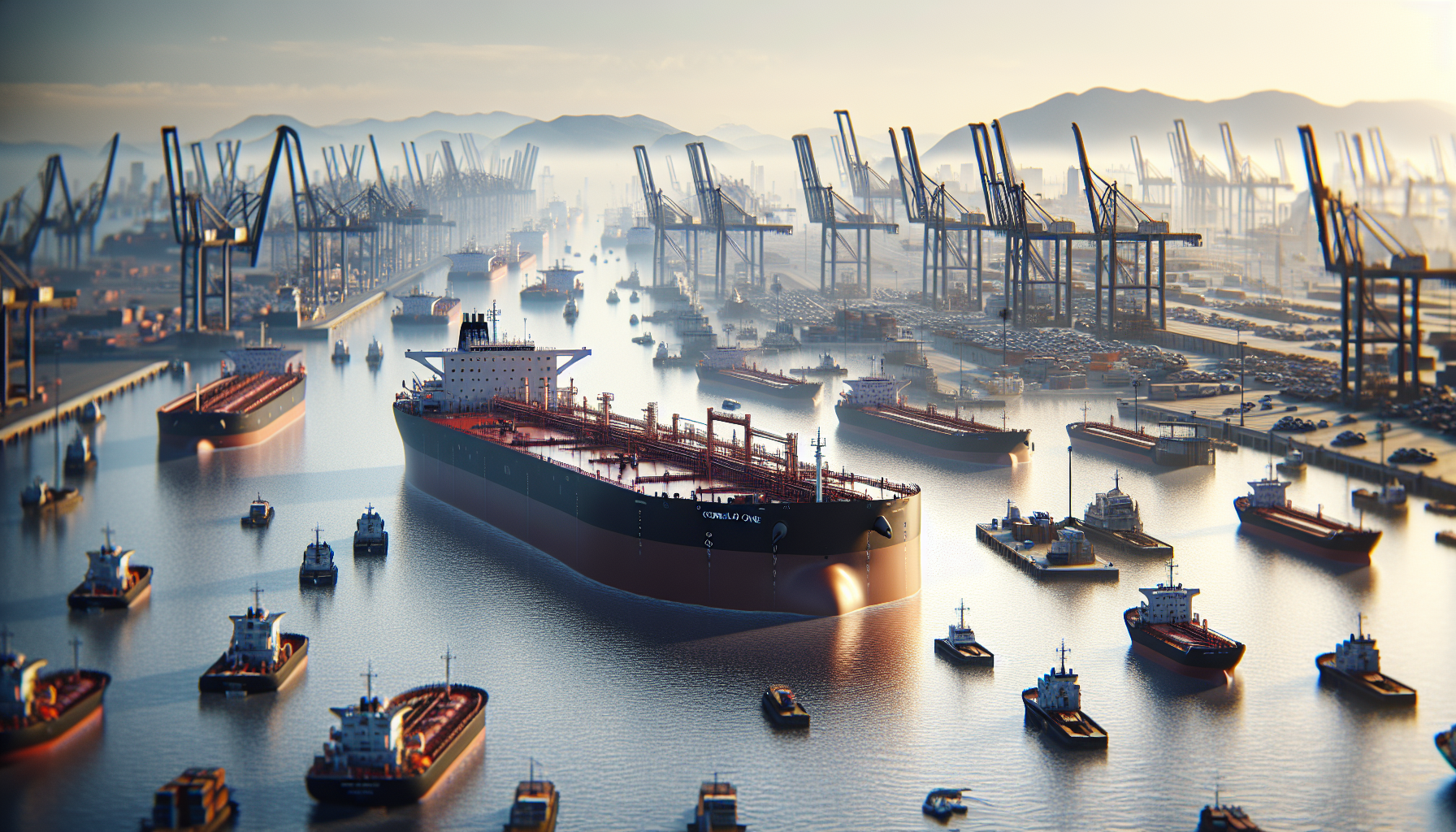
A crude oil tanker transporting petrol has docked at Port Qasim in Karachi, Pakistan. The vessel, named Corallo One, carries approximately 37,085 tonnes of petrol and is currently stationed at the port’s outer anchorage.
Port Qasim has experienced substantial cargo activity in the last 24 hours, handling around 34,296 metric tonnes of imported goods and 3,158 metric tonnes of exports. Presently, 13 ships, including the petrol tanker, are anchored at the port, carrying diverse cargo such as soybeans, coal, chemicals, coke, steel coils, and petrol.
Notably, four large vessels loaded with over 100,000 tonnes of soybeans have also arrived, which are expected to bolster Pakistan’s energy, industrial, and food sectors.
Meanwhile, in a significant development on the international front, oil prices dropped below $100 per barrel on Wednesday. This decline followed US President Donald Trump’s announcement of a two-week ceasefire agreement with Iran, contingent on the immediate and secure reopening of the Strait of Hormuz. Brent crude prices fell by $14.84, or 13.6%, settling at $94.43 per barrel, while WTI crude dropped $16.13, or 14.3%, to $96.82 per barrel as of 0023 GMT.
Trump’s reversal came just before his deadline for Iran to reopen the Strait of Hormuz, a crucial passage through which 20% of the world’s oil is transported, warning of widespread attacks on Iranian civilian infrastructure if demands were unmet. He described the agreement as a “double sided CEASEFIRE” on social media, after earlier warning that “a whole civilization will die tonight” if his conditions were ignored.
Iran responded by stating it would cease its attacks if hostilities against it stopped, allowing safe passage through the Strait for two weeks under coordination with Iranian armed forces, as announced by Foreign Minister Abbas Araqchi. Despite this, several Gulf states have reported missile launches, drone strikes, or issued alerts advising civilians to seek shelter amid ongoing tensions.
