

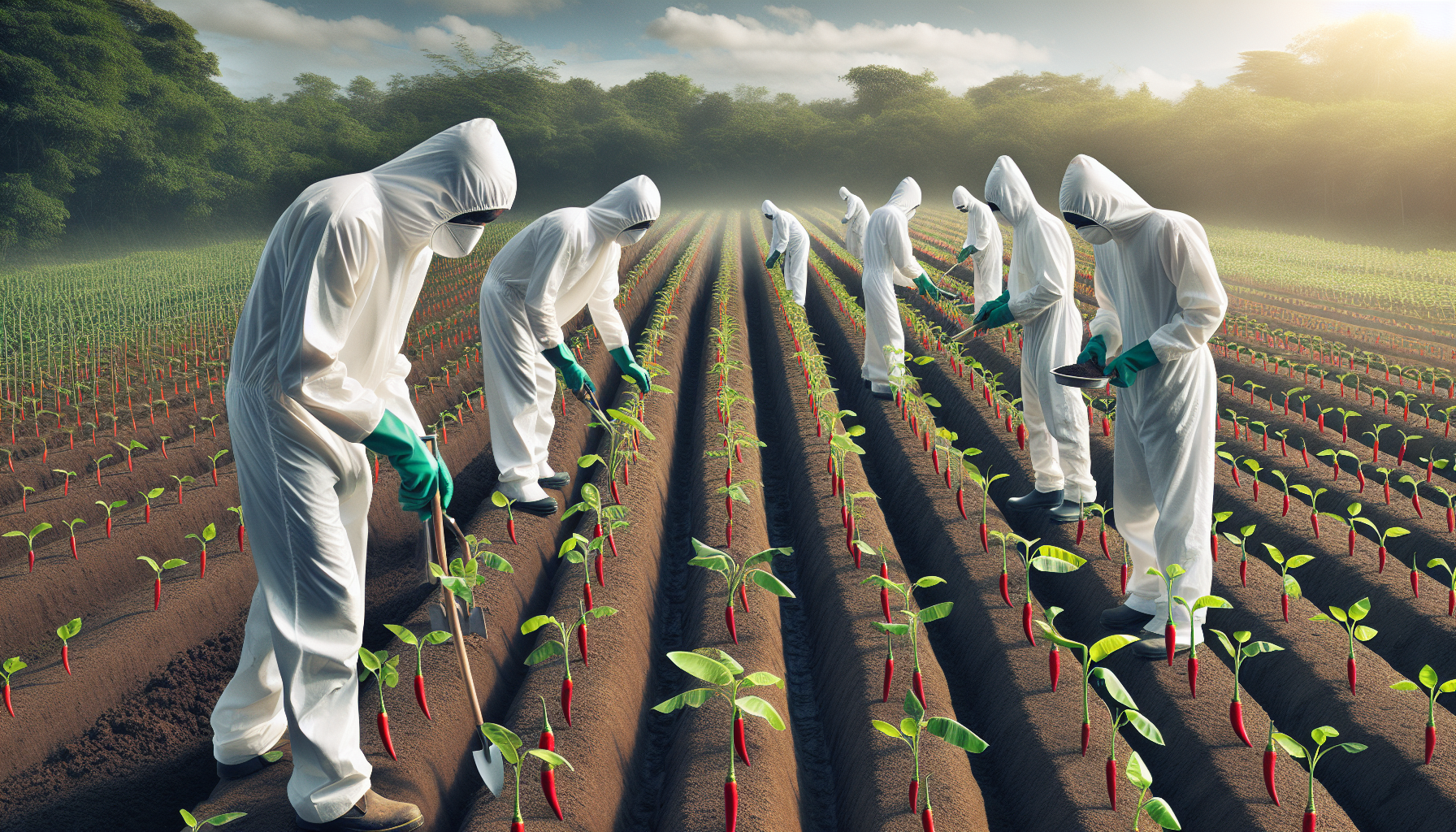
The Sindh Agriculture University (SAU) has launched a tissue culture-based banana cultivation initiative at its Latif experimental farm in Hyderabad, designed to improve crop yields and introduce advanced farming methods. The project, officially inaugurated by Vice Chancellor Engr. Prof. Dr. Altaf Ali Siyal on Tuesday, centers on the cultivation of the “Dhaka variety” of banana and incorporates intercropping with chili plants to optimize land use and increase farmers’ earnings.
As part of the launch, Dr. Siyal personally planted banana saplings over an 18-acre area. The event was attended by key university officials, including Dr. Manzoor Ali Abro, Chairman of the High Power Farms Committee, and Dr. Muhammad Mithal Lund, Director of Farms, both of whom participated in the plantation activities.
During the ceremony, Dr. Siyal highlighted that tissue culture banana farming in Sindh could enhance yields by 30 to 40 percent per acre while considerably lowering disease risks. He stressed that cultivating bananas that meet international quality standards could significantly increase exports from Sindh to global markets. Dr. Siyal also underscored the importance of educating farmers about modern agricultural technologies, engaging them in innovative trials, promoting superior crop varieties, and improving market access to make farming more profitable.
Notably, he pointed out that intercropping enables farmers to gain dual benefits from the same plot of land, thereby boosting overall productivity and income.
Dr. Manzoor Ali Abro briefed the Vice Chancellor on how the university’s farms serve as vital platforms for research and hands-on learning, benefiting both students and local farmers. Meanwhile, Dr. Muhammad Mithal Lund described the ongoing experiment at Latif farm as a crucial advancement in the adoption of modern agricultural practices in the region.
