

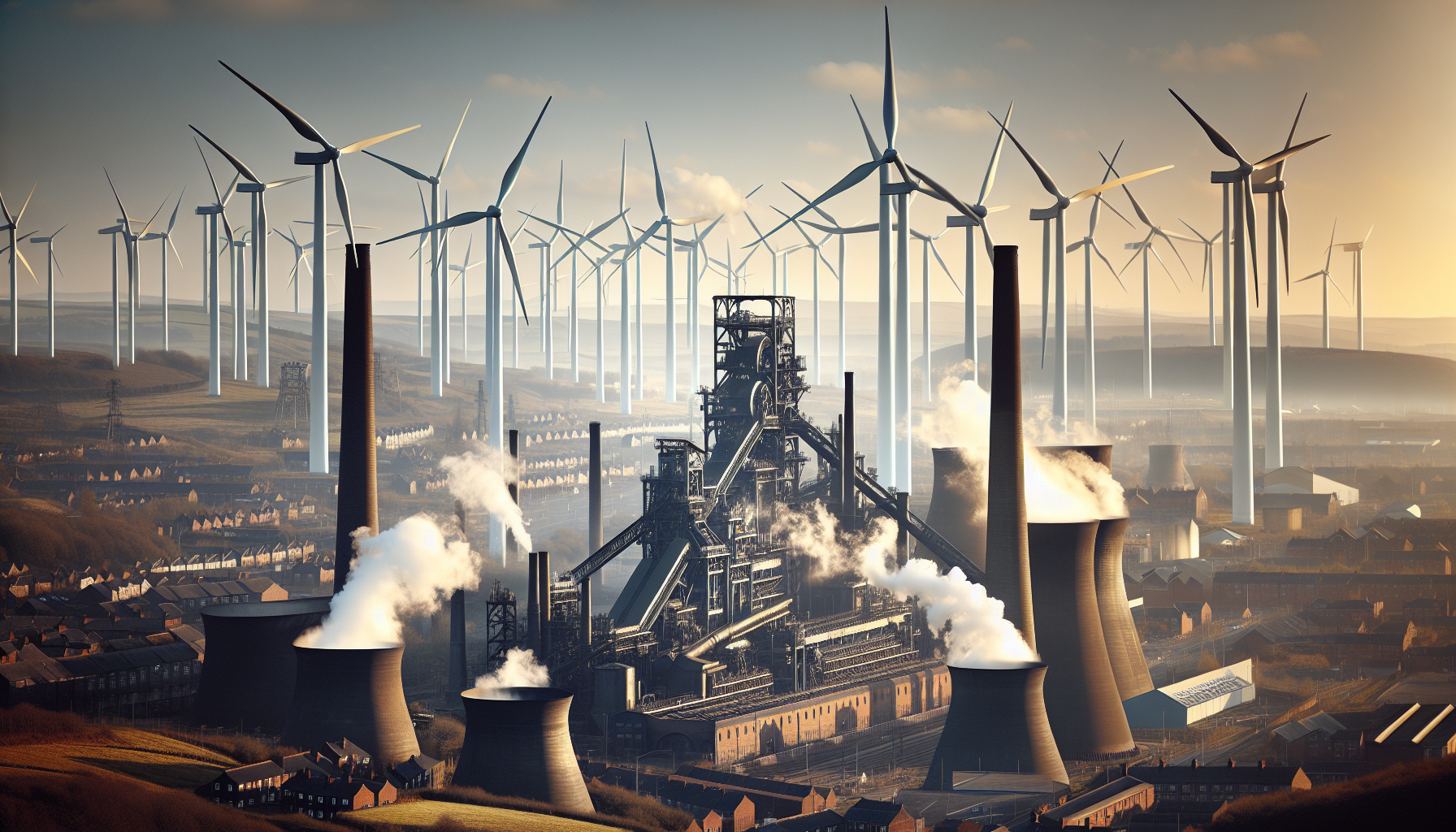
Britain’s greenhouse gas emissions decreased by 2% in 2025, provisional data released by the government on Thursday. This reduction was primarily driven by a significant decline in emissions from the industrial sector.
The country aims to achieve net zero emissions by 2050, a target that demands a substantial expansion of renewable energy sources and a transition to cleaner electric vehicles. Total greenhouse gas emissions were estimated at 367 million metric tons of carbon dioxide equivalent in 2025, marking a 7 million ton decrease compared to 2024, the Department for Energy Security and Net Zero (DESNZ) reported.
Notably, the industrial sector experienced the largest reduction, with emissions falling by 12%. This drop was largely attributed to the closure of blast furnaces in the iron and steel industries, which resulted in decreased gas consumption. In a significant development, 2024 marked the first year in over 140 years without coal-fired power generation in Britain, following the closure of the last coal plant in September 2024. Consequently, emissions from the electricity sector declined by 1%.
Meanwhile, emissions from the transport sector increased by 2%, driven by higher petrol and diesel consumption. Despite this rise, Britain’s overall greenhouse gas emissions have fallen approximately 54% since 1990.
As part of its commitment to the net zero goal, Britain has set an interim target to reduce greenhouse gas emissions by 81% by 2035, underscoring the country’s ongoing efforts to combat climate change.
