

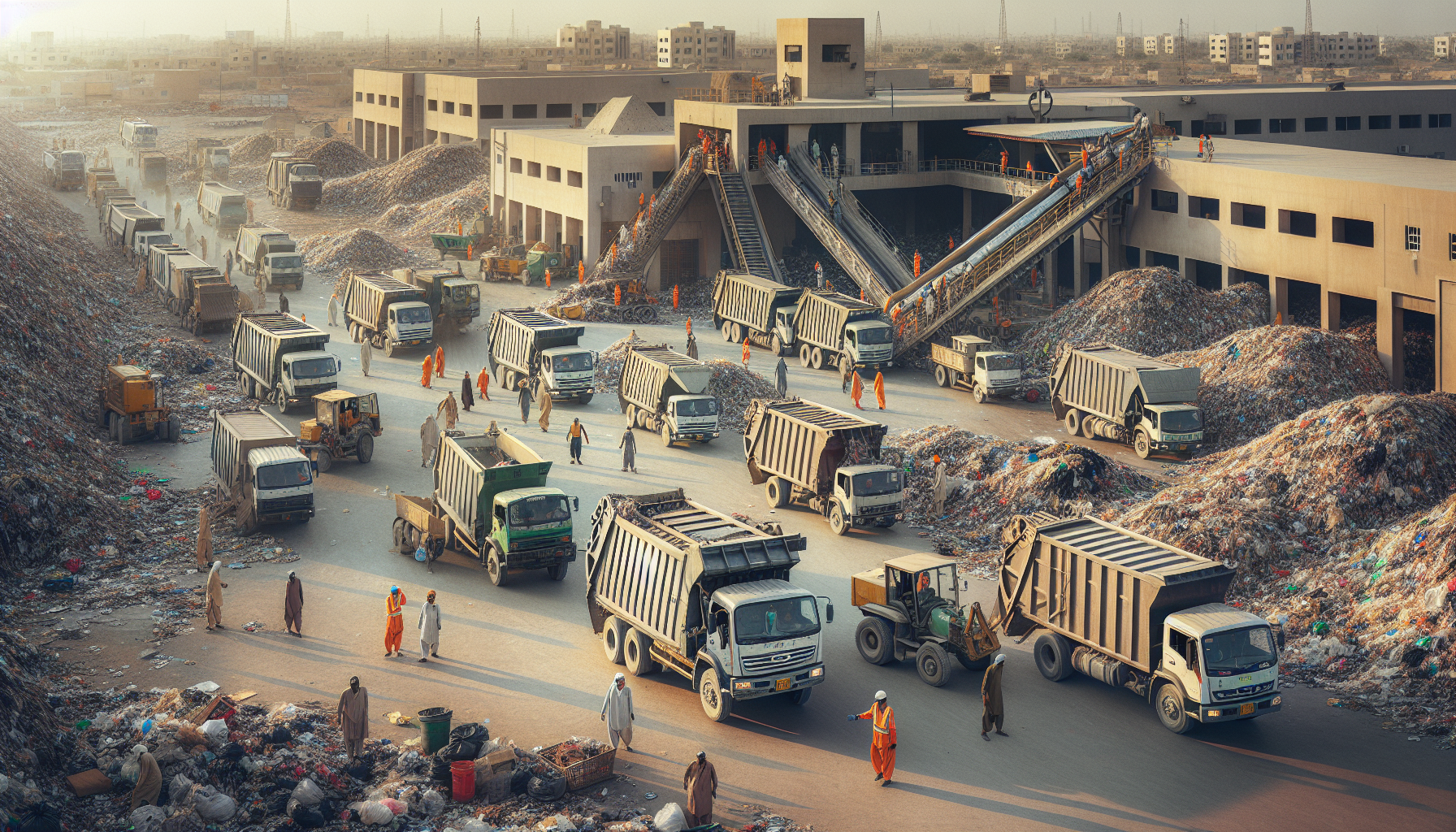
The Sindh government has intensified efforts to modernize its sanitation infrastructure by evaluating new proposals aimed at broadening efficient and sustainable waste management services throughout the province.
These proposals were examined during a high-level meeting of the Sindh Solid Waste Management Board (SSWMB), led by Sindh Local Government Minister Syed Nasir Hussain Shah. The session included senior officials such as the local government secretary, SSWMB managing director, and project leaders, who presented a comprehensive roadmap for enhancing cleanliness infrastructure.
Central to the discussion was a strategy to expand organized waste collection and disposal services beyond major urban hubs like Karachi, Hyderabad, Larkana, and Sukkur, to ensure consistent sanitation standards across all districts.
Officials introduced three operational frameworks—the Hybrid Model, Hybrid Plus Model, and Local Model—each designed to offer flexibility in managing sanitation services. These models propose distributing responsibilities among municipal bodies, local administrations, and other management entities, with a focus on empowering local governments in planning and oversight roles.
It was highlighted that decentralizing operational duties to the town level could significantly improve monitoring and service delivery. Additionally, the implementation of a centralized digital monitoring system is under consideration to track performance and enhance accountability in real time.
The meeting also addressed cost reduction strategies without sacrificing service quality. Proposals included multi-year operational contracts, such as three-plus-one or four-plus-one year agreements, to maintain continuity while linking contract extensions to performance metrics. Resource allocation—including machinery and workforce—would be customized to meet the specific needs of each district, optimizing efficiency and financial viability.
Simultaneously, the government is planning new landfill sites in multiple districts, including Kashmore-Kandhkot, Larkana, Kot Diji, Nawabshah, Sehwan, Hyderabad, Umerkot, and Dhabeji, to ensure environmentally responsible waste disposal. Several garbage transfer stations across Sindh are nearing completion and are expected to become operational shortly.
The SSWMB managing director reported steady progress at the Jam Chakro landfill facility, with two landfill cells already completed. This project is anticipated to deliver significant environmental and economic advantages, including potential revenue from carbon credits.
In a significant development, the local government minister emphasized that improving sanitation and public health remains a top priority for the provincial administration. He instructed officials to further refine the proposed models to ensure their practicality and readiness for implementation, noting that final decisions will be made in consultation with the Sindh chief minister.
Furthermore, the minister called for stringent measures against illegal waste dumping and construction debris, urging coordinated enforcement with law enforcement agencies. He underscored that stronger regulations, enhanced monitoring systems, and public cooperation are essential to achieving a cleaner and more sustainable Sindh.
