

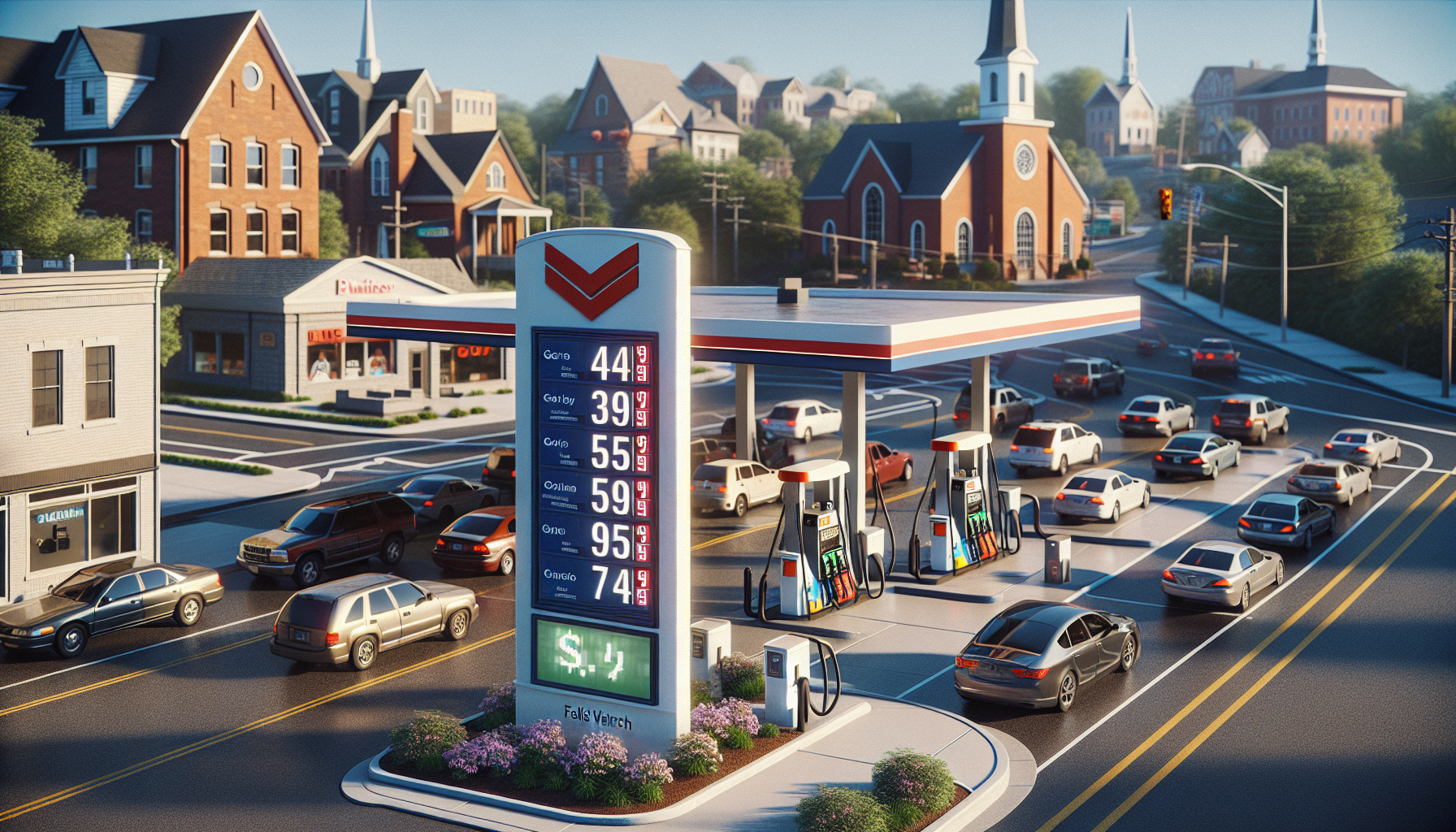
In the suburbs of Washington, at a gas station in Falls Church, motorists are grappling with the steep domestic consequences of the ongoing conflict with Iran, as soaring fuel costs severely impact family finances. Jeanne Williams, 83, had just completed a 100-mile journey from Richmond, Virginia, where she had been visiting her older sister. Observing the high prices displayed on the Liberty gas station’s LED sign, she expressed shock and dismay. “I’m not angry. I’m just bewildered, confused, unhappy,” she remarked. “Because we didn’t ask for the war.”
On Tuesday, the average price for a gallon (3.78 liters) of regular gasoline in the United States surpassed the significant threshold of $4.00, marking a 35 percent increase since the US-Israeli strikes that initiated the conflict, based on data from the AAA motor club. The station where Williams stopped is located on a busy street in Falls Church, surrounded by an Anglican church, an auto repair shop, and a dentist’s office. There, prices began at $3.79 per gallon for cash payments, with higher rates applied to debit or credit card transactions. Not far away, prices reached as high as $4.25 per gallon.
Williams, a retired civil servant currently undergoing cancer treatment, considers her pension to be “fairly decent,” yet rising living costs have forced her to draw from her savings. “Luckily, I have no children. I don’t have a spouse, so it’s just me and whatever I have I help my sister with,” she explained.
Meanwhile, US inflation has eased from its pandemic peak of 9.1 percent but remains persistently elevated, with experts cautioning that the world’s largest economy has yet to achieve price stability. The prolonged period of elevated prices has taken a toll on American households. Eliza Winger, a US economist, noted that rising fuel costs not only affect expenses at the pump but also reduce overall consumer spending, potentially impacting the broader economy. “We estimate that a 10 percent increase in oil prices reduces real consumer spending by approximately 0.2 percent,” she said. Since the conflict began, fuel prices have surged by more than three times that amount.
In a recent consumer confidence report released on Tuesday, inflation expectations among Americans climbed in March to levels not seen in seven months. Luis Ramos, a 26-year-old New Yorker, voiced his frustration at a gas station in New Jersey. “It’s ridiculous, honestly. Seeing these gas prices skyrocket, it’s incredible,” he said. “The cost of living is already skyrocketing.”
At a suburban Washington gas station, David Lee, 39, who fills his tank twice weekly, shared his experience. “I feel like every time I fill it up, I’m paying at least $10 more than before,” he said. An anesthesiologist by profession, Lee mentioned that while he can afford the increase, many of his friends have expressed concerns about reducing their driving due to the expense.
Joseph Crouch, 77, finds himself cutting back on driving because of the high prices. “It’s ridiculous,” he said, criticizing the government’s handling of the situation. “We are paying the price of the war. They try to say it’s something else, but it’s definitely a war.” Crouch, who uses a cane, wore a hat proudly identifying him as a Vietnam War veteran.
Fred Koester, 78, described the conflict as a “stupid war” that was “totally unnecessary.” Meanwhile, Kristen, a 36-year-old teacher who preferred to use only her first name, acknowledged the pain caused by rising fuel costs but called it “selfish” for people to complain about the war only when it affects their finances. “We should have cared long before it affects our pocket,” she stated.
