

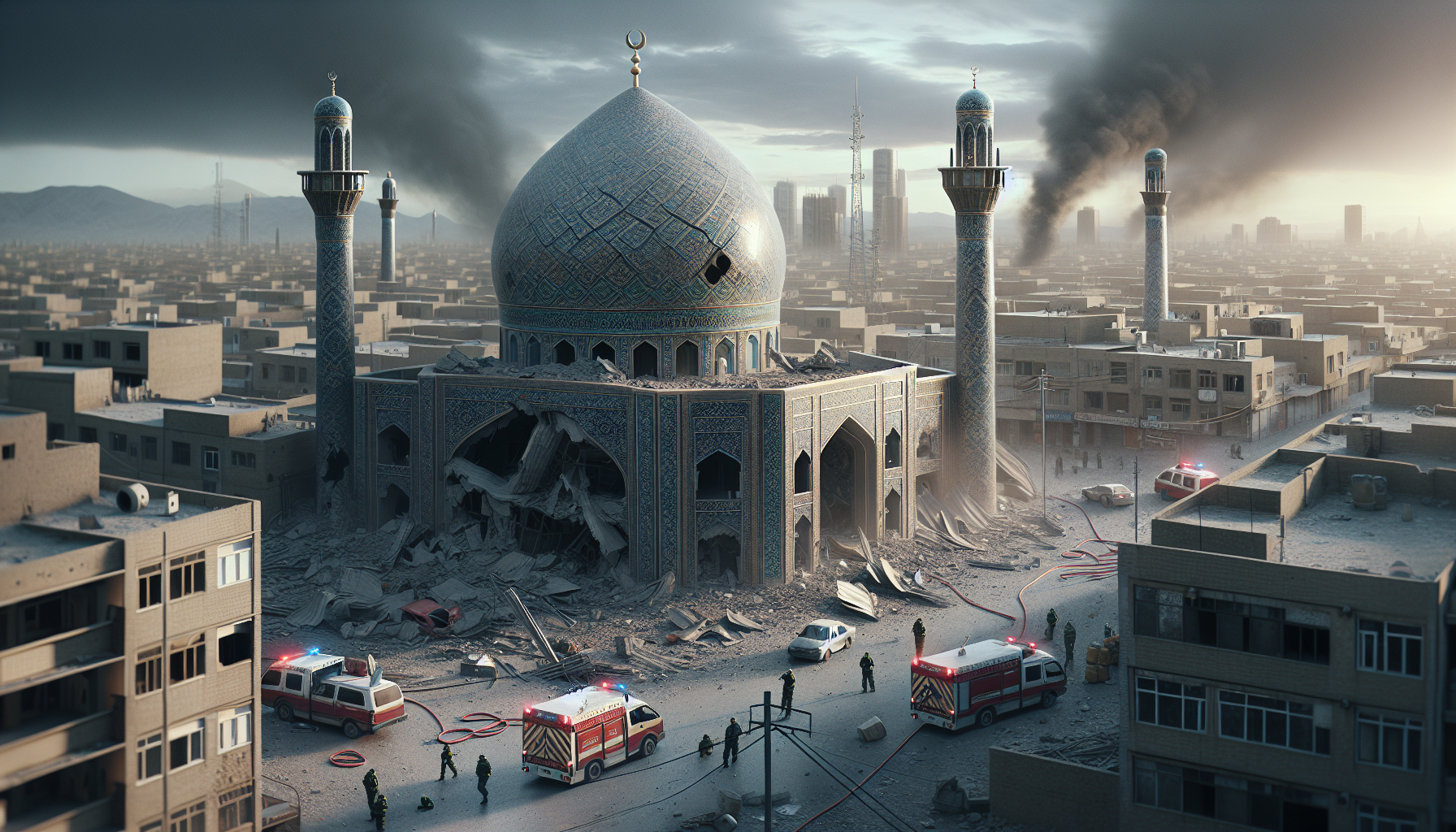
On Tuesday, US-Israeli airstrikes targeted a Shia Muslim mosque and religious site in northwest Iran, resulting in four fatalities and damage to the Grand Husseiniya hall in the city of Zanjan. The Grand Husseiniya, used for Shia gatherings and mourning ceremonies, suffered damage to parts of its dome and minarets following the morning assault on Ferdowsi Street.
Ali Sadeghi, a deputy governor of the province, confirmed that the strikes caused four deaths and injured 26 others in the vicinity. Zanjan, an industrial city approximately 300 kilometers northwest of Tehran, bore the brunt of this attack.
In a broader context, the United Nations has reported that at least four of Iran’s 29 UNESCO World Heritage sites have sustained damage amid the ongoing conflict. These include the Golestan Palace in Tehran, the Chehel Sotoun Palace and Masjed-e Jame mosque in Isfahan, as well as the prehistoric sites in the Khorramabad Valley.
Ahmad Alavi, head of Tehran city council’s heritage committee, recently highlighted that airstrikes have damaged over 120 culturally and historically significant locations across Iran since the war began. Among the affected landmarks are Tehran’s Marble Palace, the Teymourtash house, and the Saadabad Palace complex, a major tourist attraction in the capital.
