

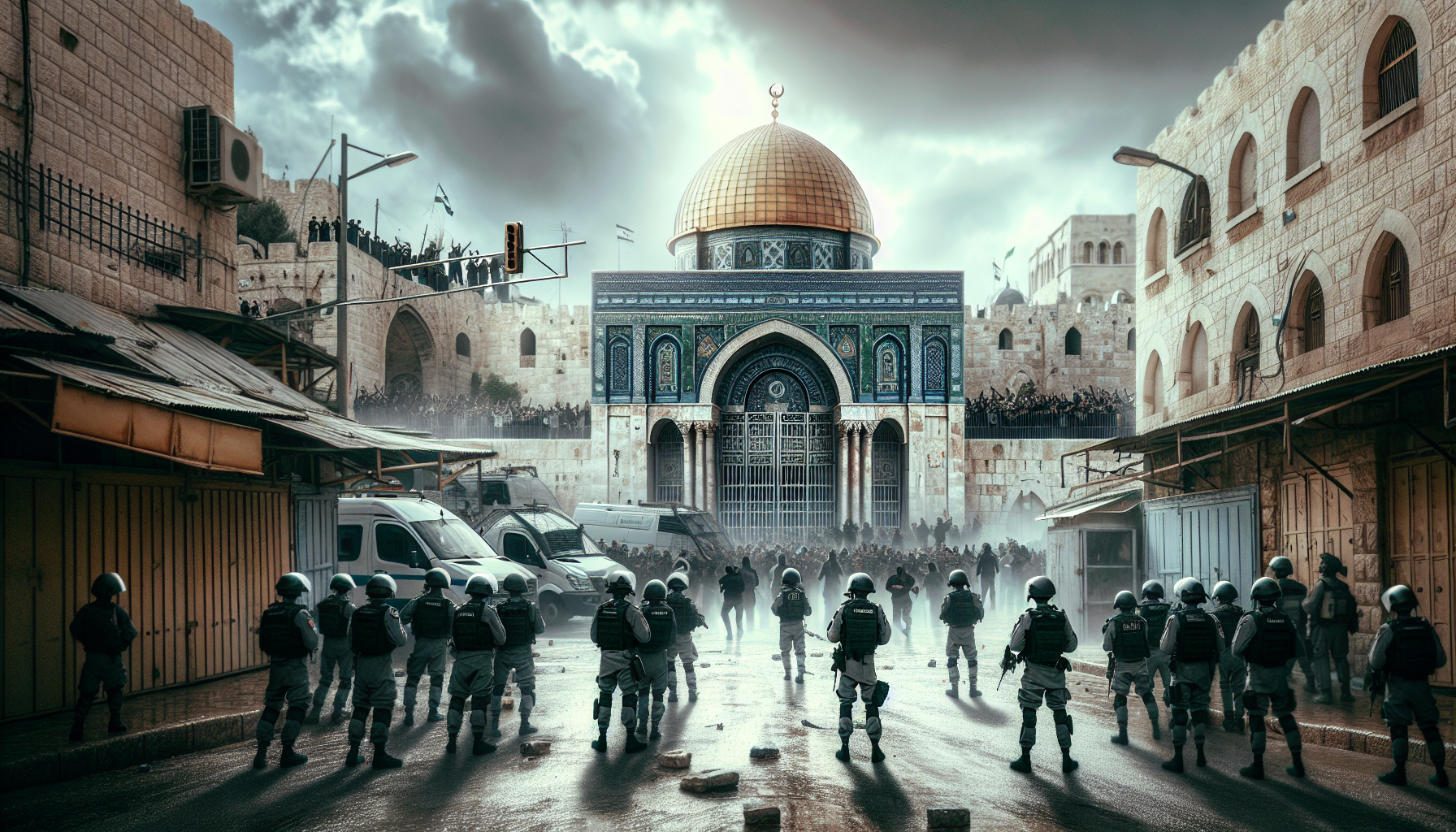
In a significant development, violence has surged across Palestinian territories, marked by increasing settler attacks and forced evictions in East Jerusalem. These actions have heightened tensions in a region already fraught with conflict, contributing to widespread unrest. Meanwhile, Israeli authorities have maintained the closure of several key holy sites, further inflaming religious and political sensitivities. The shuttering of these sacred places disrupts the daily lives of worshippers and symbolizes the deepening divide between communities.
East Jerusalem, a focal point of Israeli-Palestinian tensions, has witnessed a series of evictions that many view as attempts to assert Israeli dominance over contested neighborhoods. These evictions have sparked protests and international concern, as they threaten the fragile status quo in the city. The closure of holy sites, including those revered by multiple faiths, adds a religious dimension to the conflict, complicating efforts toward peace. The situation underscores the challenges faced by authorities in balancing security measures with respect for religious freedoms.
The ongoing violence and restrictions have significant implications for regional stability and the prospects for dialogue between Israelis and Palestinians. The escalation risks further alienating communities and diminishing trust, which is essential for any meaningful negotiation. International observers warn that continued settler violence and site closures could provoke wider unrest, potentially drawing in neighboring countries. As the situation evolves, the international community remains watchful, emphasizing the need for restraint and renewed efforts toward a peaceful resolution.
