

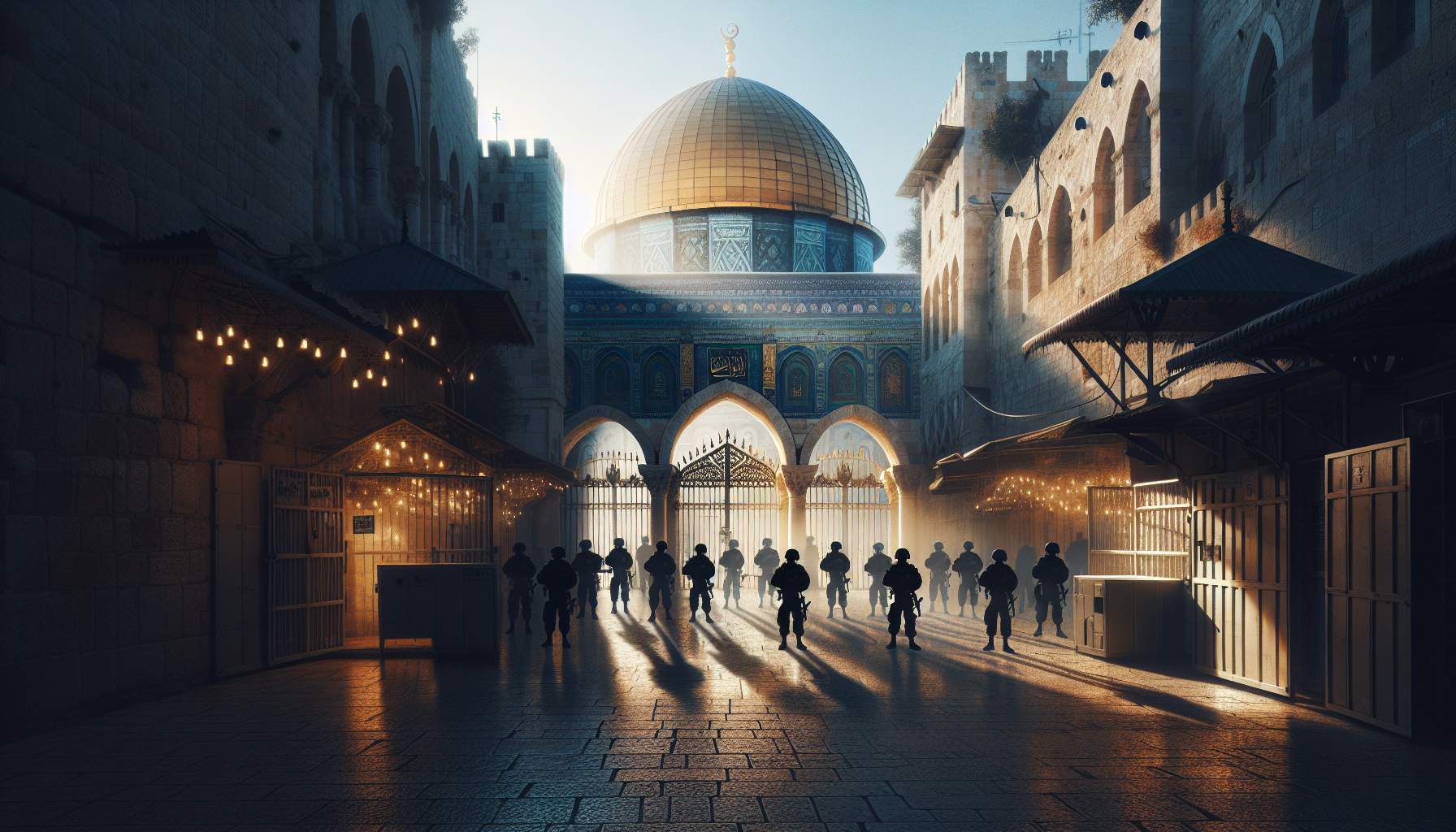
The United States government has formally expressed its concerns regarding Israel’s recent closure of significant religious sites in Jerusalem. This move has sparked apprehension due to the sensitive nature of these locations, which hold profound spiritual importance for multiple faiths. Jerusalem’s holy sites have historically been a focal point of religious coexistence as well as conflict, making any restrictions highly impactful.
In a significant development, the White House communicated its unease directly to Israeli authorities, emphasizing the potential consequences such closures could have on regional stability and interfaith relations. The decision to restrict access to these sacred places comes amid ongoing tensions in the area, which have periodically escalated into broader conflicts. The US intervention underscores its role as a key diplomatic actor seeking to maintain peace and protect religious freedoms in this volatile region.
Meanwhile, the closure of these sites has drawn international attention, raising concerns about the implications for both local communities and the wider geopolitical landscape. Access to Jerusalem’s holy sites is a deeply sensitive issue that affects millions of believers worldwide, and any disruption can exacerbate existing divisions. The US response highlights the importance of dialogue and cooperation to ensure that these revered locations remain accessible and respected by all parties involved.
