

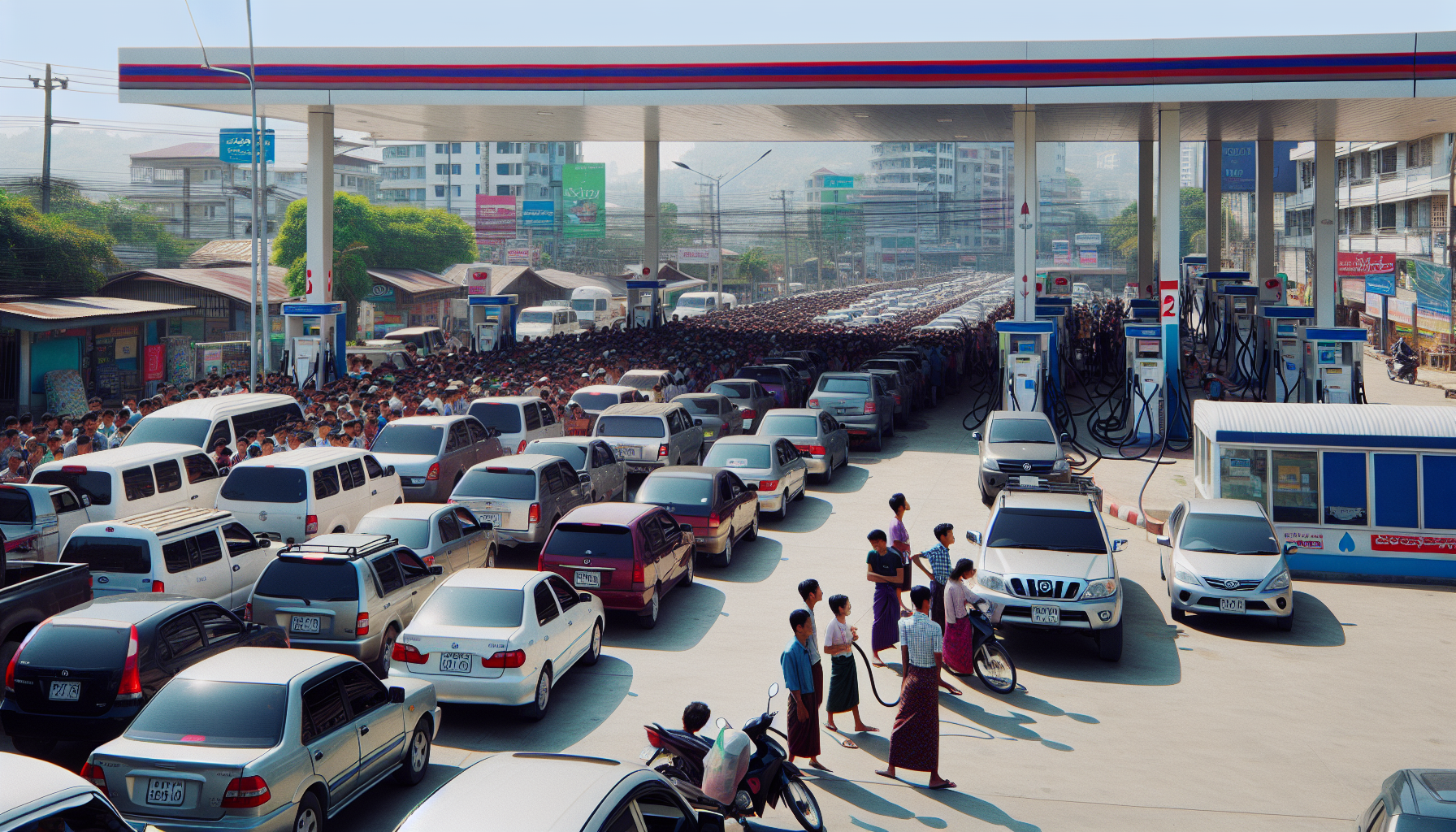
Myanmar is currently experiencing significant fuel shortages, leading to extensive queues at petrol stations where drivers wait for hours to refuel. This crisis is a direct consequence of the ongoing conflict in Iran, which has severely disrupted global oil supplies and sent shockwaves through international energy markets. The scarcity of fuel in Myanmar highlights the far-reaching impact of the Iran war beyond the immediate conflict zone, affecting everyday life in distant countries.
In a significant development, the Iran war has intensified global energy insecurity, causing supply chain disruptions that have reverberated across Asia. Myanmar, heavily reliant on imported fuel, is now grappling with the fallout as shortages strain transportation and economic activities. The long queues at petrol stations not only inconvenience citizens but also threaten to slow down commercial operations and essential services, exacerbating the country’s economic challenges.
Meanwhile, the fuel crisis in Myanmar underscores the vulnerability of global energy networks to geopolitical conflicts. As the Iran war continues, countries dependent on oil imports face increasing uncertainty, prompting concerns over energy security and price volatility. This situation calls for urgent measures to diversify energy sources and strengthen supply resilience to mitigate the impact of such international conflicts on local populations.
