

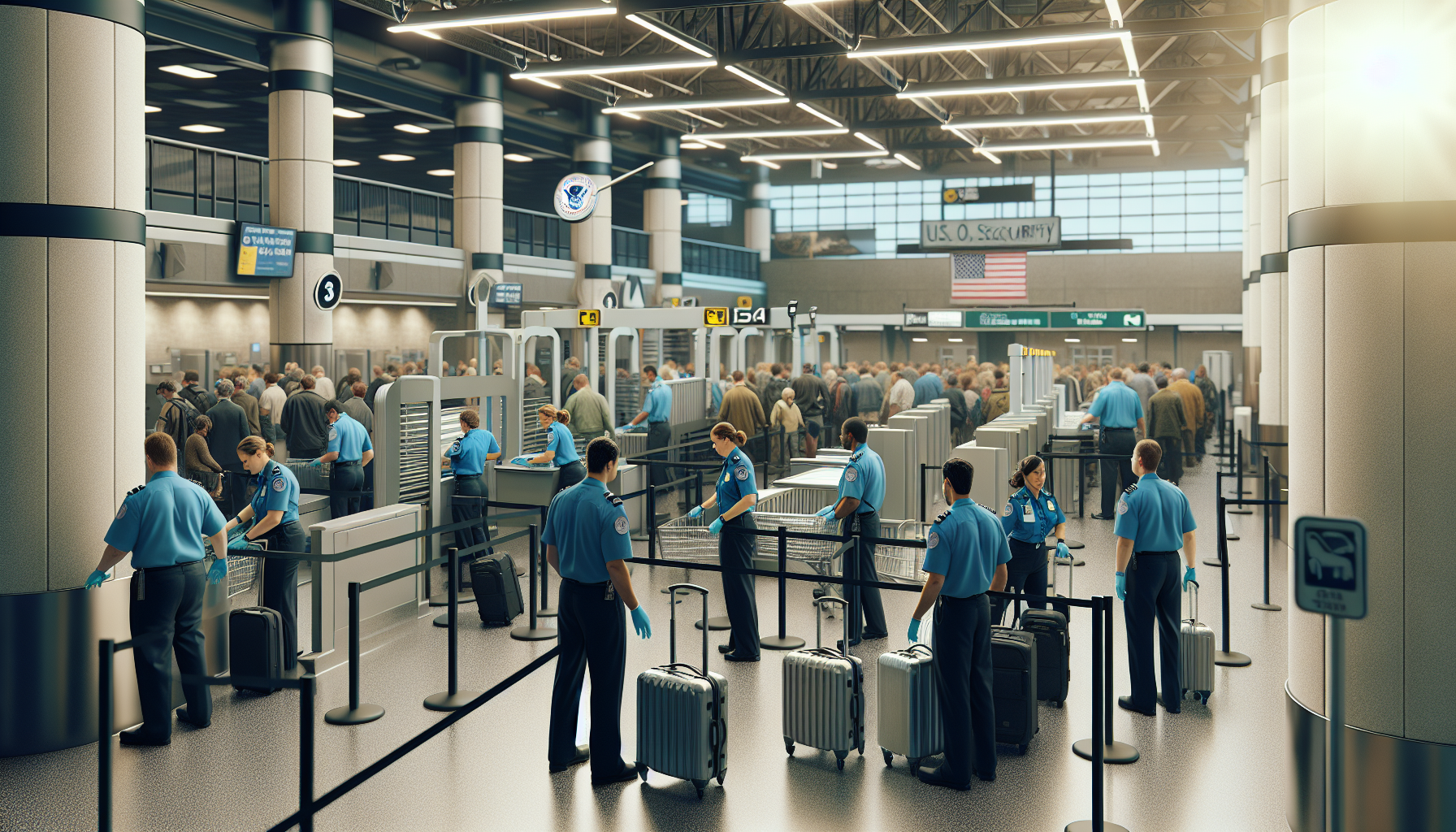
Major airports across the United States that faced significant disruptions for weeks due to unpaid Transportation Security Administration (TSA) officers are now seeing a return to normal operations. Airports in Baltimore, Houston, New York, New Orleans, and Dallas, which recently experienced extensive delays, reported notably shorter security lines on Monday.
The prolonged standoff caused unprecedented chaos, with security wait times reaching up to four hours—the longest in TSA’s nearly 25-year history. In a significant development, President Donald Trump issued an emergency directive on Friday mandating that TSA employees be paid despite Congress failing to resolve the 45-day partial government shutdown. The Department of Homeland Security confirmed that payments would be processed as early as Monday, with some TSA workers noting that their paychecks were deposited into their bank accounts early that day.
Absenteeism peaked on the preceding Friday, with approximately 12.4% of TSA staff—around 3,560 workers—failing to report to duty, contributing to extensive delays at many major airports. Since February, over 500 TSA officers have resigned. At New York’s JFK Airport, more than one-third of TSA personnel were absent on Friday. Similarly, Baltimore, Atlanta, New Orleans, and Houston’s two airports reported significant no-show rates, with Houston experiencing a 45% absentee rate.
The funding impasse stems from Congressional Democrats withholding Department of Homeland Security (DHS) funding while demanding reforms to immigration enforcement policies. This followed the fatal shootings of U.S. citizens Renee Good and Alex Pretti by agents in Minneapolis. Democrats proposed separate funding for TSA as part of negotiations on Immigration and Customs Enforcement (ICE) reforms. However, Republican leaders in the House rejected a bipartisan Senate compromise aimed at ending the six-week DHS funding deadlock and instead passed a bill to finance the entire department.
Meanwhile, airports are managing a surge in travelers due to spring break, with passenger volumes approximately 5% higher than last year. To alleviate pressure, hundreds of immigration agents and Homeland Security Investigations officers were deployed to 14 U.S. airports last week to assist with security screening. The White House has stated these personnel will remain until airport operations stabilize.
