

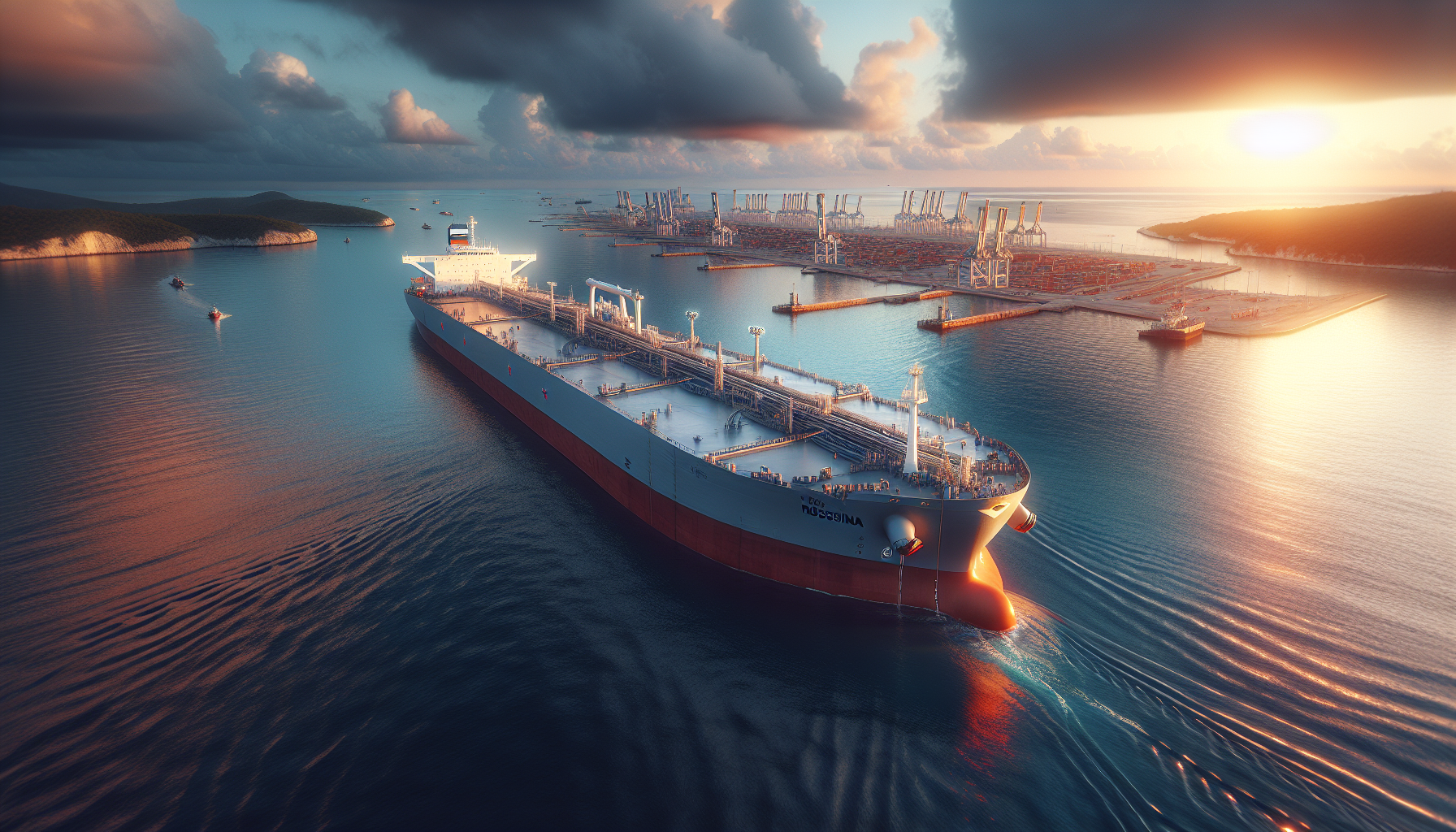
President Donald Trump indicated a shift in U.S. policy on Sunday by allowing oil shipments to Cuba, including those from Russia, as a sanctioned Russian tanker approached a Cuban port with a vital fuel delivery. The vessel, part of Russia’s so-called “shadow fleet,” was positioned off eastern Cuba and expected to dock on Monday, offering relief to an economy severely impacted by a U.S.-imposed de facto oil blockade.
Following the U.S. overthrow of Venezuelan President Nicolas Maduro on January 3, Washington halted Venezuelan oil exports to Cuba and threatened punitive tariffs against any nation supplying crude to the island. This pressure led Mexico, Cuba’s other major oil supplier, to suspend shipments, resulting in Cuba not receiving oil tankers for three months. President Miguel Diaz-Canel has highlighted the worsening energy crisis, marked by gasoline rationing and widespread blackouts affecting the 10 million population. Cuban health officials have warned that the shortage has heightened mortality risks for cancer patients, particularly children.
Speaking aboard Air Force One, Trump expressed empathy for the Cuban people’s energy needs but dismissed concerns that oil deliveries might bolster Havana’s Communist regime. He predicted the government would collapse independently and stated, “If a country wants to send some oil into Cuba right now, I have no problem with that, whether it’s Russia or not.” Trump emphasized his preference for allowing shipments to support basic necessities like heating and cooling, despite his ongoing criticism of Cuba’s leadership.
While showing concern for Cuban citizens, Trump has maintained a series of stern warnings against the Cuban government and indicated plans to focus more attention on the island after addressing issues with Iran.
In a related development, the U.S. had temporarily eased sanctions on Russia earlier in March to facilitate global oil flow amid the U.S.-Israeli conflict with Iran. However, exemptions explicitly barred transactions involving Cuba, Iran, North Korea, and Crimea. The Russian tanker Anatoly Kolodkin departed from Primorsk port carrying between 650,000 and 730,000 barrels of crude, ship-monitoring data. Cuban state media described the shipment as a direct challenge to the U.S. blockade, noting the Russian navy escorted the vessel through the English Channel en route to the Caribbean.
Reports indicate the U.S. Coast Guard permitted the sanctioned tanker to proceed to Cuba, though the rationale remains unclear. Using force to block the tanker risked escalating tensions with Russia amid sensitive geopolitical circumstances. Brett Erickson of Obsidian Risk Advisors highlighted the significance of the Anatoly Kolodkin’s arrival, especially after the UK authorized its military to board Russian shadow fleet vessels passing through its waters, allowing another Russian ship, the VAYU 1, to transit the English Channel recently.
Erickson noted that Russia has gained substantial benefits from the conflict in Iran while supplying essential oil to Cuba, whose strategic value to Moscow has grown following the loss of allies in Syria and Venezuela and ongoing attacks on Iran. He added that Cuba requires relatively modest oil quantities to function, estimating the Kolodkin’s cargo could sustain the country for about two and a half weeks, potentially extending to a month with rationing measures in place.
