

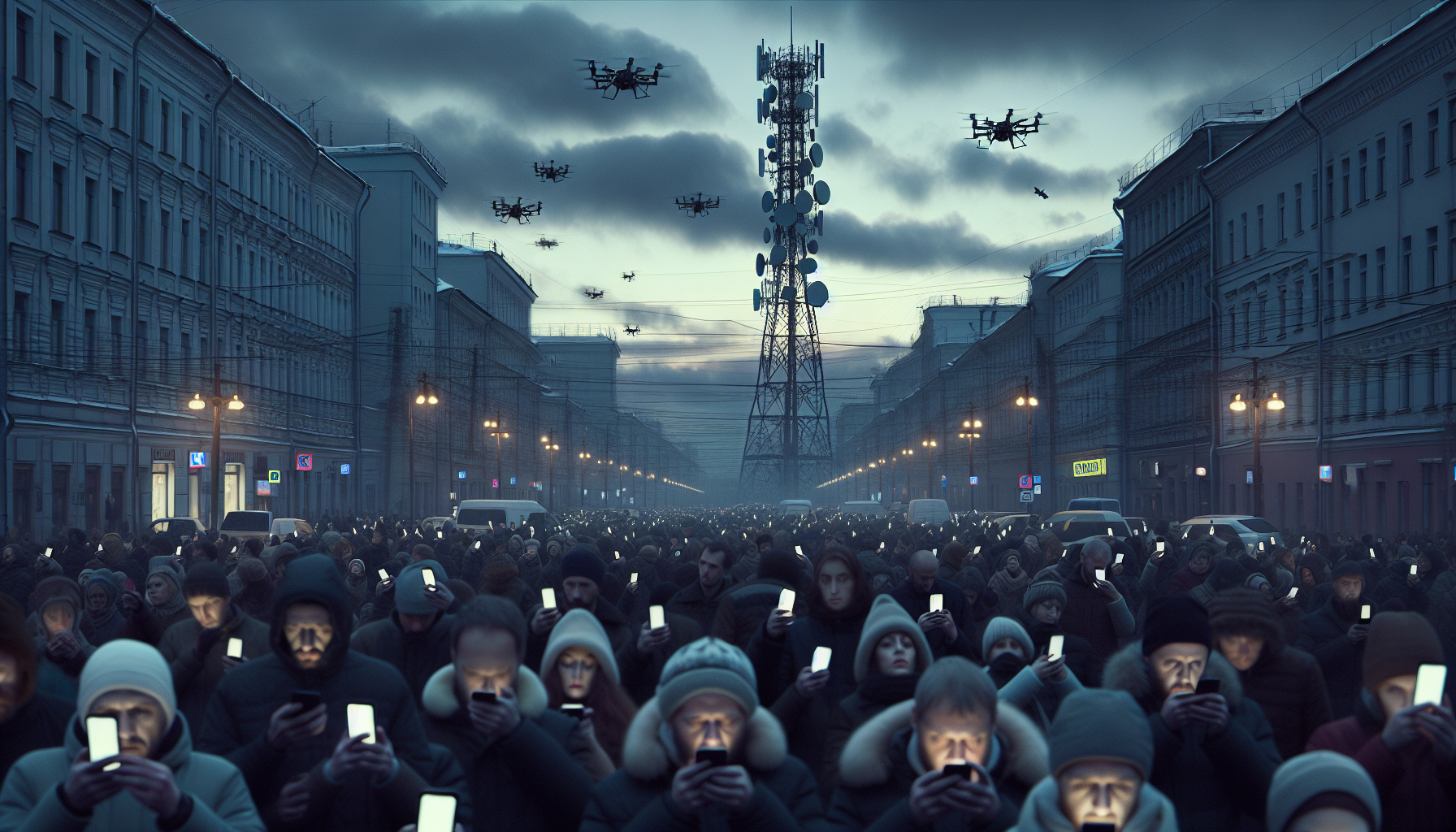
In a significant development, Russian authorities have enforced widespread data blackouts across affected regions as Ukrainian drone strikes escalate. The move aims to curb the flow of information, citing national security concerns amid ongoing military tensions. Many residents report that their mobile devices have become unusable, describing their phones as ‘bricks’ due to the lack of connectivity. This disruption has severely limited access to news and communication channels, heightening public anxiety.
Meanwhile, Ukrainian drones continue to target strategic locations within Russia, intensifying the conflict and prompting stricter information controls. The blackouts reflect a broader strategy to manage the narrative and prevent real-time updates from reaching the public or adversaries. Such measures also complicate humanitarian efforts and the ability of citizens to stay informed about safety and emergency protocols. The information blackout underscores the growing technological and psychological dimensions of modern warfare.
Notably, these developments highlight the challenges faced by civilians caught in the crossfire of geopolitical conflict, where access to reliable information becomes a critical issue. The disruption of communication networks not only affects daily life but also raises concerns about transparency and accountability during times of crisis. As the situation evolves, the impact of these blackouts on public morale and the flow of information will remain a key factor in the ongoing conflict dynamics.
