

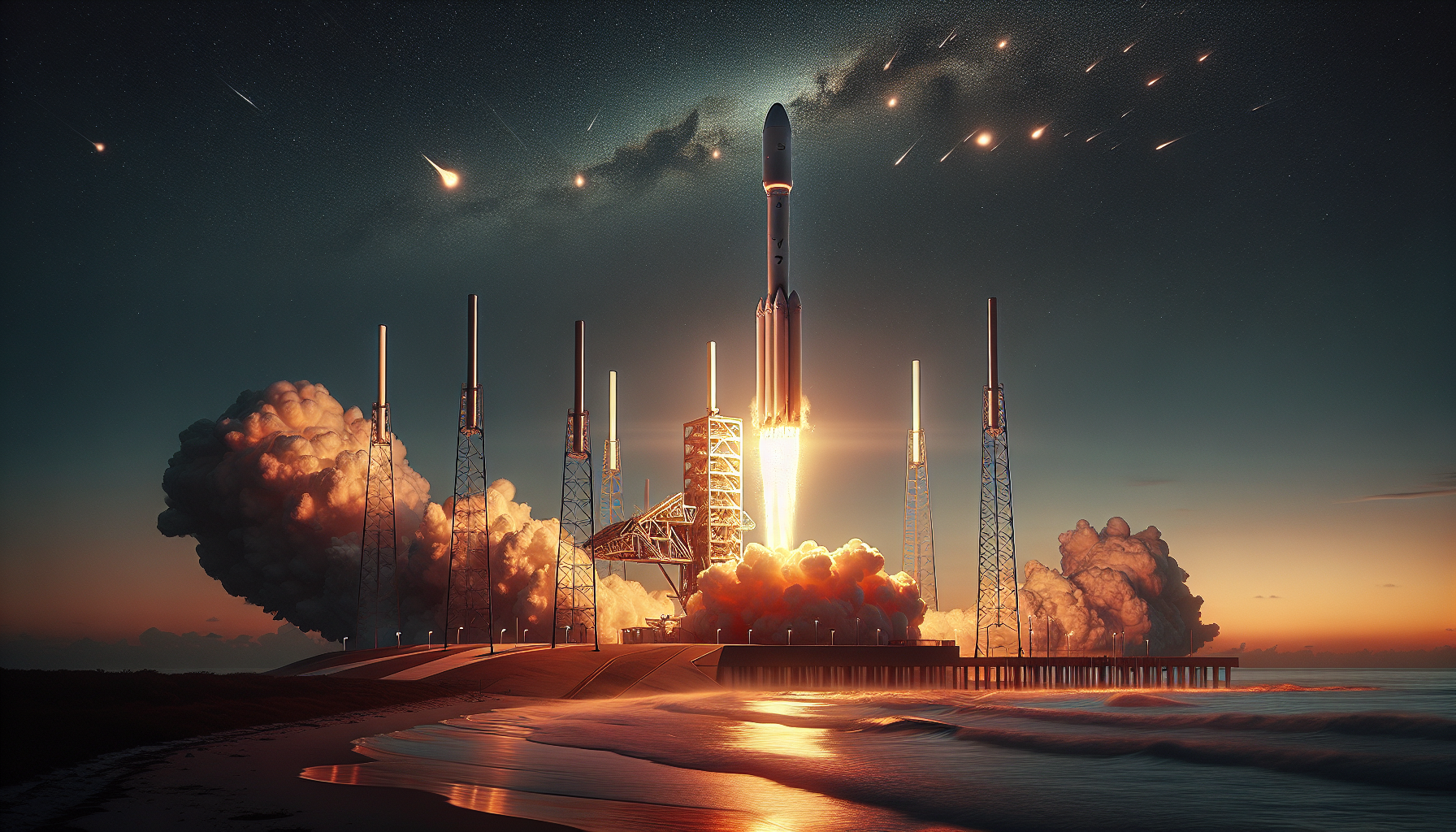
The upcoming public offering of SpaceX represents more than just a major initial public offering; it may signify the expansion of the global economy beyond Earth’s boundaries. With a potential valuation reaching $1.75 trillion, this IPO could become the largest in history. More importantly, it highlights a fundamental transformation: space is evolving from a realm dominated by governments and exploration into a fully-fledged economic sector.
For many years, space activities were primarily motivated by national pride and scientific research, led by agencies such as NASA. However, this paradigm is rapidly shifting. Private enterprises are now spearheading a new space economy, characterized by more affordable launch technologies, extensive satellite networks, and increasing commercial collaborations that are gradually replacing government monopolies.
At the forefront of this revolution is SpaceX, whose development of reusable rockets has made space access more frequent and cost-effective. The company’s influence extends well beyond rocket launches. Its satellite constellation, Starlink, already delivers internet connectivity worldwide, including to remote and underserved areas. This infrastructure is comparable to the transformative impact railways and fiber optics had in their eras—except it operates in orbit.
Notably, SpaceX’s partnership with xAI points to the next stage of innovation: integrating space-based systems with artificial intelligence to establish a new digital infrastructure layer. Ambitions also include deploying large numbers of satellites that could serve as orbital data centers, effectively relocating computing power beyond Earth.
Historically, investors viewed space ventures as high-risk and futuristic. That perception is changing as SpaceX demonstrates profitability, generating billions in revenue with strong demand from both government and commercial sectors. The IPO would enable everyday investors to access an industry that was previously inaccessible to the public. This move might also trigger a wave of public offerings from other cutting-edge tech companies, including OpenAI, signaling a broader trend of next-generation firms entering public markets.
Beyond financial implications, the growing reliance of governments on private space companies and intensifying competition are positioning space as a strategic asset for national security, communication, data services, and future industries. Just as railroads transformed the 19th century and the internet reshaped the 21st, space infrastructure could become the foundation for decades to come.
Under Elon Musk’s leadership, SpaceX has been instrumental in enabling this shift. Its IPO could crystallize years of quiet development, marking the transition of space from a visionary goal to a tangible economy. If successful, this public listing will not only make history on Wall Street but also confirm that the space economy has truly arrived.
