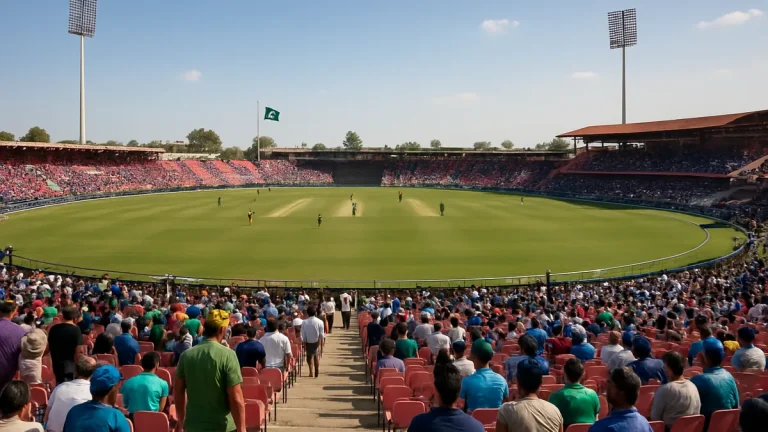
The Pakistan Cricket Board (PCB) has taken a stern stance following the national team’s underwhelming performance in the recently concluded T20 World Cup 2026. In a decisive move, the board has levied a hefty fine of Rs 5 million on every player who represented Pakistan in the tournament. This disciplinary action reflects the PCB’s growing impatience with the team’s failure to meet expectations on the global stage.
In addition to the financial penalties, the PCB has made it clear that future monetary rewards and benefits will be closely linked to individual and team performances. This marks a shift towards a more results-driven approach within the cricketing establishment, aiming to hold players accountable for their contributions. The board is reportedly contemplating a significant reshuffle of the squad, which may include the controversial decision to remove some senior players, among them the current T20 captain, Babar Azam.
Pakistan’s campaign in the T20 World Cup ended abruptly on Saturday when the team failed to secure a spot in the semi-finals, a result that has sparked widespread criticism. Analysts and fans alike pointed to a series of tactical and technical shortcomings. From the captaincy of Salman Agha, who faced criticism for his suitability in the fast-paced T20 format, to the sluggish batting approach and the questionable selection of all-rounders, Pakistan appeared out of sync with the evolving demands of modern Twenty20 cricket.
Veteran cricketer and former wicketkeeper-batsman Kamran Akmal voiced his concerns about the widening gap between Pakistan and the world’s leading T20 teams. He emphasized that while countries like India, West Indies, South Africa, and England have adapted their strategies and skillsets to thrive in this format, Pakistan has lagged behind. Akmal likened the disparity to a scenario where other teams are playing on a different planet, highlighting Pakistan’s inability to compete consistently against top-tier opponents. He noted that Pakistan’s victories have largely come against lesser-ranked teams, underscoring the urgent need for improvement.
Before the World Cup, expectations were high as Pakistan had convincingly swept Australia 3-0 in a pre-tournament series, raising hopes of a strong showing. However, the team’s inability to replicate that form on the biggest stage has raised questions about preparation, mindset, and selection policies. The PCB’s decision to impose fines and consider a squad overhaul signals a commitment to addressing these issues head-on as Pakistan looks to rebuild and regain its competitive edge in international T20 cricket.