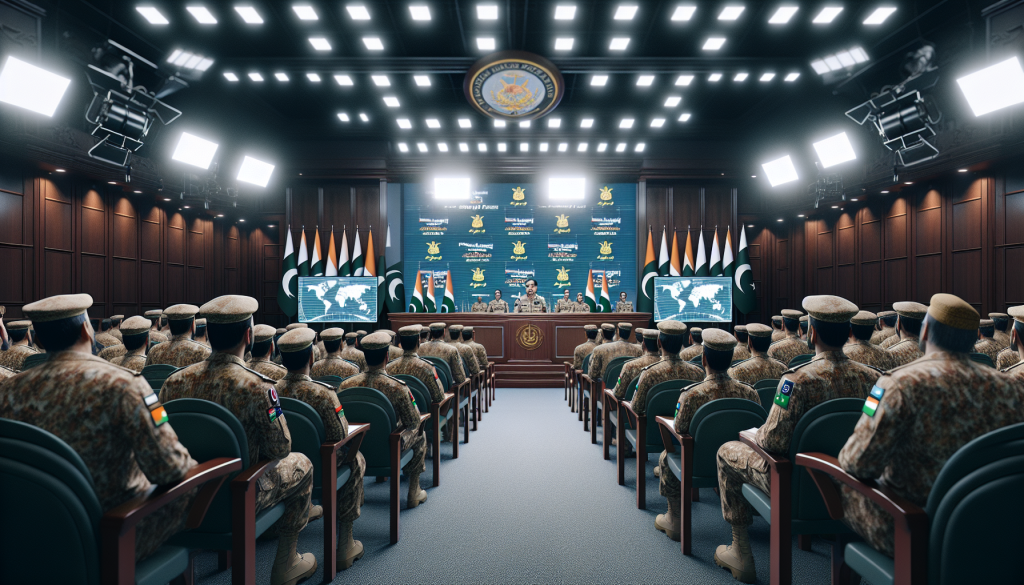
In a comprehensive briefing, senior Pakistani military officials provided an in-depth strategic evaluation of the Marka-e-Haq conflict, underscoring the nation’s stance on maintaining regional stability and strengthening deterrence capabilities. The officials highlighted Pakistan’s preparedness to engage in multi-domain warfare, encompassing land, air, sea, and cyber operations, reflecting a modernized and integrated defense posture.
Marka-e-Haq, which translates to the “battle of truth,” refers to the intense 19-day military confrontation between Pakistan and India that took place from April 22 to May 10, 2025. This conflict marked a significant episode in the ongoing tensions between the two nuclear-armed neighbors. The briefing was led by Lieutenant General Ahmed Sharif Chaudhry, Director General of Inter-Services Public Relations (ISPR), who was joined by Rear Admiral Shifaat Ali Khan and Air Vice Marshal Tariq Ghazi. Together, they presented a unified military perspective on the conflict’s operational dynamics and its broader strategic implications.
The officials recounted that the hostilities escalated after India launched an unprovoked attack on Pakistan on May 6-7, 2025, following an incident involving tourists in the Indian Illegally Occupied Jammu and Kashmir’s Pahalgam town. During the intense 87-hour phase of the conflict, Pakistan’s air defenses successfully downed eight Indian fighter jets, including advanced French-made Rafale aircraft, along with numerous drones. This demonstrated Pakistan’s effective air defense capabilities and operational readiness under combat conditions.
In a significant development, the confrontation concluded on May 10 with a ceasefire agreement facilitated by the United States, bringing an end to the hostilities. The military leaders emphasized that the lessons learned from Marka-e-Haq have reinforced Pakistan’s commitment to safeguarding its sovereignty and enhancing its defense mechanisms across multiple domains. This strategic assessment serves as a critical reflection on the conflict, highlighting Pakistan’s resolve to maintain peace and stability in the region while remaining vigilant against future threats.