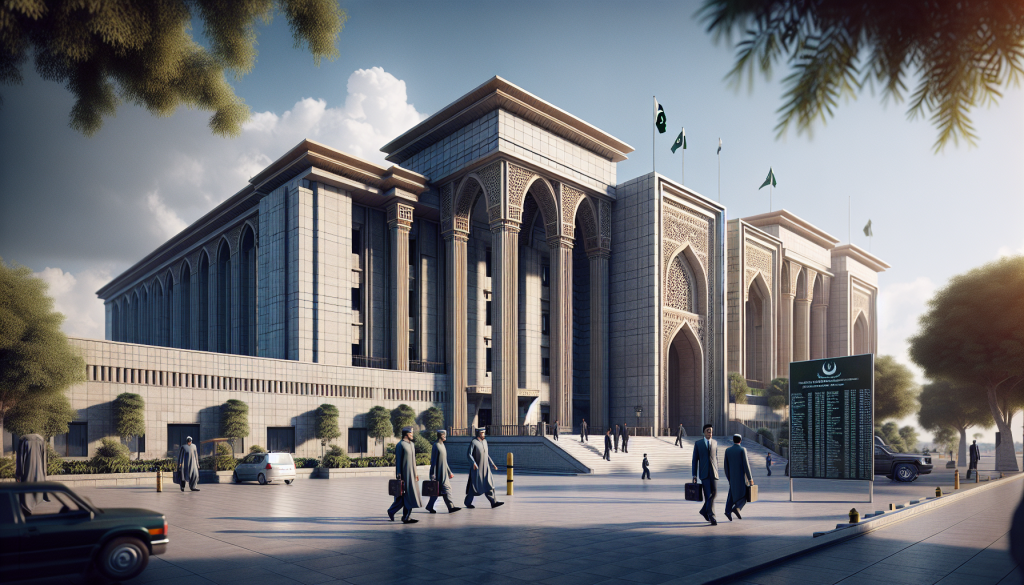
The transfer of three judges from the Islamabad High Court has resulted in a substantial reordering of judicial seniority and administrative duties, prompting the issuance of a new roster for the upcoming week. This follows the Judicial Commission of Pakistan’s decision to transfer Justices Mohsin Akhtar Kiani, Babar Sattar, and Saman Rafat Imtiaz to various provincial high courts, a move that has sparked legal and constitutional disputes within the legal community.
With Justice Mohsin Akhtar Kiani’s departure, Justice Sardar Ejaz Ishaq Khan has become the senior-most judge in the Islamabad High Court after the Chief Justice. Court officials have indicated that Justice Ejaz Ishaq Khan will retain this position until further appointments or transfers occur. This seniority shift has also prompted adjustments in administrative roles and the formation of benches, particularly affecting division benches responsible for constitutional, criminal, and tax cases.
In a significant development, the Islamabad High Court registrar’s office released a new duty roster effective from April 4, which includes seven single benches and four division benches. This updated schedule reflects the reshuffled bench composition and will remain in place until further notice, ensuring the continuity of judicial proceedings amid these structural changes.
The reconstituted division benches include a key panel led by Chief Justice Sardar Muhammad Sarfraz Dogar and Justice Muhammad Asif, tasked with hearing a wide array of cases. Another division bench, headed by Justice Sardar Ejaz Ishaq Khan alongside Justice Arbab Muhammad Tahir, will focus on tax matters. Additionally, a bench of Justice Khadim Hussain Soomro and Justice Muhammad Asif has been assigned criminal cases, while Justice Muhammad Azam Khan and Justice Raja Inam Amin Minhas will hear cases across all categories. Notably, Justice Muhammad Asif will serve on multiple division benches, indicating an increased judicial workload under the revised framework.
The transfers stem from the Judicial Commission’s majority decision earlier this week to approve inter-high court judge transfers. Justice Mohsin Akhtar Kiani was moved to the Lahore High Court, Justice Babar Sattar to the Peshawar High Court, and Justice Saman Rafat Imtiaz to the Sindh High Court. The commission also decided that vacancies resulting from these transfers will be filled through further transfers, rather than fresh appointments, marking a significant precedent for future judicial postings.
Meanwhile, the legal community has raised concerns about the transfers. The Lahore High Court Bar Association has challenged the move in the Supreme Court, citing issues related to transparency and constitutional adherence. Petitioners argue that the lack of explicit reasons for the transfers could undermine judicial independence, while also contesting recent constitutional amendments affecting judicial appointments and transfers.
Chief Justice Yahya Afridi had previously voiced reservations during discussions, cautioning that such transfers might raise constitutional issues and disturb the balance between federal and provincial judiciaries. These transfers coincide with amendments to Article 200, which now permit the Judicial Commission to recommend inter-high court transfers without requiring the judges’ consent, a significant change from prior protocols.
Legal experts note that while these amendments create a new system for judicial transfers, they have also sparked debate regarding institutional autonomy and administrative control within the superior judiciary. Despite these challenges, court officials emphasize that maintaining the Islamabad High Court’s operations remains a priority. The revised roster ensures that both single and division benches continue functioning effectively, marking one of the most notable judicial reorganizations in recent years.