



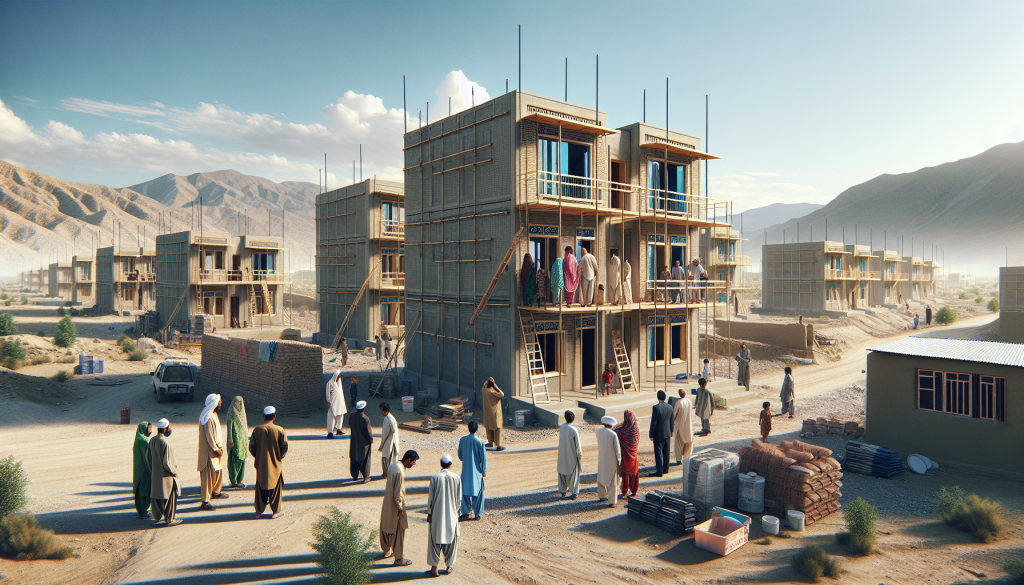
Reconstruction efforts in flood-ravaged areas of Balochistan are progressing rapidly with the introduction of climate-resilient housing projects designed to withstand extreme weather conditions. These initiatives aim to support communities repeatedly affected by severe flooding.
In a collaborative effort, the United Nations Development Programme (UNDP), the German Government through KfW Development Bank, the Ministry of Planning, Development and Special Initiatives, and provincial authorities are jointly constructing 700 homes tailored to endure climate challenges. A delegation led by Muhammad Bashir Khetran recently visited the Hanna–Urak site in Quetta to assess the project’s advancement and engage with the families benefiting from the new housing. Officials reported that over 150 homes have already been delivered, with additional units nearing completion.
This project follows the catastrophic floods of 2022, which submerged vast regions of Pakistan, displaced millions, and destroyed more than two million houses, with Balochistan among the hardest hit. The situation was exacerbated by subsequent flooding in 2025, underscoring the urgent need for durable, climate-adaptive housing solutions rather than temporary fixes.
The newly constructed homes feature flood-resistant designs, including elevated foundations, reinforced structures, and enhanced ventilation systems to cope with both flooding and extreme heat. This approach marks a significant shift toward “building back better,” emphasizing resilience alongside recovery.
By embedding disaster risk reduction into the housing design, the initiative seeks to safeguard vulnerable populations from recurring climate-related disasters while restoring their stability and livelihoods. This programme is viewed as a crucial step in bolstering Pakistan’s overall climate resilience through coordinated international and local collaboration.

Leave an opinion