



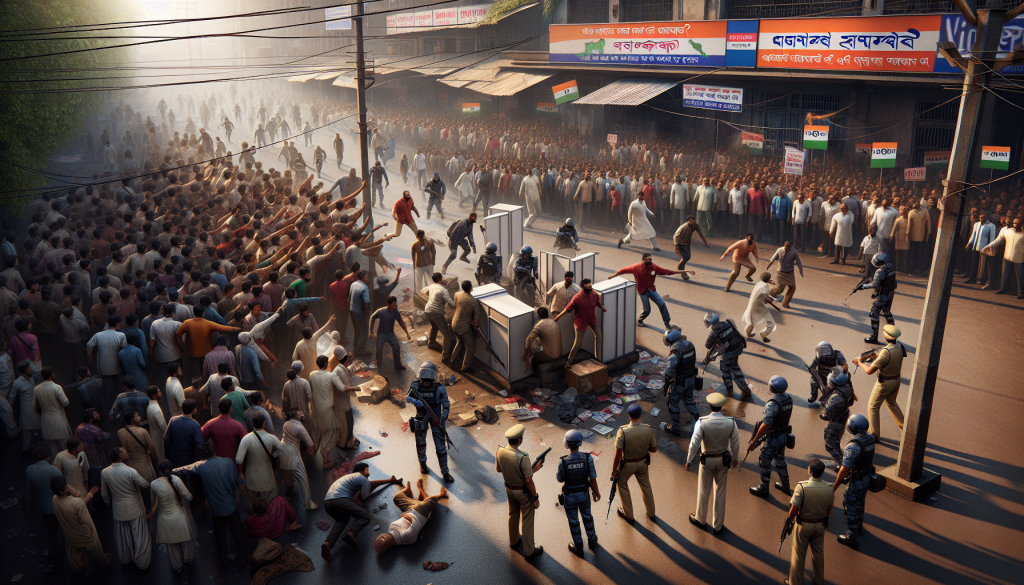
On election day in West Bengal, India, violent clashes erupted between workers of rival political parties, disrupting the voting process in several areas. These confrontations underscore the intense political rivalry and heightened tensions that often accompany elections in this region. West Bengal has a history of politically charged violence, which frequently impacts voter turnout and election administration. Authorities faced challenges in maintaining law and order amid the unrest.
In a significant development, the clashes not only delayed voting in some constituencies but also raised concerns about the safety of voters and election officials. The state’s political landscape is highly polarized, with parties fiercely competing for control, often leading to aggressive tactics. Election commissions and security forces have been deployed to prevent further escalation and ensure the electoral process continues smoothly. Such incidents highlight the fragile nature of democratic processes in politically volatile areas.
Meanwhile, the violence in West Bengal reflects broader issues of political instability and the struggle for power in Indian state elections. The events have drawn attention to the need for stronger measures to protect democratic institutions and promote peaceful political engagement. The outcome of the elections will be closely watched, as they could influence the political dynamics not only within West Bengal but also across India. Ensuring free and fair elections remains a critical challenge amid ongoing political rivalries.

Leave an opinion