



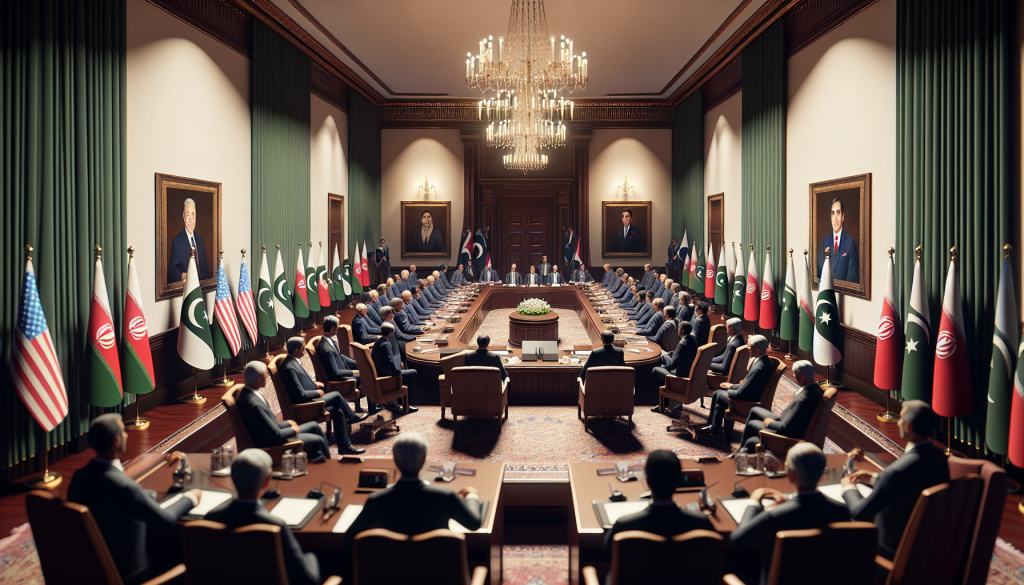
Prime Minister Shehbaz Sharif convened a high-level meeting on Wednesday to evaluate the changing regional dynamics following the extension of the ceasefire between Iran and the United States. The session focused on reviewing the latest developments and Pakistan’s ongoing diplomatic engagement in the region.
Officials participating in the meeting examined efforts to facilitate a second round of negotiations between Iran and the US, emphasizing the critical role of sustained diplomacy in maintaining regional stability and preventing further escalation of tensions.
Pakistan welcomed the US President’s announcement of the ceasefire extension, regarding it as a constructive move toward de-escalation and dialogue. This extension was reportedly granted at Pakistan’s request, as Islamabad continues to mediate between the two parties.
In a significant development, US President Donald Trump declared an open-ended extension of the ceasefire with Iran, aiming to create space for diplomatic solutions. However, uncertainty remains as neither Iran nor Israel, a key US ally, has formally endorsed the continuation of the truce.
Meanwhile, the United States continues to enforce a naval blockade on Iranian trade routes, a measure strongly condemned by Tehran as hostile. Iranian officials have expressed doubts about Washington’s intentions, questioning the sincerity of the ceasefire extension.
The conflict, which erupted on February 28 following US and Israeli airstrikes on Iranian targets, rapidly intensified and involved multiple regional actors, including Gulf states hosting US military bases and groups like Hezbollah in Lebanon. The war has resulted in over 5,000 civilian casualties, displaced hundreds of thousands, and disrupted global markets.
Tensions have been especially high near the Strait of Hormuz, a crucial oil shipping corridor, where instability has caused fluctuations in energy prices and raised concerns about wider economic consequences.
Despite the ceasefire extension, the outlook for lasting peace remains uncertain. The planned second round of talks in Islamabad faces logistical and political challenges, with significant disagreements persisting, particularly regarding Iran’s nuclear program. While the ceasefire offers temporary respite, deep-rooted divisions continue to hinder progress toward a durable resolution.

Leave an opinion