



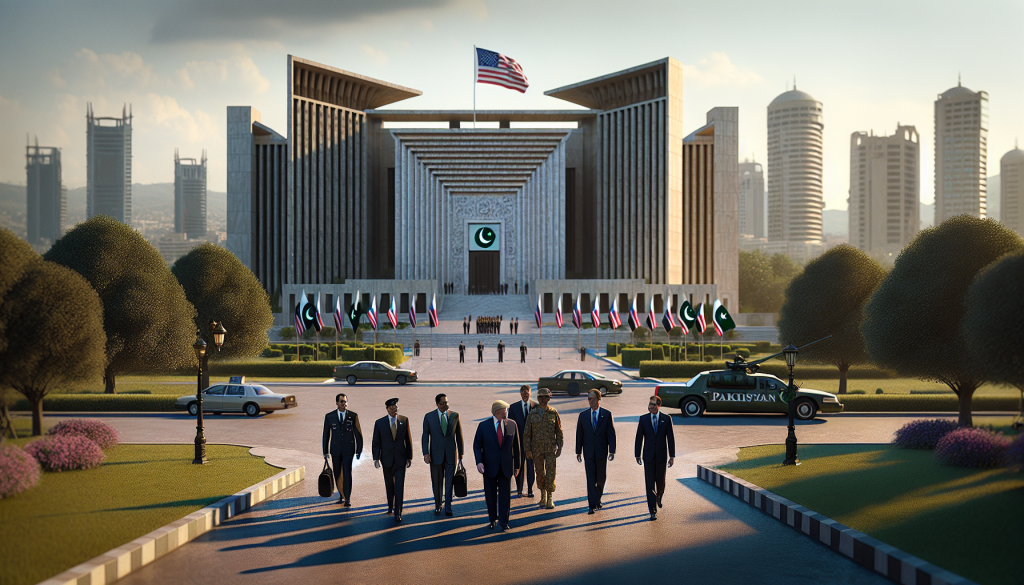
Negotiations between the United States and Iran, described by Prime Minister Shehbaz Sharif as “make-or-break” discussions, are scheduled to commence in Islamabad. These talks, brokered by Pakistan, aim to transform a fragile two-week ceasefire into a durable resolution to the conflict. The ceasefire was announced by US President Donald Trump after six weeks of hostilities, halting US and Israeli airstrikes against Iran.
Despite the ceasefire, major disagreements remain, with both parties accusing each other of not fully honoring the truce. Tensions persist over the Strait of Hormuz and ongoing confrontations involving Israel and Iran-backed Hezbollah forces in Lebanon.
Meanwhile, a high-level Iranian delegation led by Parliament Speaker Mohammad Baqer Ghalibaf arrived in Islamabad early Saturday ahead of the talks. The group also includes Iranian Foreign Minister Abbas Araghchi.
In a significant development, JD Vance, the 50th Vice President of the United States, landed in the federal capital on Saturday alongside negotiators Steve Witkoff and Jared Kushner. Their presence underscores efforts to de-escalate tensions in the Middle East. Vance is the first US vice president to visit Pakistan since Joe Biden in 2011, highlighting the importance Washington places on this diplomatic engagement.
US vice presidential visits to Pakistan have historically been rare and typically coincide with critical geopolitical moments. Richard Nixon visited Karachi on July 9, 1956, meeting President Iskandar Mirza during the early stages of Pakistan-US relations. Lyndon B. Johnson traveled to Karachi on a goodwill mission for President Kennedy, meeting President Ayub Khan and famously interacting with a local camel cart driver, Bashir Sarban, who was later invited to the United States as an official guest.
Vice President Dick Cheney made an unannounced visit on February 26, 2007, holding discussions with General Pervez Musharraf amid regional security concerns. Joe Biden arrived in Islamabad on January 12, 2011, for a brief but high-level visit, meeting with President Asif Ali Zardari and Prime Minister Yousaf Raza Gilani. Earlier, in February 2008, Biden had been part of a delegation that observed Pakistan’s elections while serving as Chairman of the Senate Committee on Foreign Relations.
On the presidential front, Dwight D. Eisenhower was the first US president to visit Pakistan in 1959, welcomed by President Ayub Khan in Karachi amid large crowds. President Johnson made a brief stopover on December 23, 1967, during his tenure. Richard Nixon visited Lahore twice, on August 1 and August 1, 1969, meeting President Yahya Khan. Bill Clinton held a short visit on March 25, engaging with President Rafiq Tarar and General Musharraf. George W. Bush traveled to Pakistan on March 3-4, meeting General Musharraf and participating in public diplomacy events, including a cricket match with local players.

Leave an opinion