



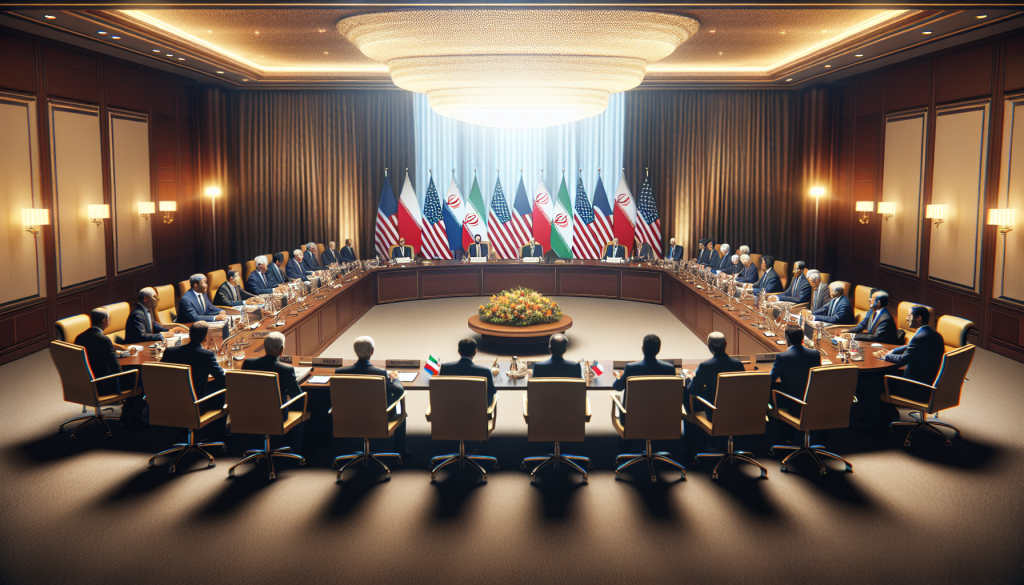
Prime Minister Shehbaz Sharif announced on Wednesday that Islamabad will host delegations from the United States and Iran later this week to advance ceasefire negotiations. He expressed profound gratitude to the leadership of both nations and extended an invitation for their representatives to meet in Islamabad on Friday, April 10, 2026, aiming to finalize a comprehensive agreement to resolve ongoing disputes.
Pakistan has developed a close rapport with US President Donald Trump and remains attentive to developments in neighboring Iran. In recent weeks, Islamabad has served as a conduit for communication between Tehran and Washington. The prime minister conveyed hopes that the “Islamabad Talks” will successfully establish enduring peace and promised to share further positive updates soon.
Both Tehran and Washington agreed to a two-week ceasefire just an hour before Trump’s ultimatum to destroy Iran was set to expire. In a separate announcement, PM Shehbaz revealed that Iran’s President Masoud Pezeshkian confirmed Tehran’s participation in the upcoming talks during a 45-minute phone conversation.
The conflict escalated after Israel and the United States launched strikes on Iran, including the assassination of its supreme leader on February 28. This prompted retaliatory attacks by Tehran on Gulf countries and Israel. Lebanon has also become involved following Hezbollah’s attacks on Israel, which responded with airstrikes, including on Beirut, and initiated a ground offensive in southern Lebanon.
PM Shehbaz emphasized that the ceasefire applies universally, including Lebanon, although Israel declared it would continue its aerial and ground operations against Hezbollah there. The temporary truce followed intense mediation efforts by Pakistan and other parties to prevent Trump’s threat to destroy Iran’s power plants and bridges, a move considered by legal experts as potentially constituting a war crime.
Turkey and Egypt have also played roles in mediation recently. China was instrumental in bringing Iran to the negotiating table, as acknowledged by Trump. PM Shehbaz further credited China, Saudi Arabia, Turkey, Egypt, and Qatar for their support in achieving the ceasefire and promoting diplomatic solutions. He also thanked the Arab Gulf states for their dedication to regional peace and stability.
Despite past missile exchanges with Iran and a sometimes tense relationship with the United States, Pakistan currently maintains cordial relations with both countries. Pakistan shares a 900-kilometer (560-mile) border with Iran and represents some Iranian diplomatic interests in Washington, where Tehran lacks an embassy.

Leave an opinion