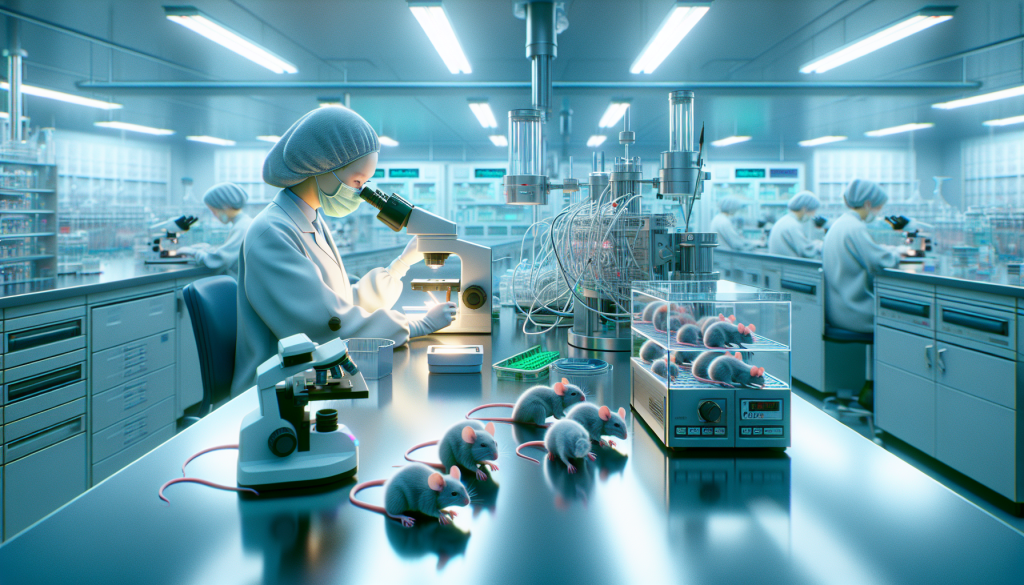
In a groundbreaking study that spans nearly 20 years, scientists have uncovered significant genetic challenges associated with repeated cloning in mammals. The research, conducted in Japan, involved cloning mice continuously from a single female donor over the course of two decades, revealing that serial cloning leads to the accumulation of severe genetic mutations that ultimately prove fatal. This discovery challenges long-held assumptions about the viability and fidelity of cloning technology when applied over multiple generations.
The team generated a total of 1,206 cloned laboratory mice between 2005 and 2025, all derived from one original female mouse. For the first 25 generations, the clones appeared healthy and showed no outward signs of genetic or physical abnormalities. However, as the cloning process continued, mutations began to accumulate silently within the animals’ genomes. By the 58th generation, despite no visible physical defects, the clones died shortly after birth, highlighting the hidden but devastating impact of these genetic changes.
These findings fundamentally contradict the popular notion that clones are perfect, identical replicas of their donor animals. Instead, the study reveals that cloning using current nuclear transfer technology cannot be sustained indefinitely without detrimental consequences. Teruhiko Wakayama, a developmental biologist at the University of Yamanashi and the senior author of the study published in Nature Communications, emphasized the novelty of this research, stating that no one had previously pursued re-cloning for such an extended period. The results clearly demonstrate that repeated cloning eventually reaches a biological limit.
Wakayama explained that mutations in cloned mice occur at a rate approximately three times higher than in offspring produced through natural mating. This accelerated mutation rate leads to the gradual deterioration of genetic material, making it impossible for mammals to perpetuate their species through cloning alone. The study sheds light on why mammals, unlike plants or some lower animals, cannot rely on cloning to sustain their populations over time.
The cloning process employed by the researchers involved nuclear transfer, a technique famously used to create Dolly the sheep in 1996 and Cumulina, the first cloned mouse, in 1998. This method entails transferring the nucleus from a donor cell into an egg cell that has had its own nucleus removed. In this study, the donor cells were specialized ovarian cumulus cells, which surround and support developing eggs. The clones produced were all female with brown fur, mirroring the original donor mouse.
Initially, the researchers published preliminary findings in 2013 after studying the first 25 generations, concluding that re-cloning could potentially continue without adverse effects. However, they had not yet analyzed the genetic sequences at that time. Continuing their work for an additional 13 years, they eventually discovered that their earlier optimism was misplaced. The accumulation of mutations over successive generations imposes a clear biological ceiling on cloning viability.
To better understand the genetic changes occurring during serial cloning, the team sequenced the genomes of 10 clones from various generations. Their analysis revealed a phenomenon similar to making photocopies of photocopies, where each successive copy loses quality and fidelity. Over time, the genetic information diverged significantly from the original, leading to harmful mutations and chromosomal abnormalities. Notably, starting from the 27th generation, large-scale mutations such as the loss of one copy of the X chromosome were observed, which is particularly critical since female mammals typically carry two X chromosomes.
Fertility assessments further highlighted the impact of accumulated mutations. Cloned females mated with normal male mice produced healthy litters of about 10 pups up to the 20th generation. Beyond this point, litter sizes began to decline, reflecting the growing genetic burden. Wakayama pointed out that because cloning passes on all genetic material unchanged, any defective genes are also transmitted, compounding the problem with each generation.
Despite the disappointing results, the study underscores the vital role of sexual reproduction in mammals as a natural mechanism to reduce harmful mutations and maintain genetic health. The researchers acknowledge that current nuclear transfer technology has inherent limitations and that overcoming these challenges will require innovative approaches. Wakayama expressed the need for fundamentally new methods to improve cloning techniques if indefinite re-cloning is ever to become feasible.
In summary, this extensive research provides critical insights into the genetic risks of long-term cloning in mammals. It highlights the biological constraints that prevent infinite replication through cloning and emphasizes the importance of genetic diversity maintained through sexual reproduction. These findings have profound implications for the future of cloning technology and its potential applications in medicine, agriculture, and conservation.