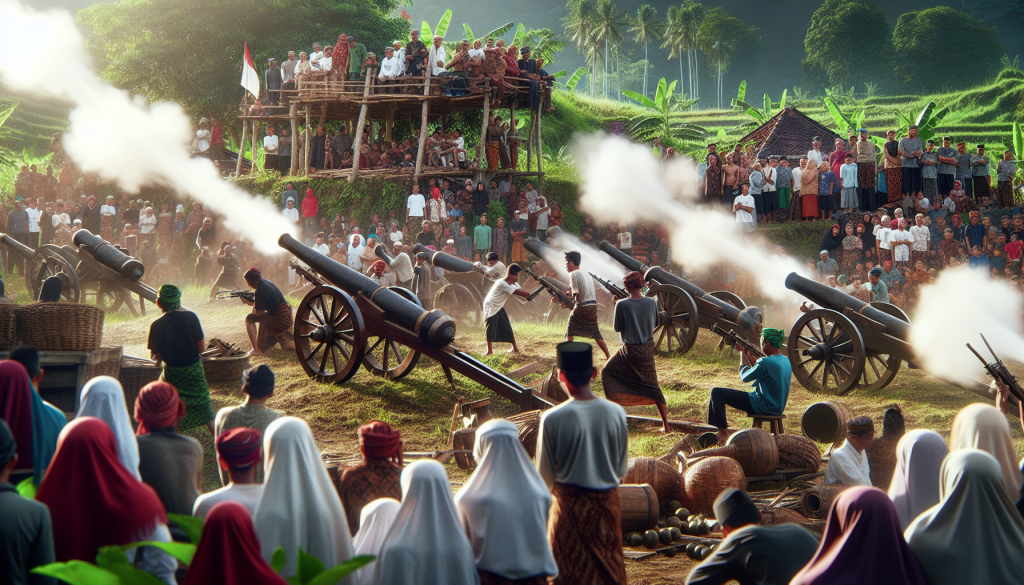
In the heart of Indonesia’s West Java province, a unique and centuries-old tradition unfolded as two neighboring villages engaged in a spirited contest using wooden cannons. This vibrant event, held annually after the Eid celebrations, draws crowds eager to witness the age-old custom that blends cultural pride with communal festivity.
The wooden cannon duel is more than just a display of craftsmanship and noise; it symbolizes unity, rivalry, and the preservation of local heritage. Each village meticulously prepares their cannons, which are handcrafted from sturdy timber, and the event serves as a platform for friendly competition and social bonding among residents. The tradition dates back generations and remains a significant part of the post-Eid festivities, marking the end of Ramadan with joy and excitement.
During the event, participants fire their wooden cannons in rhythmic bursts, creating a thunderous atmosphere that echoes through the surrounding hills. The sound is not only a form of celebration but also believed to ward off evil spirits and bring blessings to the community. Spectators, including families and tourists, gather to enjoy the spectacle, often accompanied by traditional music, food stalls, and other cultural performances that enrich the festive mood.
It is worth noting that this custom highlights the rich tapestry of Indonesia’s diverse cultural landscape, where local traditions continue to thrive despite rapid modernization. The wooden cannon contest serves as a reminder of the importance of maintaining cultural identity and fostering community spirit in an increasingly globalized world.
Meanwhile, authorities ensure that the event proceeds safely, balancing the preservation of tradition with public safety measures. The post-Eid wooden cannon battle remains a cherished ritual, drawing attention from cultural enthusiasts and reinforcing the bonds between the villages involved.