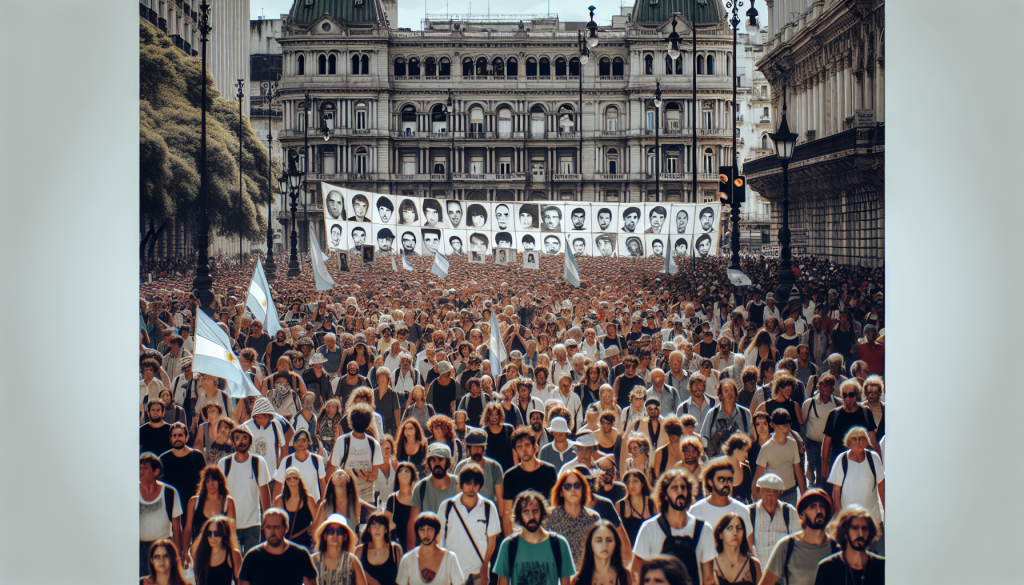
In a powerful display of collective memory and resilience, thousands of Argentinians flooded the streets of Buenos Aires to commemorate the 50th anniversary of the country’s last military coup. The event, which took place on March 24, 1976, marked the beginning of a brutal dictatorship that profoundly shaped Argentina’s modern history.
The march drew people from all walks of life, including families of victims, human rights activists, and younger generations eager to understand the dark chapter their nation endured. Demonstrators carried banners, chanted slogans demanding justice, and paid tribute to the thousands who disappeared during the regime’s reign of terror. The atmosphere was both somber and determined, reflecting a collective commitment to never forget the atrocities committed during those years.
It is worth noting that the 1976 coup led to the overthrow of Isabel Perón’s government and ushered in a military junta that ruled Argentina for seven years. This period was marked by widespread human rights abuses, including forced disappearances, torture, and censorship. The legacy of this era continues to influence Argentine politics and society, as efforts to hold perpetrators accountable remain ongoing.
Meanwhile, various organizations and government officials participated in ceremonies and public speeches throughout the city, emphasizing the importance of democracy and human rights. The event also served as a reminder of the resilience of Argentine society in overcoming a painful past and striving toward a more just future.
In a related development, educational institutions across the country organized special programs to educate students about the coup and its consequences, ensuring that the memory of this critical moment in history is preserved for future generations. The 50th anniversary has thus become not only a day of remembrance but also a call to vigilance against any threats to democratic values.